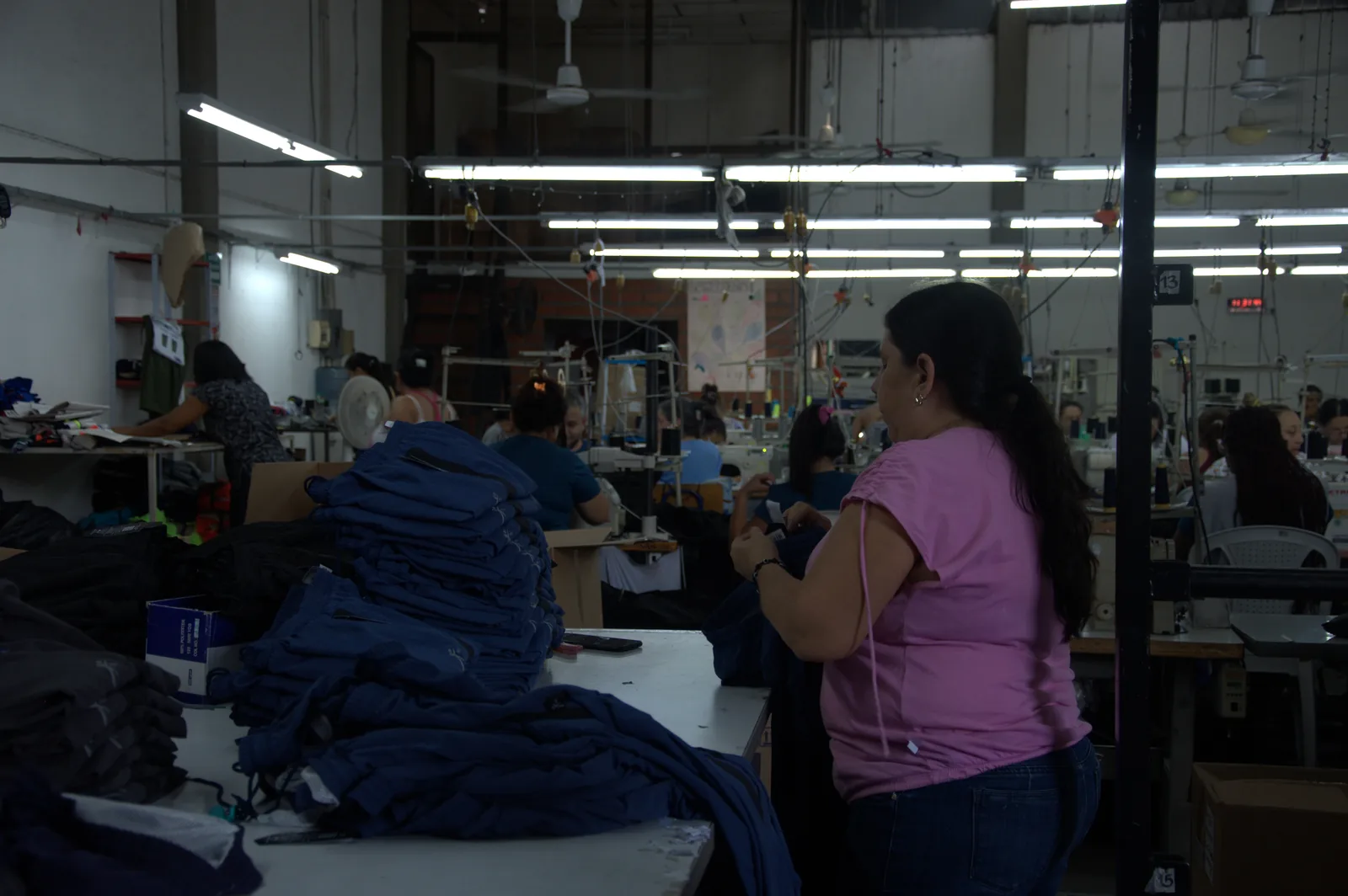

Clothing manufacturers split by how much of the work they take on. At one end a CMT workshop only cuts and sews what you send. At the other a vertical mill makes the fabric too. Between them sit full package, private label, white label, wholesale, print on demand, sample houses and process specialists.
Getting this taxonomy wrong is the most common reason a first approach to a factory goes nowhere. Asking a CMT workshop to develop your collection, or asking a private label supplier to build your pattern, is asking each of them for the one thing their business is not set up to sell.
The ten, at a glance
| Type | What they do | You supply |
|---|---|---|
| 1. CMT | Cut, make and trim only | Pattern, graded sizes, fabric and trims |
| 2. Cut and sew specialist | CMT for one garment category, done very well | Same, plus a product that fits their category |
| 3. Full package (FPP) | Development, sourcing, production, quality, dispatch | A reference and approvals |
| 4. Private label | Sell you a garment they developed, adapted for you | Your labels and your order |
| 5. White label | Sell the same blank garment to everyone | Your labels |
| 6. Wholesale manufacturer | Produce and sell under their own brand | Nothing. You resell their brand |
| 7. Print on demand | Decorate blank stock per order | Artwork |
| 8. Sample house | Patterns, tech packs and samples. No production | A design intent |
| 9. Process specialist | One stage: knitting, dyeing, embroidery, printing, washing | The garment or fabric at that stage |
| 10. Vertical manufacturer | Fabric and garment under one ownership | A reference, and usually large volume |
1. CMT
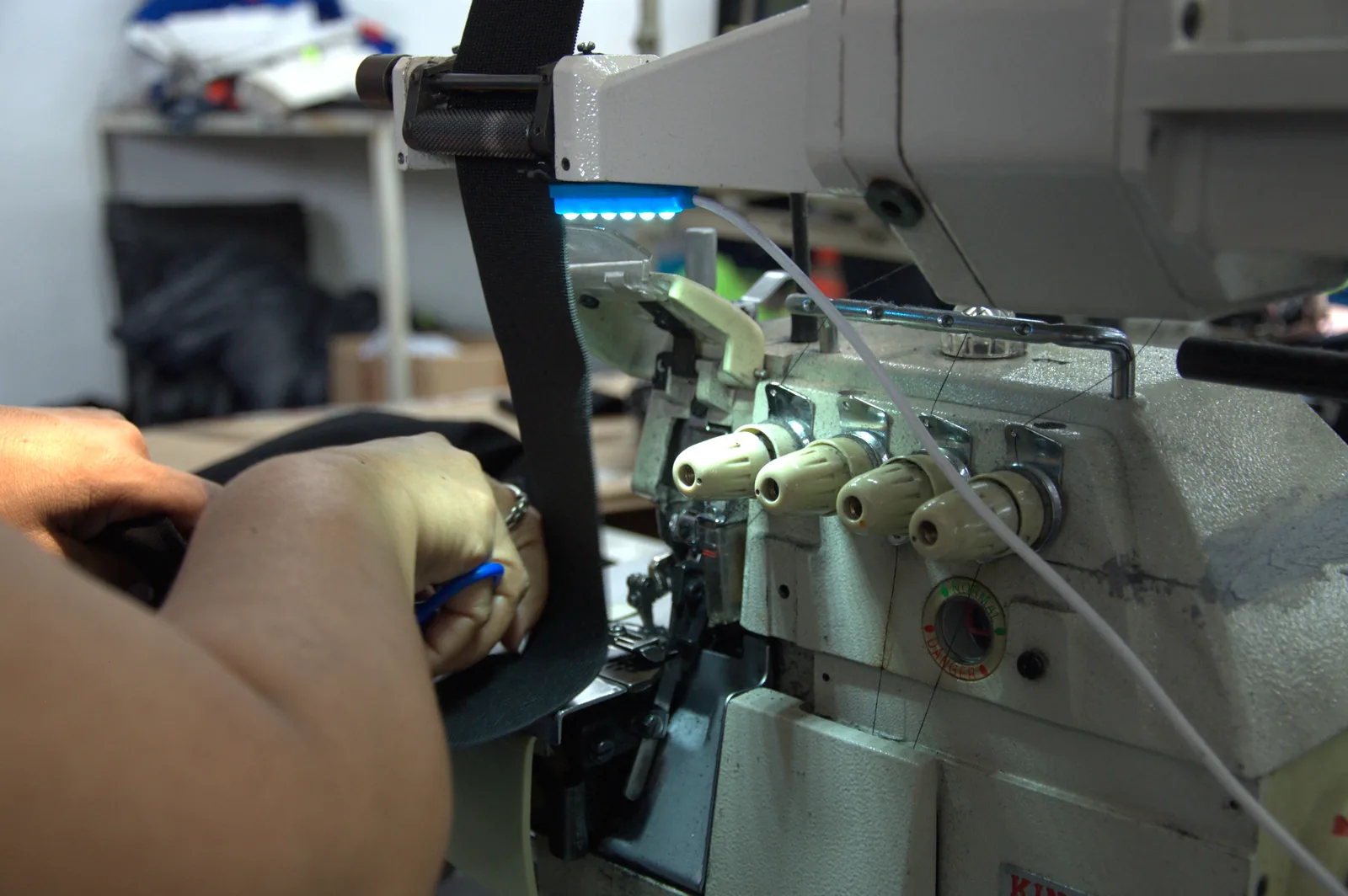
Cut, make and trim. You deliver the pattern, the size grading, the fabric and every trim, and the workshop returns sewn garments. It is the cheapest line on a quote and the most work for you, because everything upstream of the sewing machine is your responsibility to organise and pay for separately.
It suits brands that already have a technical team or a pattern maker. It punishes brands that do not, because a pattern error becomes a full production of the wrong garment. Where a maquila's job ends covers this model in detail.
2. Cut and sew specialist
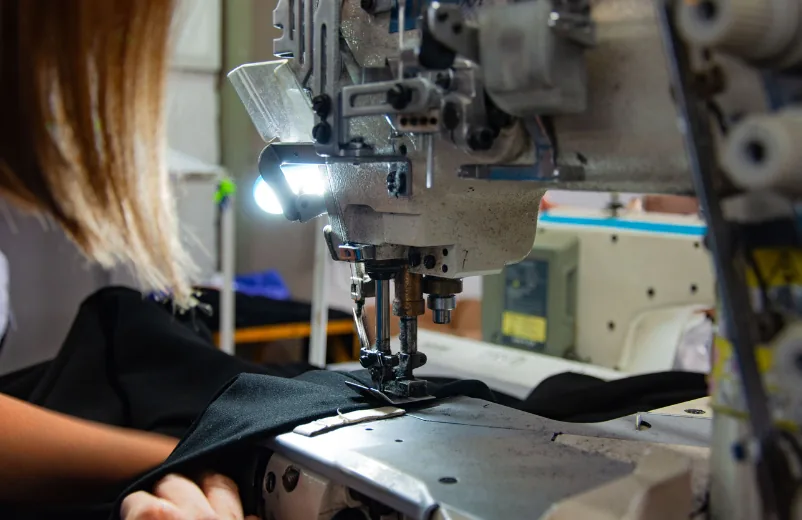
The same arrangement narrowed to one category: swimwear, activewear, lingerie, tailoring, knit tops. The machines, the operators and the accumulated judgement are all tuned to that product.
Worth seeking out when your garment is technically demanding. A generalist workshop can sew a bikini and a specialist will sew it better, faster and with fewer questions.
3. Full package manufacturer
One supplier takes the garment from a reference to finished, inspected stock, including buying the fabric and trims. Development, pattern making, sourcing, production and quality all sit with them.
It costs more per unit than CMT and removes the coordination work entirely, which is why it is the default for brands without an internal technical team. What full package covers sets out the scope.
4. Private label manufacturer
They developed the garment, they own the pattern, and they sell it to you adapted with your labels and sometimes your colours. Exclusivity is occasionally purchasable.
Fast and cheap to start because you skip development. The limit is that the pattern is shared, so the garment cannot be the thing that makes your brand different.
5. White label supplier
The same idea with no adaptation. A blank garment sold identically to every buyer, who each apply their own branding. Cheapest route to having product with your name on it, and the least defensible. White label against wholesale compares it to the next one.
6. Wholesale manufacturer
They make and brand their own garments and sell them to retailers in bulk. You are not a client of manufacturing here, you are a stockist. No development, no minimum per style in the manufacturing sense, and no ownership of anything.
7. Print on demand
Blank stock held in a warehouse, decorated one unit at a time after a customer orders. Calling it manufacturing is generous, since the garment already existed, but it is where a large number of brands genuinely should start. What print on demand covers.
8. Sample house
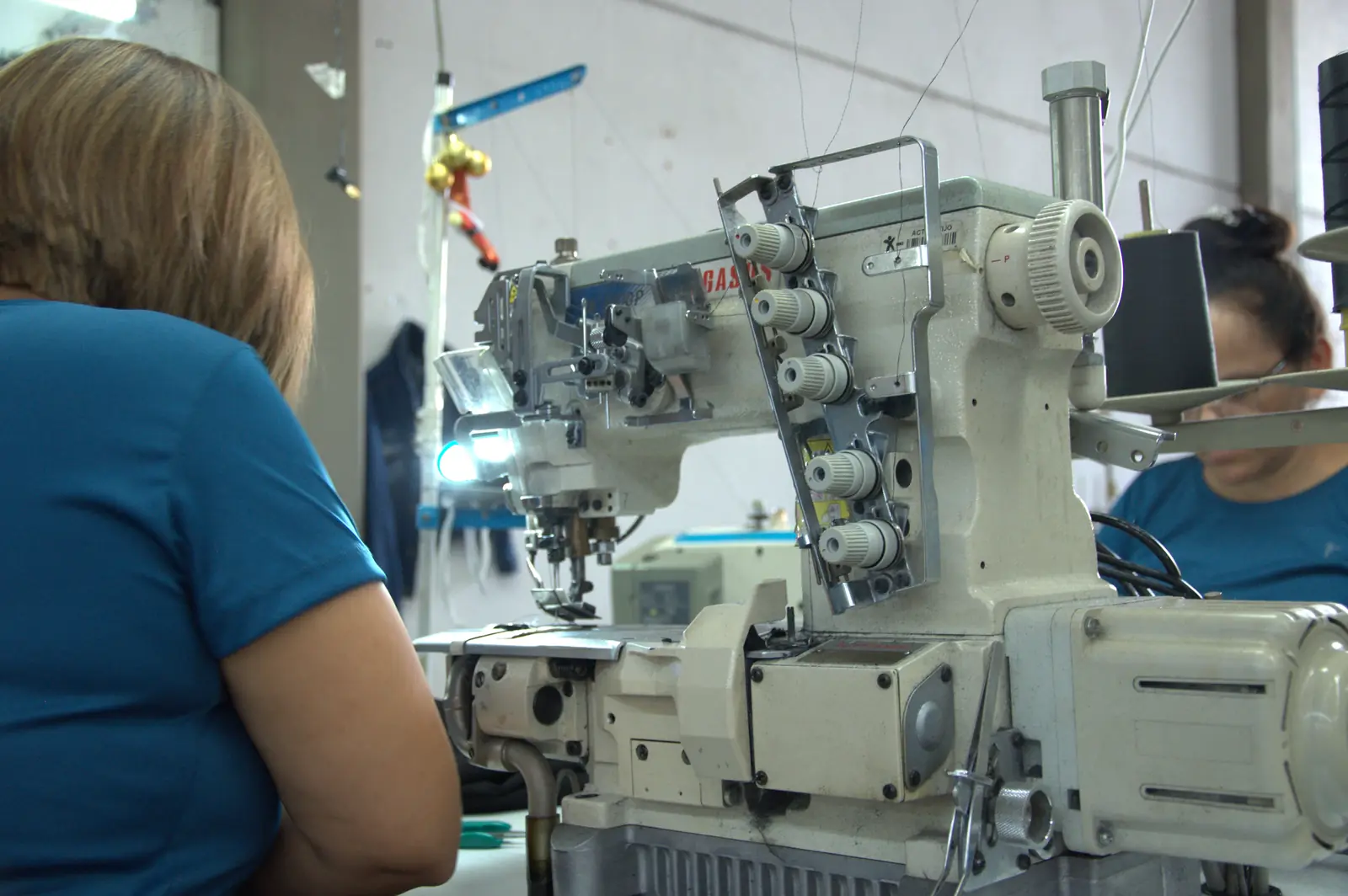
Development without production. Pattern making, technical files, fit samples, sometimes small runs. Useful when you want your pattern drawn independently of whoever will produce it, and normal in markets where development and production are separate trades.
The trade-off is that a pattern drawn away from the production floor sometimes does not suit the machines that will sew it, and reconciling that costs a round.
9. Process specialist
One stage of the chain sold as a service: circular knitting, dyeing, screen printing, embroidery, garment washing, pleating. Almost every finished garment passes through at least one of these, usually subcontracted by whoever holds your order.
You rarely contract them directly unless you are managing your own chain. Knowing they exist matters because it explains why a lead time stretches: your garment is queuing at somebody else's plant.
10. Vertical manufacturer
Fabric production and garment production under one ownership, sometimes including spinning. Shortest lead times and the tightest control over material quality, at the cost of large minimums and little flexibility on fabric choice, since the point is to use their own.
How to tell which one is quoting you
Two questions resolve it every time, whatever the company calls itself.
- Who buys the fabric? If you do, it is CMT or a specialist. If they do, it is full package, private label, white label or vertical.
- Who owns the pattern? If you do, it is CMT, full package or a sample house. If they do, it is private label, white label or wholesale.
Suppliers describe themselves inconsistently, and many describe themselves as whatever the enquiry asked for. The answers to those two questions do not move.
For the rest of the vocabulary you will meet in a quote, from POM to grading to incoterms, see the glossary of garment manufacturing terms.
Frequently asked questions about types of garment making businesses
What are the types of garment making businesses?
They divide by scope of work: CMT, cut and sew specialists, full package manufacturers, private label, white label, wholesale manufacturers, print on demand decorators, sample houses, single-process specialists and vertical manufacturers.
What is the difference between a clothing manufacturer and a clothing maker?
In trade usage a manufacturer produces at industrial volume on a line, while a maker or atelier produces individually or in very small numbers. The distinction is about method and scale, not quality.
Which type is best for a startup?
Usually full package or private label, because neither requires you to have a technical team. Full package if the garment must be your own, private label if getting to market fast matters more than owning the pattern.
Can one manufacturer be more than one type?
Often. A full package plant will sometimes take CMT work to fill capacity, and a private label supplier may also develop custom pieces. Ask what they do most of, because that is what they are good at.
Which type has the lowest minimum order?
Print on demand, at one unit, then white label and private label, then full package and CMT. Vertical manufacturers have the highest, because a fabric run has its own minimum before a garment run even starts.
Do I need different manufacturers for different garments?
Frequently yes, and it is normal. Denim, knitwear, tailoring and swimwear are effectively different industries, and a plant that does one well often does not do another at all.
How we work
GAT Fashion Lab is number three on this list. We work full package from Cali, Colombia, taking a garment from a reference photograph to inspected stock, and have done for more than two decades. Number ten we are not, and that matters to you: we buy fabric on the open market, which means your fabric choice is not restricted to what we happen to weave. Denim and tailored outerwear are outside what we do.
To find out what your garment costs under this model, describe it in our quoting tool. Free, an estimate in minutes, and a person after that. From Colombia to the world.