
Print on demand is a fulfilment model where a supplier holds blank stock, usually t-shirts, hoodies and accessories, and prints your artwork on a unit only after a customer buys it. There is no minimum order and no inventory to fund. What you can change is the print, not the garment underneath.
We are a clothing manufacturer, so we lose work to this model regularly and we think that is often the right outcome. A brand selling five graphic tees a week has no business ordering a production run. This page is the honest version of where print on demand fits, written from the side of the industry that has to build the garment when printing is no longer enough.
How print on demand works, step by step
The mechanics are the same across every supplier in the category.
- You upload artwork. A design file, placed on a product template from the supplier's catalogue.
- Nothing gets made. The product exists as a listing in your store and as blank stock in the supplier's warehouse.
- A customer buys. The order routes automatically from your storefront to the supplier.
- The unit gets printed. Direct to garment, transfer or embroidery, on the blank that was already sitting on the shelf.
- It ships to the buyer. Usually with your label in the box, from the supplier's facility, and you never touch the product.
Your capital is committed at step four, after the sale, which is the entire point of the model. Every other manufacturing arrangement asks you to pay before you know whether anyone wants the thing.
What a print on demand store is
A print on demand store is an online shop whose catalogue is not stock. Every listing is a design mapped onto a blank product, and the storefront is connected to the supplier so that a sale triggers production of that one unit. The shop can list two hundred designs and hold zero garments.
That is also its limit. Because the catalogue is a template library shared with every other seller on the same platform, two competing stores can be selling the identical blank with different artwork on it, at the same cost base.
What you can order, and what you cannot change
The product range is wide. Apparel covers t-shirts, hoodies, sweatshirts, shorts, leggings and some swimwear. Beyond clothing there are mugs, notebooks, tote bags, backpacks, caps, socks, posters, cards, pillows and towels.
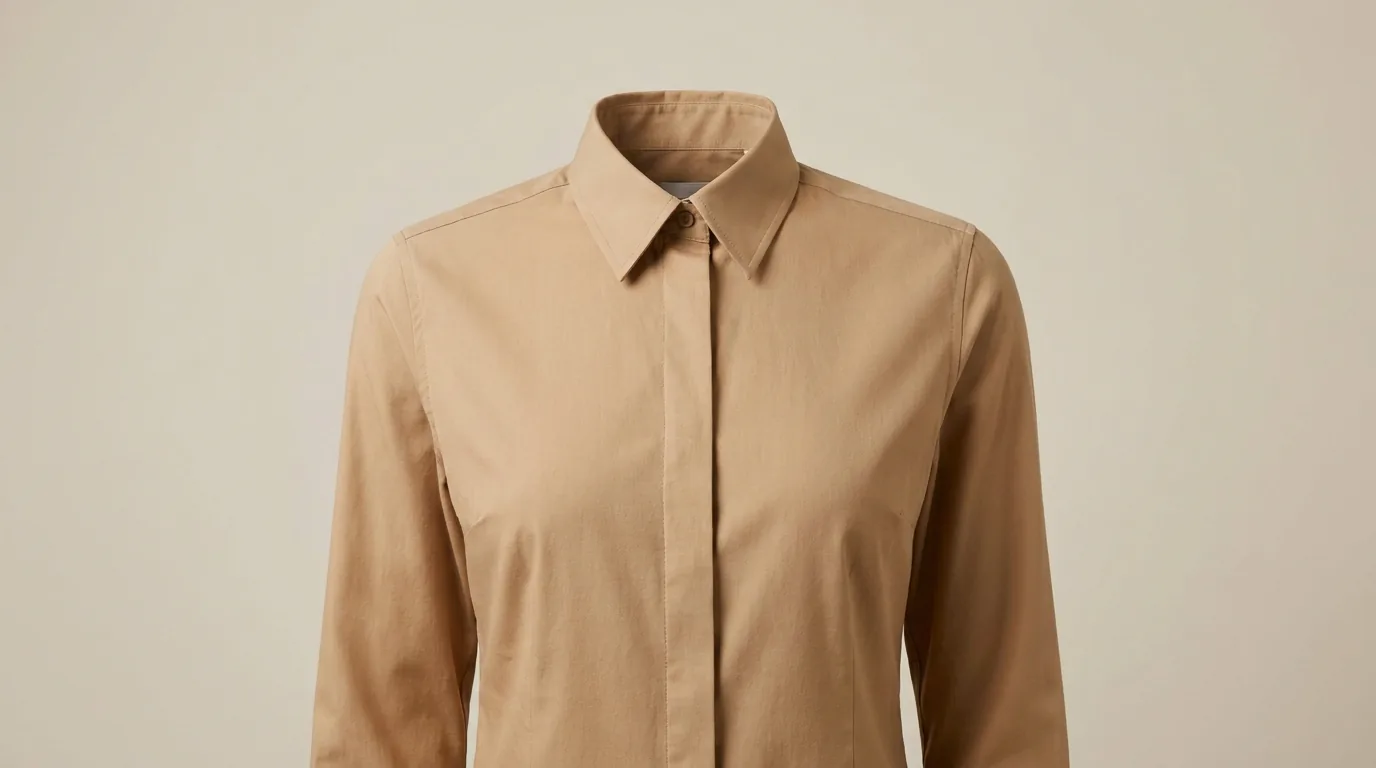
What stays fixed is the garment itself. The blank has a fitting, a fabric, a neckline and a construction chosen by the supplier, and none of those are open to you. You cannot lengthen a sleeve, move a seam, change the knit weight, add a lining, cut a different neckline or specify a trim. If your idea lives in the silhouette rather than in the graphic, print on demand cannot produce it at any price.
Print on demand in fashion: where the model holds
It holds cleanly for merchandise, for graphic streetwear, for artists and creators selling to an existing audience, and for testing whether a design has buyers before committing to it. In all four cases the value is in the artwork and the audience, and the blank is a carrier.
It stops holding when the garment is the product. Fashion brands that compete on fit, fabric or construction are selling exactly what the model holds constant. A well made tee from a print on demand catalogue is still the same tee your competitor is printing on.
What print on demand actually costs you
Per unit it is the most expensive way to make a garment, because you pay retail-adjacent pricing on the blank plus a print charge on every single piece, with no volume curve. Margins land thin once shipping is added, and shipping is charged per order rather than per shipment, so a customer buying three items can generate three fulfilment fees.
Three things you also give up: control of print quality, since you are not inspecting the unit that goes out; control of packaging and unboxing; and control of delivery times, which depend on which facility has the blank in stock. Against that, the model produces almost no waste. Nothing is cut that was not already bought, and there is no end-of-season pile to liquidate.
How to choose a print on demand supplier
Most comparison checklists in this category run to twenty items and hide the four that decide the outcome.
| What to check | Why it decides |
|---|---|
| Blank quality, ordered as a sample | You are reselling their garment under your name. Photos will not tell you the hand feel or how it survives five washes. |
| Print method offered per product | Direct to garment, transfer and embroidery age very differently. A cracked print at week six is your return, not theirs. |
| Facility location relative to your buyers | This sets both delivery time and shipping cost, and it is the single biggest lever on margin. |
| All-in cost per unit, shipping included | Base price plus print plus shipping, compared against your retail price. Run it before you list anything. |
The rest, catalogue breadth, editor features, review counts, matters far less than these four.
When printing stops being enough
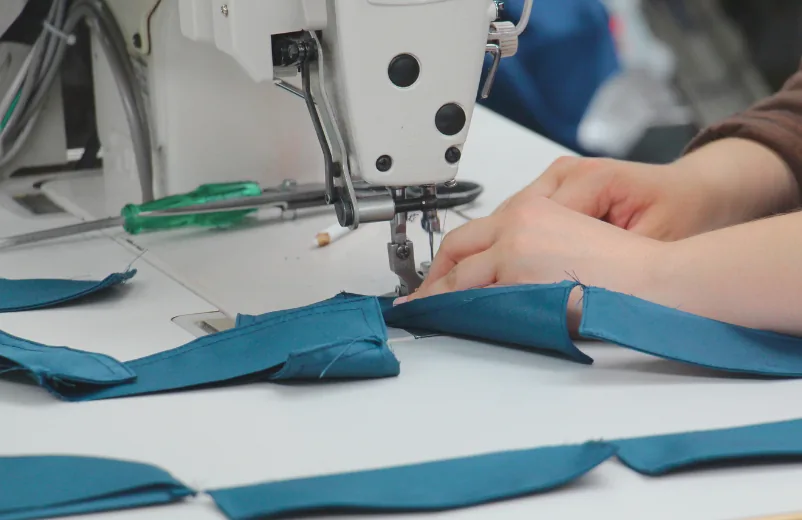
The handover point is specific: you want to change the garment, not the graphic. A different fabric weight, a neckline that is yours, a fit that flatters your customer, a trim nobody else has. At that moment you need a manufacturer, and the economics invert. You commit before the sale and you get a product that cannot be copied by uploading a different PNG.
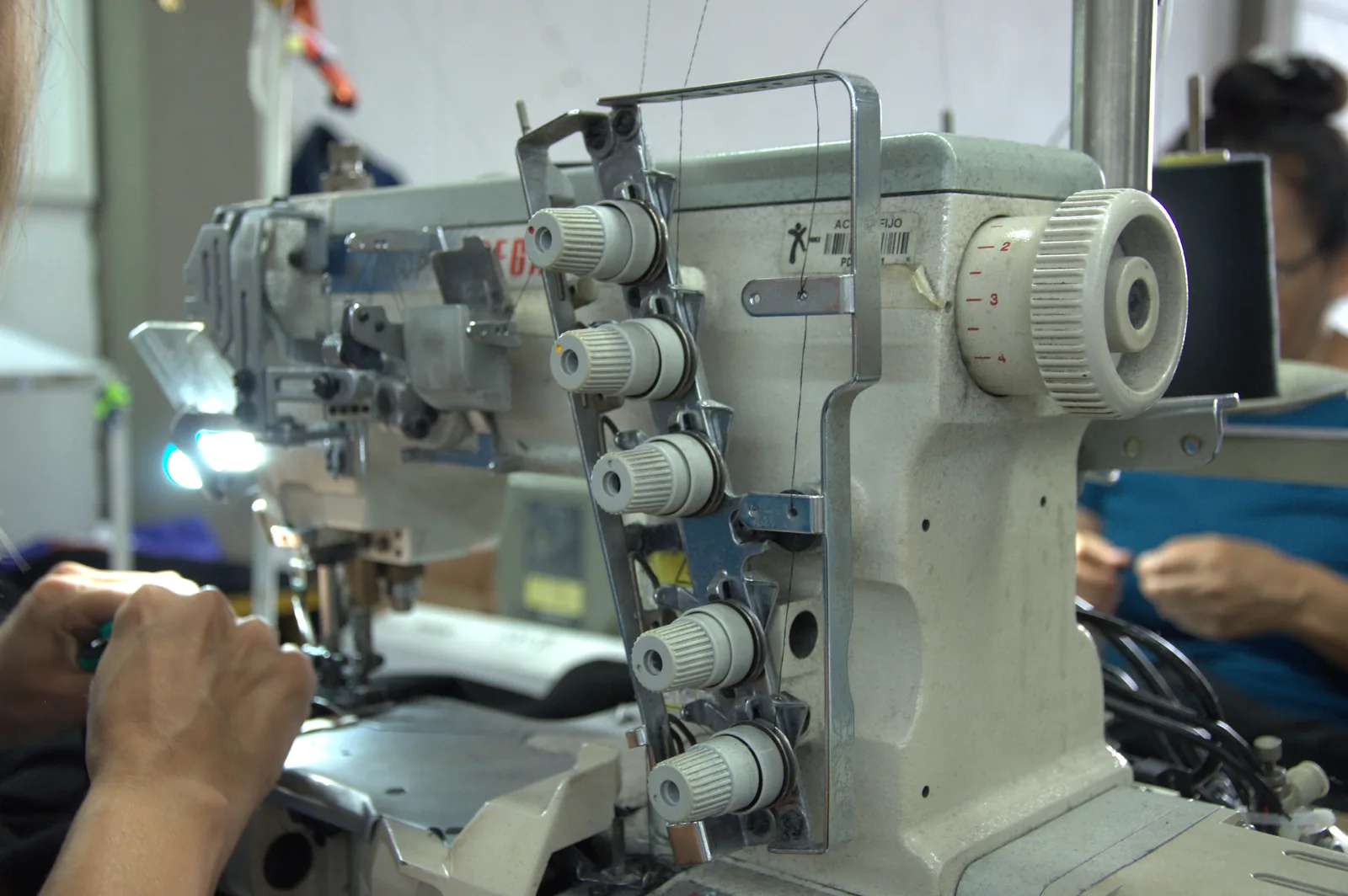
Here is what that looks like on our side. Send a photograph of what you want and that is enough to open a quote, because drawing the technical file is part of the job. Development runs two to eight weeks, wider when the garment is new rather than a variation. Production takes 30 to 45 business days counted from your approval of the physical sample. Orders open at 36 of a style in a single colour, and above roughly a hundred units the development stops setting the price. One caution about ordering at that floor: the next 36 are 30 to 45 business days behind, so selling out fast can leave you with two months of nothing to ship. Values are EXW by default, at our plant in Colombia, with DDP available when it is settled before production.
What stays yours: the design decisions, the photography, the store and the advertising. We build garments. The rest of the brand is not something a manufacturer can do for you, and any manufacturer who says otherwise is selling you something else.
The head-to-head on cost, control and speed is laid out in custom manufacturing against print on demand. If the answer is a full production run, what full package production covers explains the scope.
Frequently asked questions about print on demand
What does print on demand mean?
It means a product is made after it is sold, not before. In apparel it specifically means a blank garment already in a warehouse gets your artwork printed on it once an order arrives, then ships straight to the buyer.
Does print on demand really work?
Yes, for the cases it was built for. It works when the design is the product, the audience already exists and volume is low or unpredictable. It works badly as a route to a fashion brand built on fit and fabric, because the model deliberately holds those constant.
What is the minimum order for print on demand?
One unit. That is the defining feature of the category and the reason it is the right starting point for so many brands.
Can I customise the garment itself, not just the print?
No. The blank is fixed. Changing fabric, fit, seams, neckline or trim requires a manufacturer that cuts and sews to your specification.
Is print on demand cheaper than manufacturing?
Cheaper to start, more expensive per garment. There is no upfront outlay, and there is also no volume discount, so unit cost stays flat forever while a production run gets cheaper as it grows.
Can I use print on demand and a manufacturer at the same time?
Plenty of brands do. Graphic tees and merchandise stay on print on demand while the pieces that carry the brand identity get manufactured. The two models solve different problems and there is no reason to pick only one.
How we work
Two decades of building garments in Cali, Colombia, is what sits behind this page. GAT Fashion Lab works with recognised brands across Latin America and with smaller labels shipping into the United States. Because the same team answers for development, sourcing, production and quality, you talk to one counterpart rather than four. Our limits, said plainly: nothing sold from a catalogue, no denim, no tailored outerwear.
If you have reached the point where the garment itself has to change, describe it in our quoting tool. There is no charge, an estimate arrives within minutes, and a person takes it from there. From Colombia to the world.