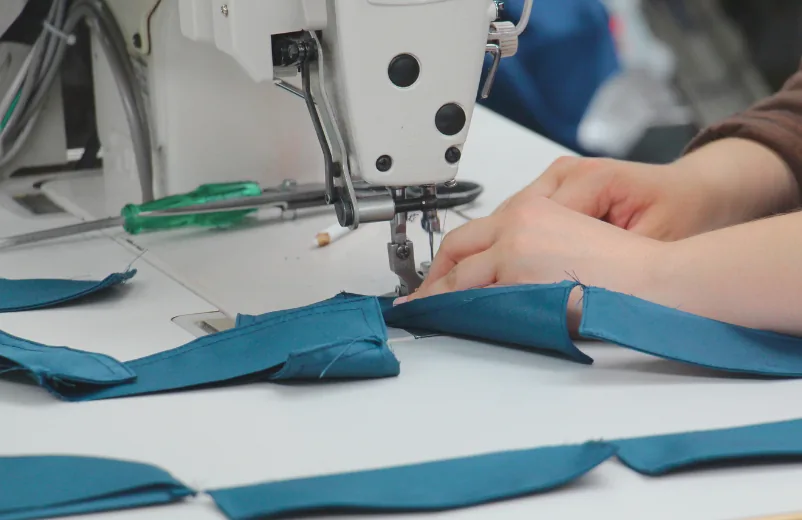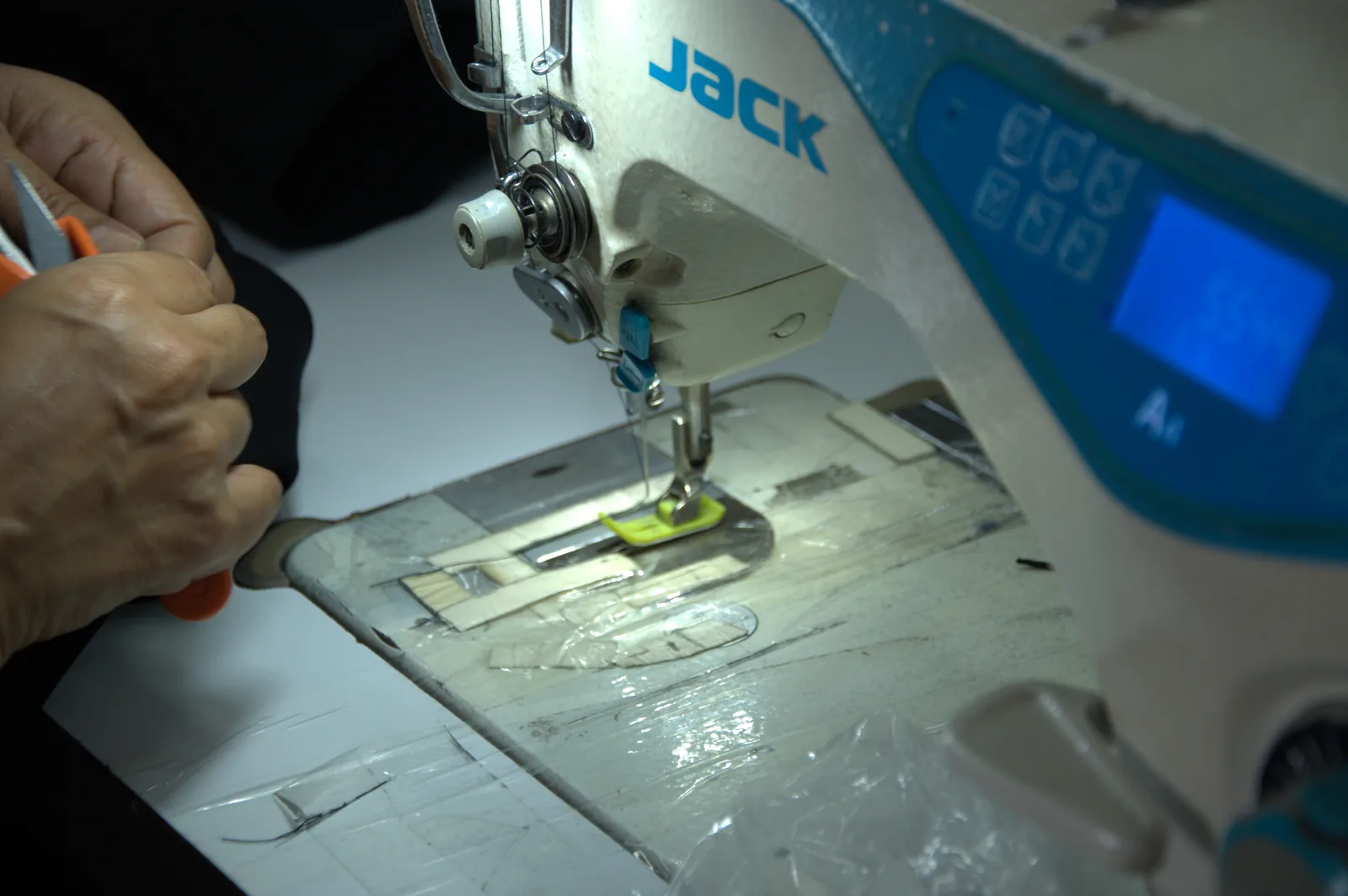

Small batch production is manufacturing clothing in short runs, typically tens to low hundreds of units per style, instead of thousands. It is a method rather than a size: shorter fabric lays, more frequent line changeovers, and quality checked on a larger share of the units. It costs more per garment and wastes far less.
Most explanations of this treat it as a marketing position. It is not. It changes what happens at the cutting table and on the sewing line, and those changes are the reason the garment comes out different. Here is what actually differs, stage by stage, from a plant that runs both.
What changes on the floor
| Stage | Mass production | Small batch |
|---|---|---|
| Fabric lay | Dozens to hundreds of plies, cut once | Few plies, cut more often. Less compression distortion at the bottom of the stack |
| Line setup | Set once, runs for days | Reset for every style. The dominant cost |
| Operator familiarity | The same operation thousands of times, fast and consistent | Fewer repetitions, so more skill required per operator |
| Inspection | Statistical sampling against an AQL | A far larger proportion of units, often all of them |
| Correcting a fault | Found late, it can mean thousands of remakes | Found on a run of 80, it is contained |
| Fabric waste | Efficient markers, low waste percentage, large absolute volume | Higher waste percentage, much lower absolute volume |
Why short runs can produce a better garment
Three mechanisms, and none of them is that small batch factories care more.
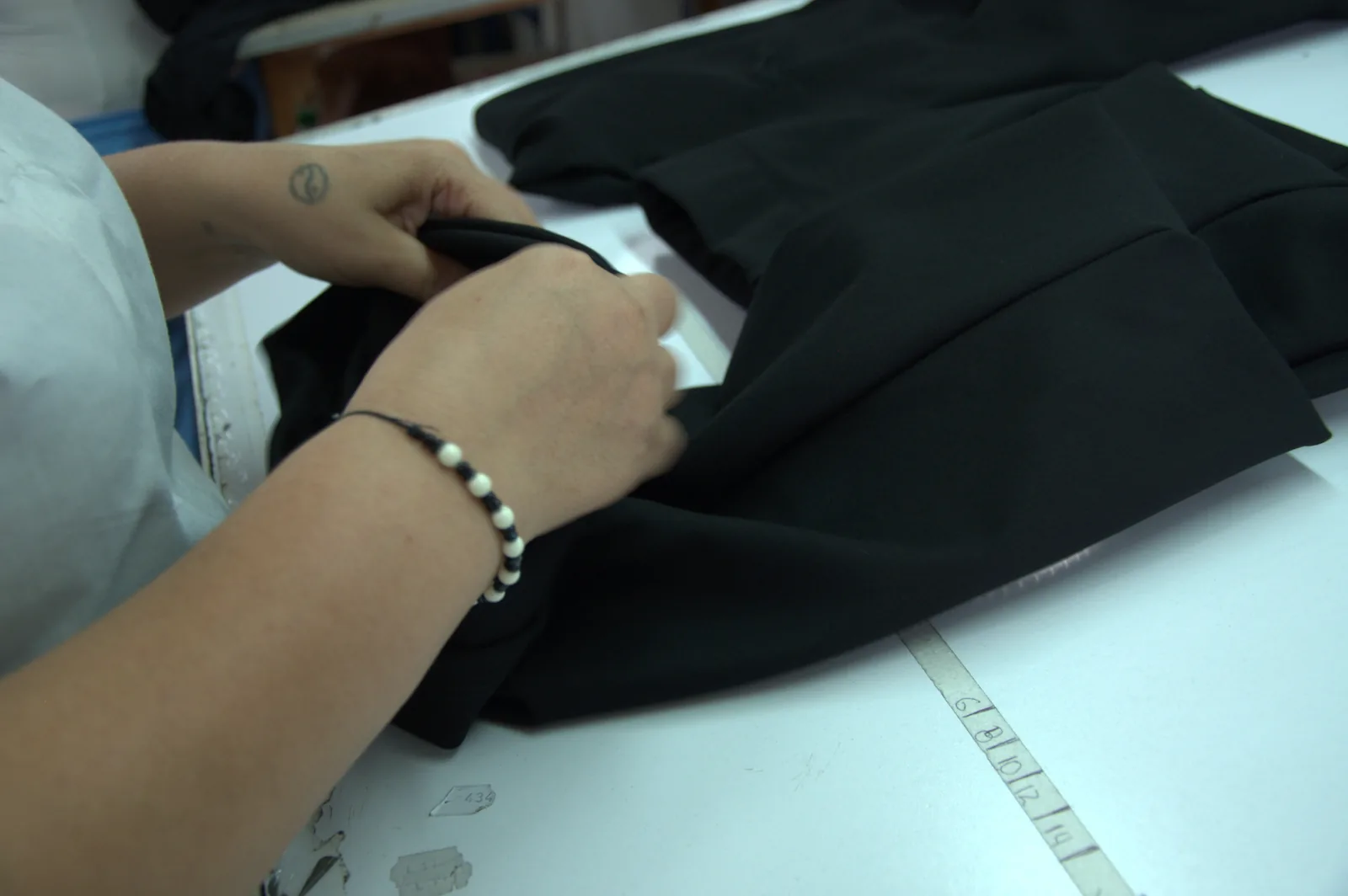
Inspection coverage. On a run of 3,000, checking every piece is not economic, so quality is sampled. On a run of 80, checking every piece takes an afternoon. Defects that would statistically survive sampling get caught.
Feedback distance. When the run is short, the person who cut the fabric and the person who sewed it are still available when a problem appears. On a long run, the correction arrives after hundreds of units have already gone through.
Cutting accuracy. A very tall fabric lay compresses the lower plies, and the pieces cut from the bottom are marginally different from the top. Shorter lays reduce that drift. It is a small effect and it shows up in fit consistency across a size run.
The honest counterweight: a specialised high-volume plant with good process control makes an excellent garment, and repetition genuinely builds precision. Small batch is not automatically better. It fails differently, and the failures are cheaper.
What it costs
More per garment, and the reason is arithmetic rather than policy. Pattern drafting, sampling, fabric and trim purchase and line setup all happen once per style regardless of quantity. Divided by 80 units they are visible in every price. Divided by 2,000 they vanish.
Fabric is the second cost. Buying a short length usually means paying a higher rate, or using what a plant already holds, and marker efficiency is worse on a small lay, so the waste percentage rises even though the absolute waste falls.
What you get back is inventory risk you did not take, and range. A brand that produces 100 units of six styles has six chances to be right. A brand that produces 600 of one has a single chance and finances the answer for a year.
Small batch, made to order and mass production
Three points on a scale, and the words get mixed up constantly.
- Made to order. Production begins after a customer buys. No inventory, highest cost per garment, longest wait for the buyer.
- Small batch. A short run produced ahead of demand. Some inventory risk, higher cost per garment, ability to reorder or change quickly.
- Mass production. Long runs against a forecast. Lowest cost per garment, all the inventory risk, and slow to correct a mistake.
Most brands move along this scale rather than choosing a position permanently. Styles that prove themselves get produced longer, styles being tested stay short.
Whether the method suits your brand
It suits brands whose product carries a price with room in it: distinctive pieces, made in deliberately limited numbers, where scarcity is part of the proposition and the margin absorbs a higher unit cost without flinching. It suits a wide range of styles over deep stock in a few, and products that change by season.
It suits badly anything competing on price. There the unit cost gap is the margin itself, and no amount of flexibility makes up for it. That is not a judgement about the brand, it is arithmetic: a garment sold on being cheap has to be made cheaply, and cheap is what volume buys.
The practical test: estimate what you lost last year on stock that did not sell. If that number is larger than the extra you would pay for short runs, the method pays for itself.
If you have decided it fits, how to find small batch manufacturers covers the search, and what a low MOQ really means explains the numbers you will be quoted, and how many units to produce helps you set your own.
Frequently asked questions about small batch production
What is small batch production in clothing?
Manufacturing a style in a short run, usually tens to low hundreds of units, with shorter fabric lays, more frequent line changeovers and inspection across a larger share of the pieces than statistical sampling would cover.
How many units is a small batch?
There is no formal threshold. In practice the term covers roughly 30 to 300 pieces per style. Below 30 you are closer to sample-house territory, above 300 the economics start behaving like standard production.
Does small batch production improve clothing quality?
It changes where quality comes from. Inspection covers more units, faults are caught while the run is still correctable, and shorter fabric lays cut more accurately. It does not compensate for a bad pattern or the wrong fabric.
Is small batch production more expensive?
Per garment, yes, because the fixed costs of a style are divided among fewer units. In total it is often cheaper, once the cost of unsold inventory is counted honestly.
What is the difference between small batch and made to order?
Timing. Small batch produces a short run before the sale. Made to order produces after it. Small batch carries some inventory risk and ships immediately, made to order carries none and makes the customer wait.
Is small batch production more sustainable?
In absolute terms it produces far less unsold garment, which is where most apparel waste actually sits. Per garment it uses slightly more fabric, because short lays cut less efficiently. The net effect is favourable, and it is a smaller effect than fabric choice, which our guide to responsible manufacturing covers honestly.
Can any factory do small batch production?
Technically yes, willingly no. A plant organised around long runs loses money on changeovers and will price accordingly or decline. Look for manufacturers who describe short runs as their normal work rather than as an exception.
How we work
Short runs are ordinary work at GAT Fashion Lab rather than a favour. Orders open at 36 pieces of a style in one colour, and 100 to 300 is the band where the development stops driving the price. We inspect at four points during a run instead of once at the end, which is the part of the method that does the most for the finished garment. Denim and tailored outerwear are outside what we make, and there is no catalogue to order from. What the stage involves end to end is on our small batch manufacturing page.
To see what a short run of your garment costs, describe it in our quoting tool. No charge, an estimate in minutes. From Colombia to the world.