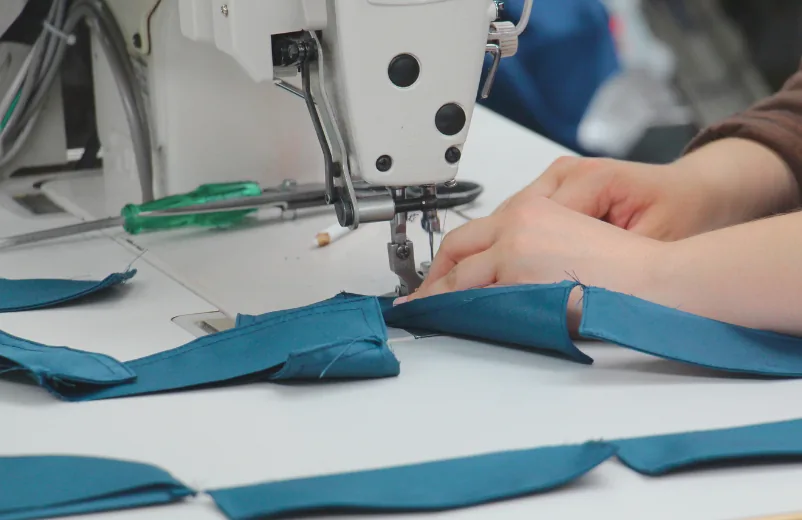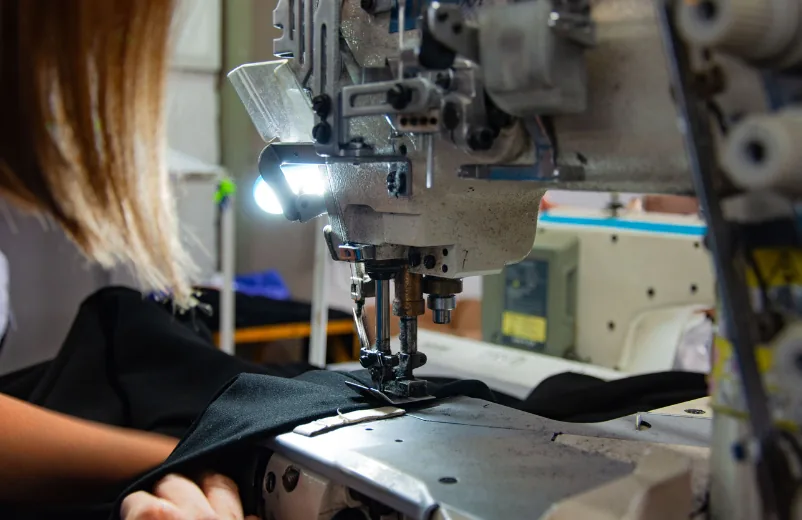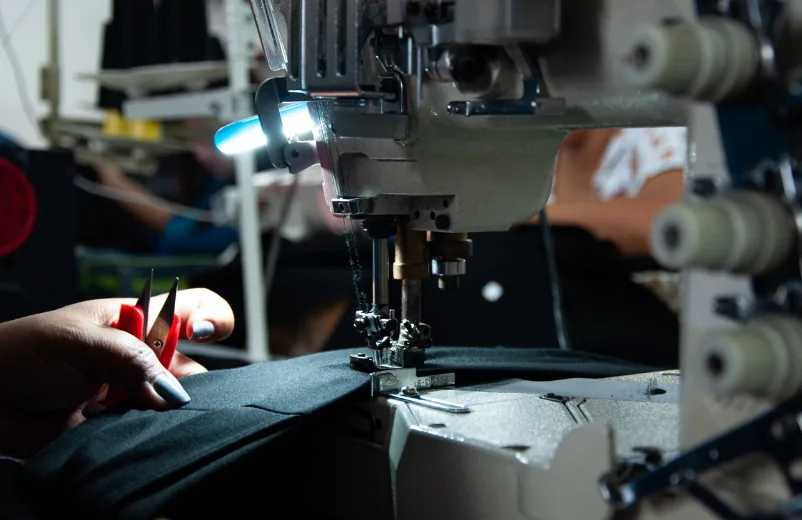

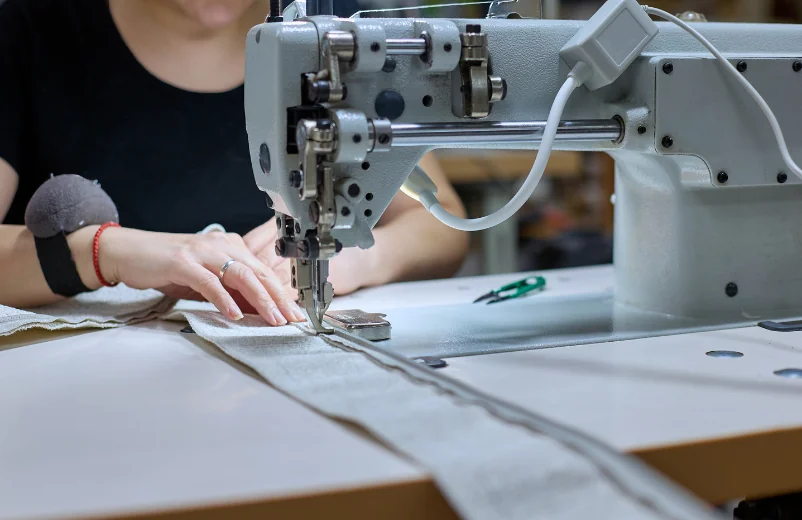
A small batch clothing manufacturer takes production runs far below the industry standard, usually tens of pieces per style instead of hundreds. The term is not regulated, so one factory's small batch is 500 units and another's is 50. What matters is the number they will actually quote you.
That gap is where emerging brands lose months. A factory calls itself flexible, you build a plan around it, and the real minimum turns up with the quote. Our own floor is 36 pieces per style and colour, so the numbers below come from running these orders rather than from describing them. Think about the second run before you sign anything. A repeat order takes its own 30 to 45 business days, and that gap is why we push brands from the floor toward 100 to 300.
Most factories are built for volume, and a request for 40 pieces does not pay for the setup a run needs, so it gets declined or quoted at a price that reads like a refusal. Factories that take small batches have organised themselves around that problem. The types of factory and what each one does are covered in what custom clothing manufacturing involves.
What are small batch clothing manufacturers?
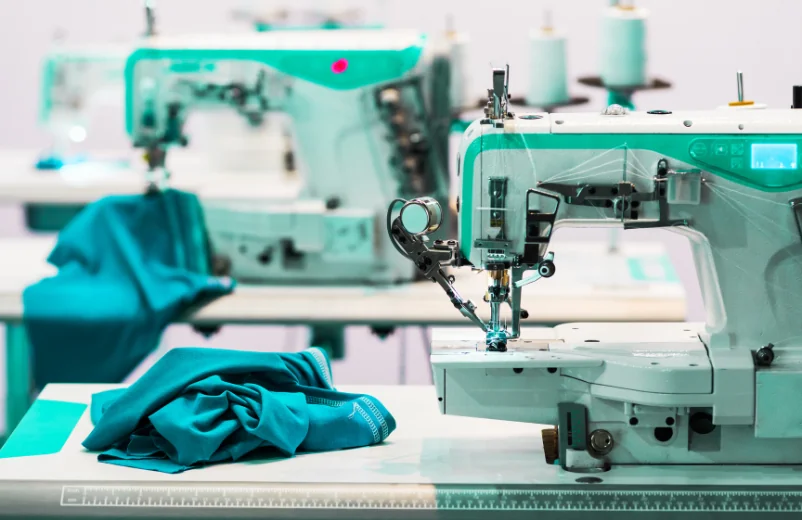
Small batch clothing manufacturers are clothing producers whose MOQ or minimum order quantity is lower or smaller than that of a wholesale manufacturer.
The term 'small batch' is very subjective and varies among each manufacturer, meaning that for some, a small batch could be 500 units per style, while for others, it might be 50 units per style.
It all depends on the manufacturer and the type or design of the garment you want to produce. However, you may find cases where the manufacturer doesn't require any MOQ and allows you to produce as few as 1 unit or up to 100, although in such cases, the production cost will be higher.
RECOMMENDED: How to Find Clothing Manufacturers for Startups
Benefits of small batch clothing manufacturers
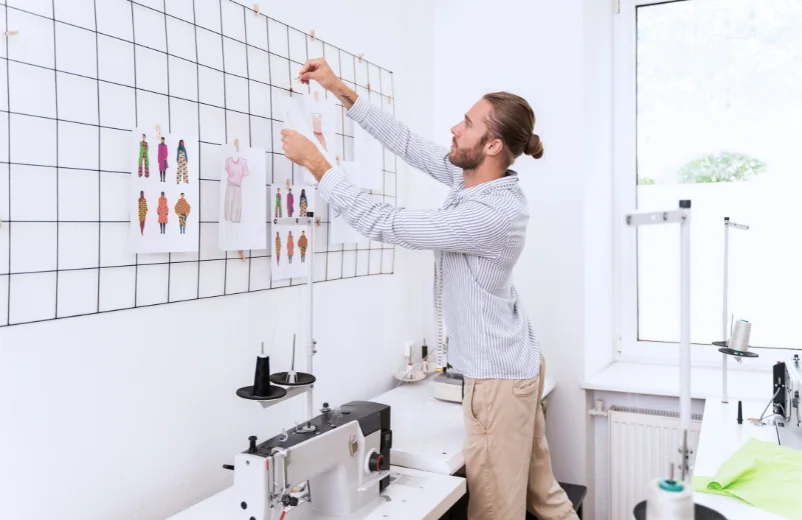
- Low MOQ (Minimum Order Quantity):
These manufacturers free the customer from having to produce more than 1,000 units per design and the risk of inventory overstock. They allow you to produce in smaller quantities and vary among the design options to be produced.
- Shorter production times:
Usually, the production and delivery times of wholesale garment manufacturers are longer, often taking months. On the other hand, small batch clothing manufacturers offer shorter production times due to fewer units.
- Product quality:
Monitoring production and the quality of garments is easier with small batch clothing manufacturers than with wholesale production involving thousands of garments.
With small batch manufacturers, you can have a more detailed and concise observation of each process and make necessary changes in a timely manner.
This ensures that the final product meets the quality the customer needs, and if a garment needs to be reproduced, the delivery time remains short.
- Minimize investment risks:
Since the investment is lower than producing wholesale, the risk of losses is minimized. This gives you the creative freedom to experiment with different designs and test the market.
This option is useful while the designer or emerging brand identifies their market and the best-selling designs to produce on a wholesale scale later.
RECOMMENDED: Clothing Manufacturers with Low MOQ: Small Orders, Big Opportunities
How do I know if my brand needs a small batch clothing manufacturer?
Producing with small batch clothing manufacturers has its benefits but also its drawbacks, depending on your brand's goals.
Although you have more control over quality and production, and the investment is lower than mass production, the profit margin will be lower with low volume production.
If your goal is to produce multiple designs and have a variety of products while testing and identifying the market, a small batch clothing manufacturer is ideal for your brand.
How and where to find small batch clothing manufacturers?
- Identify the type of manufacturer you need:
In the garment production industry, not all manufacturers do the same thing or focus on the same things. Some manufacturers specialize in women's high-end garments, while others focus solely on lingerie, swimwear, and so on.
Identifying the type of manufacturer your brand needs is essential before starting the search to locate the ideal manufacturer that suits your brand/product.
- Networking:
If you already have a brand in mind that produces with these types of manufacturers, don't hesitate to contact them and ask for their contact information.
Another effective method is attending industry events to generate contacts that can be beneficial for your brand in the future.
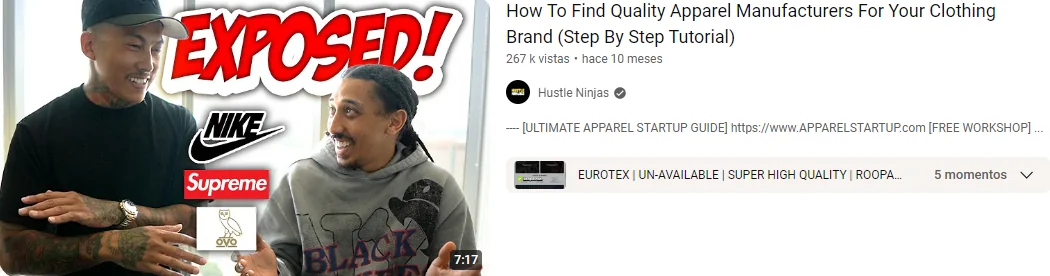
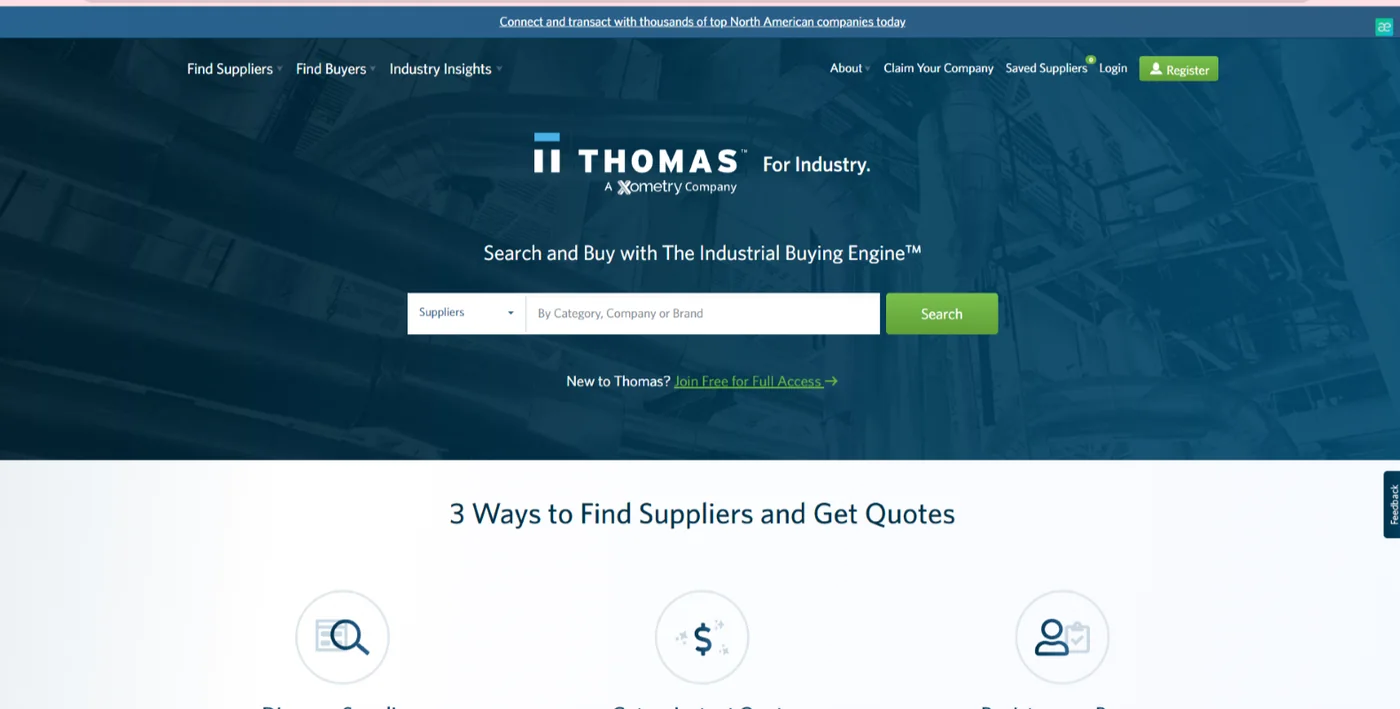
- Online search:
There are websites dedicated to recommending clothing manufacturers based on the specific sector the customer needs, like a directory. Treat them as a list to filter rather than a recommendation, because the listings are paid or self-reported almost everywhere.
These platforms work by entering your specific industry and the type of product you want to produce, and the site will automatically suggest manufacturers that meet your requirements.
The positive aspect of these platforms is that they ensure recommendations for manufacturers with a database of satisfied customers.
However, it's important to verify the information by searching for the company on Google and reading customer reviews and ratings.
- Attend trade fairs:
One of the best ways to find manufacturers and have instant contact is by attending trade fairs or industry events.
These events take place in different parts of the world, including Europe, the United States, Colombia, etc. If you want to learn more about these fairs, don't miss our blog here.
These fairs allow you to appreciate the latest fashion trends, make contact with all types of manufacturers, distributors, suppliers, and more. They are also useful for building a good network of contacts.
Small batch clothing manufacturers in the USA, and producing from nearby
Searches for small batch manufacturers usually carry a city attached, New York and Los Angeles most of all, because proximity feels like control. It is a fair instinct: being able to walk into the place that is making your product is worth something real, especially on a first run.
What that instinct tends to miss is that domestic small batch capacity in the United States is thin and priced accordingly, and that the alternative is not a factory twelve time zones away. Colombia sits in the same time zone as the east coast, which means a question sent in the morning gets answered the same morning rather than the following night. We produce for United States brands from Cali, quote EXW by default and work DDP when it is agreed at the start.
The honest version of the trade: you give up the surprise visit, and you get a plant that will take 36 pieces per style and colour and still put a physical sample in your hands before production runs.
Questions to ask your manufacturers
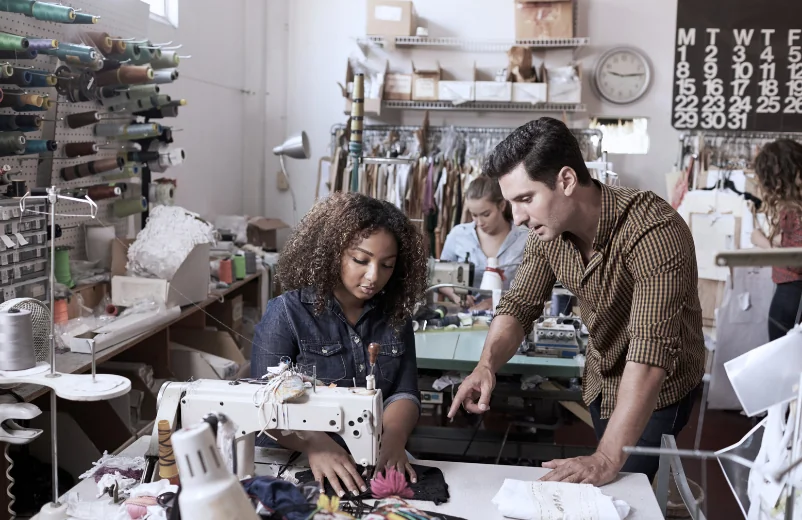
After conducting a relevant search and selecting potential manufacturers, before contacting them, you should consider the following questions to ask them to gain a more specific insight into who they are, what they offer, and how they work.
- What is your MOQ or minimum order quantity per style?
- How many sizes are included in the MOQ?
- How do you calculate quotations?
- How fast is your typical response time?
- What manufacturing processes or technological innovations are included in your garment production process?
The last two matter more than the rest. A factory that will not sample is asking you to approve a garment you have never touched, and a factory that cannot tell you how price moves with quantity has not costed your garment yet.
Frequently asked questions about small batch clothing manufacturing
What counts as a small batch in clothing production?
There is no standard, which is the honest answer. In practice anything from a handful of pieces to a few hundred per style gets called small batch. Ask for the number rather than the label. Ours is 36 per style and colour, and we suggest 100 to 300 once a design is proven, so development cost spreads over more pieces.
What is batch production in clothing?
Making a set quantity of one style, finishing it, then moving the line to the next style. It sits between one-off tailoring and continuous mass production, and it is how nearly every fashion brand is actually made, whatever the volume.
Which clothing manufacturers take small orders?
Factories that have organised their cutting and line changes around it. The tell is not what a website claims but whether they will quote 40 pieces without the price per unit becoming absurd, and whether they can say why the setup costs what it costs.
Are there cut and sew manufacturers with low minimums?
Yes, and cut and sew is usually where low minimums are easiest to find, because you supply fabric and trims and the factory only sews. The trade is that sourcing becomes your job. Full package costs more per piece and removes that work.
Does a small run cost more per garment?
Yes. Pattern making, marker making and machine setup cost the same whether you make 36 pieces or 3,000, so with fewer pieces each one carries more of it. That is arithmetic rather than a penalty, and it is why we suggest moving to 100 to 300 as soon as a design proves itself.
How we work
GAT Fashion Lab is a clothing manufacturer in Cali, Colombia, working with brands from first sample to finished order for over twenty years. We take runs from 36 pieces per style and colour, develop the garment with you, buy the fabric and trims, produce and audit quality at four points before shipping. What we do not do: denim, structured outerwear such as coats, and anything sold from a catalogue.
Tell us what you want to make in our quoting tool and you will have an estimate in minutes at no cost, with an advisor following up. From Colombia to the world.