
MOQ is the minimum order quantity a manufacturer will accept. In apparel it is set per style and per colour, not per order, which is the detail that catches most brands out. A low MOQ in this industry means roughly 30 to 100 pieces per style and colour.
That per-colour clause is worth reading twice. A minimum of 50 sounds manageable until three colourways make it 150, and a supplier who quotes only the first number is not being dishonest so much as answering the question you asked.
Why factories set a minimum at all
It is not a negotiating tactic. Every style carries fixed costs that happen once regardless of quantity: drafting and grading the pattern, making and correcting the sample, buying fabric in whatever the mill's own minimum is, ordering trims and labels with their own minimums, and setting up the cutting table and the sewing line for that specific garment.
Spread over 36 pieces those costs dominate the price of each one. Over 300 they nearly disappear. The minimum is the point below which the factory would be working at a loss or charging a per-unit price that would shock you.
The fabric constraint is the one brands find hardest to argue with. Mills sell by the roll and dye by the batch. If a colour requires a minimum dye lot, no amount of goodwill from the sewing plant changes that number.
What counts as low
| Range per style and colour | Who operates there |
|---|---|
| 1 unit | Print on demand, decorating existing blank stock. Not manufacturing |
| 10 to 50 | Sample houses, ateliers and very small workshops. Highest cost per piece |
| 30 to 100 | Genuinely low for real production. Plants organised around short runs |
| 100 to 300 | Where development stops dominating the unit price. The efficient band |
| 500 to 1,000+ | Export volume plants. Best unit price, and out of reach for a launch |
Ours opens at 36 pieces of a style in one colour, and we point brands at 100 to 300 because that is where the arithmetic starts working in your favour rather than ours. The reason is supply as much as cost: a second run of 36 is another 30 to 45 business days away, so a style that sells out leaves you with roughly two months of nothing to ship at the exact moment demand proved itself.

What a low MOQ costs you
Nothing is free here, and a supplier who implies otherwise is hiding the cost somewhere.
- Higher price per garment. Unavoidable, and the honest trade. You are buying the right to be wrong in small amounts.
- Narrower fabric choice. At low volume you work with what is in stock or with fabrics the plant already buys, because ordering a bespoke roll for 36 pieces rarely makes sense.
- Lower priority in the queue. Not always, but a plant juggling a 5,000-piece order and a 40-piece order will sometimes make the obvious choice.
- Fewer suppliers to choose from. The set of plants that will take a short run is much smaller than the set that exists.
Against that, you can carry more styles at less risk, and you can produce something that stays scarce on purpose. Both are worth real money to the right brand.
Who a low minimum actually suits
Low minimums get read as the beginner's option, and that is the wrong way round. The arithmetic only closes at the upper end of a range.
The reason is the one above: a short run divides the same fixed costs among fewer garments, so the unit cost is high and stays high. That is affordable in exactly one situation, which is when the garment sells at a price with room in it. Labels producing something distinctive in deliberately limited numbers are the natural fit, because scarcity is part of what they are selling and the margin carries the cost comfortably.
Where it does not work is a product competing on price. There the unit cost gap is the margin, and no amount of flexibility compensates for it. If your plan depends on a low price per garment, you need volume, and you need a supplier built for volume.
So the question a low minimum answers is not whether you can afford to start. It is whether your product can carry a higher unit cost, and that is a question about the garment rather than about the size of the company. Plenty of small labels pass it easily and plenty of large ones do not.
How to find a manufacturer with a low minimum
- Ask the question correctly. "What is your minimum per style and per colour?" Both numbers, in writing, before anything else.
- Look for plants that describe short runs as normal. A factory built for 5,000-piece orders will quote you 500 as a favour and treat your order like one.
- Ask what fabric options exist at that quantity. The real constraint often lives here rather than in the sewing.
- Check whether the minimum drops on a repeat. Some plants lower it once the pattern exists and the development is paid for.
- Consider the region. Nearshore plants in Latin America and Eastern Europe tend to open far lower than large offshore export factories. Why that is.
If your quantities are genuinely tiny, below any real production minimum, the honest alternatives are print on demand or a sample house, and both are better answers than pressuring a factory into a run it cannot cost properly. What print on demand covers.
Working out your own number rather than accepting a supplier's is a separate exercise, and how many units to produce walks through it.
Frequently asked questions about low MOQ clothing manufacturers
What does low MOQ mean?
MOQ stands for minimum order quantity, the smallest order a supplier will accept. Low MOQ means that minimum is small enough for a brand producing in short runs, which in apparel is roughly 30 to 100 pieces per style and colour.
What does MOQ mean in business?
The smallest quantity a supplier is willing to sell in a single order. It exists because fixed costs per order, setup, materials minimums and administration, have to be covered whatever the size.
Is MOQ per style or per order?
In apparel, per style and almost always per colour as well, because each combination is a separate pattern setup and a separate fabric lot. Confirm this explicitly, because it changes the total substantially.
Can I negotiate a manufacturer's MOQ?
Sometimes at the margin, more often not. Where there is room is in accepting fabric the plant already holds, or in combining styles that share a fabric. Where there is no room is below a mill's dye lot minimum.
Are there clothing manufacturers with no MOQ?
Not in real production. Suppliers advertising no minimum are decorating existing blank stock, which is a different service. Made-to-order tailoring has no minimum either, at a cost per garment that does not scale.
Does a low MOQ mean lower quality?
No. It means the plant is organised for shorter runs, which is a different production setup rather than a worse one. Judge the sample in your hands, not the minimum on the quote.
What is a typical MOQ for a startup clothing brand?
Most brands launching realistically look at 50 to 300 pieces per style and colour depending on the supplier and the garment. Below that the per-unit cost climbs steeply, and above it the inventory risk climbs instead.
Low minimum manufacturers in the USA, and the nearer alternative
Domestic plants in Los Angeles and New York do take small runs, and the calendar is the shortest available to a US brand. What you are paying for is labour: American sewing rates sit several times above Latin America, and the fabric usually crosses a border anyway. The maths works while the run is tiny and stops working as soon as it grows.
Brands that want the short calendar without the domestic rate look one region south. Colombia and Mexico are a few flight hours from either coast, the knit is local, and small opening quantities are normal rather than a favour. The comparison worth running is landed cost against weeks to shelf, not price per piece.
How we work
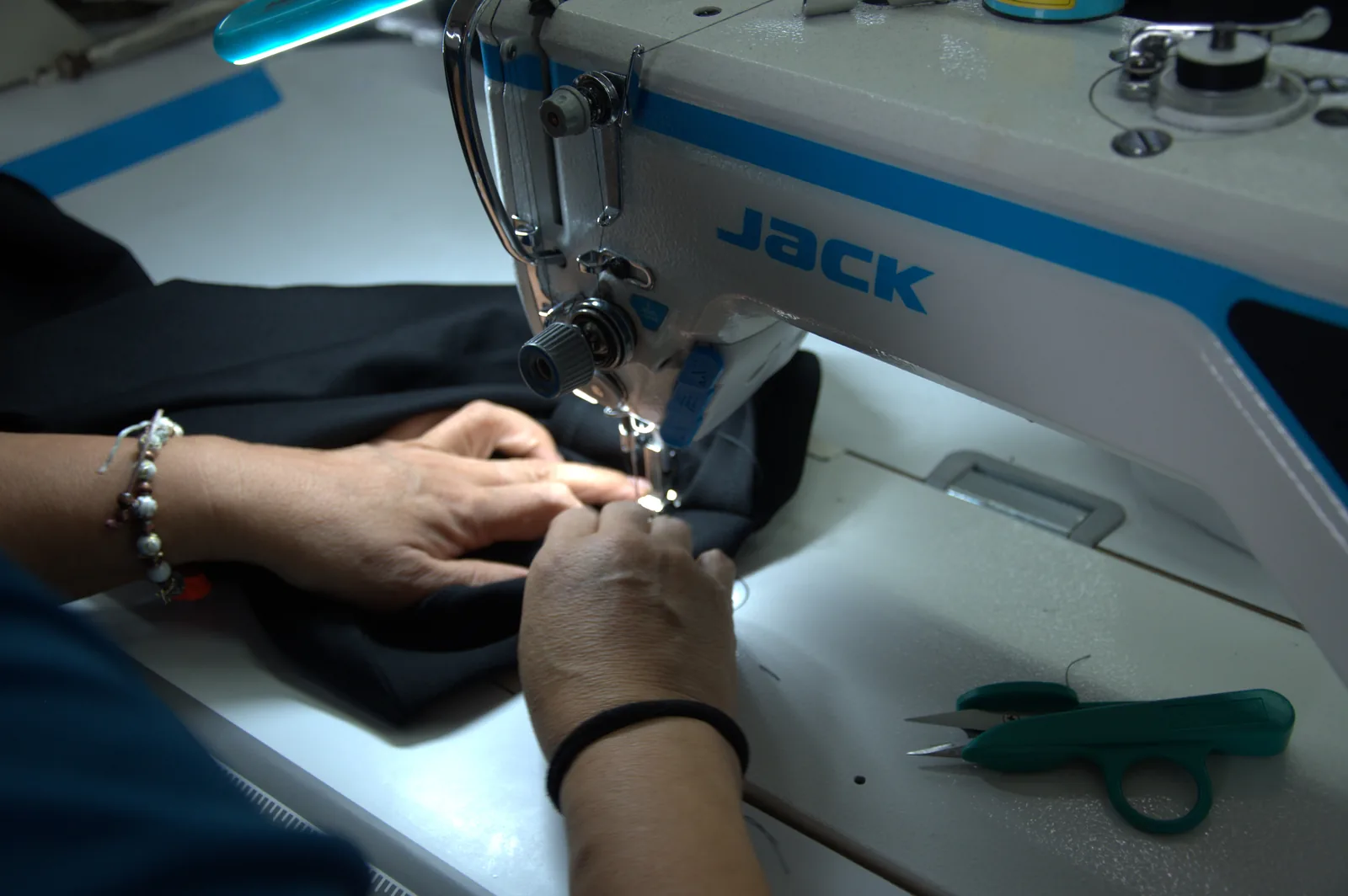
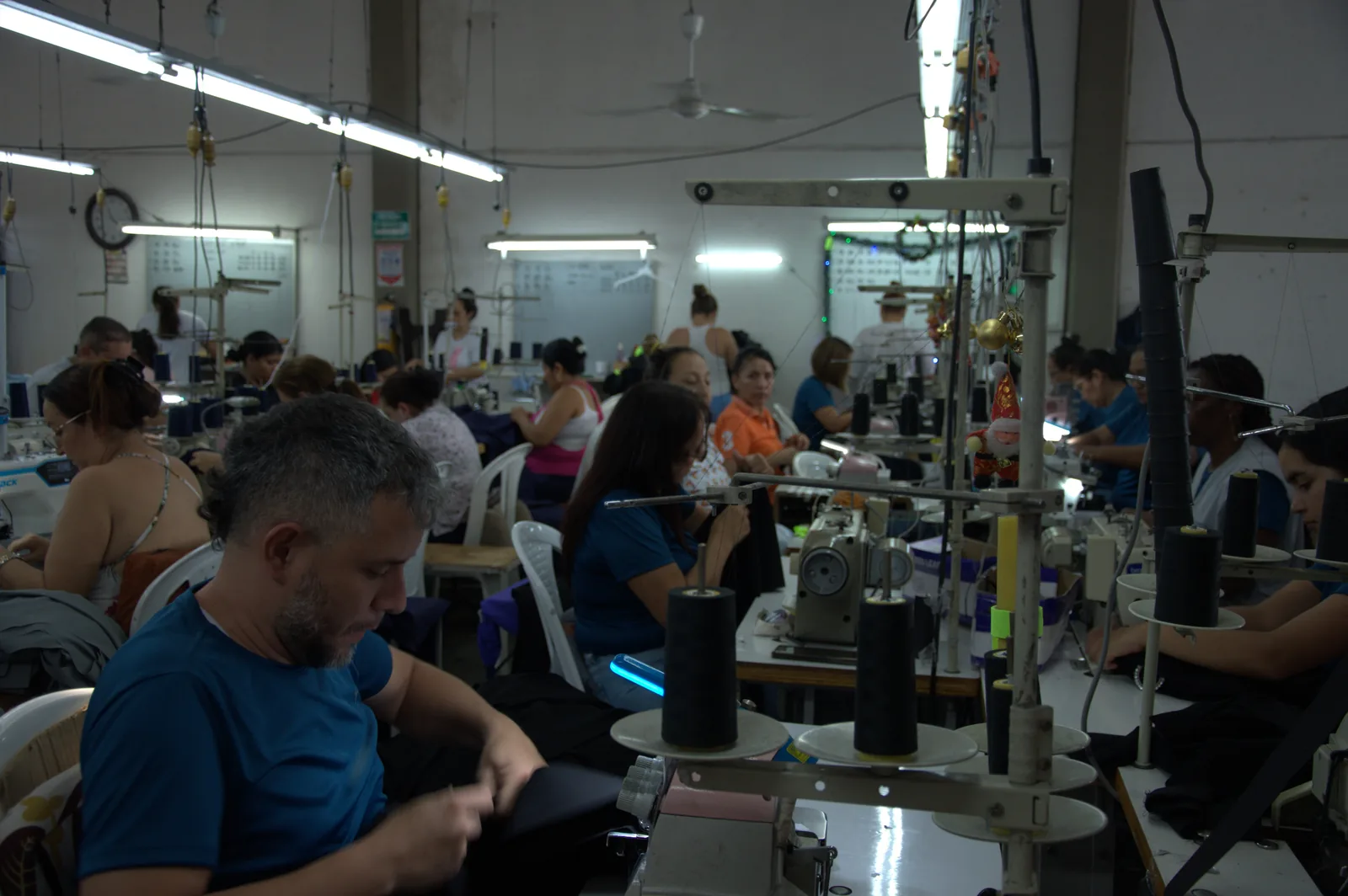
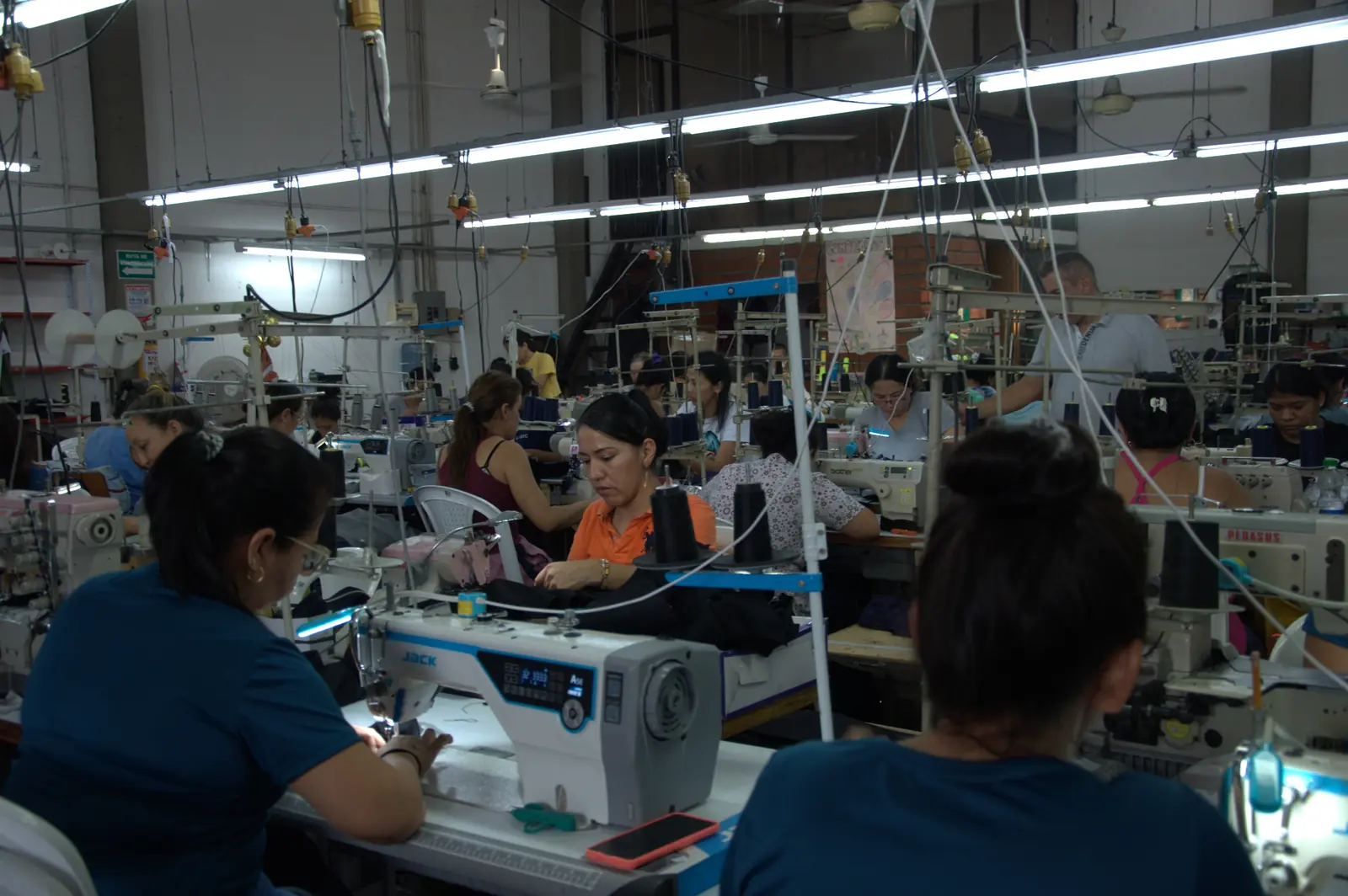
GAT Fashion Lab takes orders from 36 pieces of a style in one colour, which is low for real production and is a deliberate choice rather than a promotion. We produce full package in Cali, Colombia, buying the fabric and trims, developing the pattern from your reference and inspecting during the run. Two things we do not make: denim and tailored outerwear.
To see what your quantity costs per garment before you commit to it, run the garment through our quoting tool. Free, and an estimate in minutes. From Colombia to the world.