
Wholesale means buying another brand's finished product to resell under their name. White label means buying an unbranded product and selling it under yours. In wholesale you own neither the brand nor the design. In white label you own the brand, and the design still belongs to the factory.
That single distinction decides everything downstream: your margin, who you compete with, and whether you are building an asset or running a shop. The rest of this page is what each one costs in practice.
The comparison
| Wholesale | White label | |
|---|---|---|
| Whose name is on the label | Theirs | Yours |
| Whose design is it | Theirs | The factory's, shared with other buyers |
| Who you compete with | Everyone stocking the same brand | Everyone selling the same unbranded garment |
| Marketing you must fund | Little. The brand is already known | All of it. Nobody has heard of you |
| Margin | Thin, and pressured by other stockists | Higher, if the brand earns it |
| Speed to selling | Fastest. Buy and list | Fast. Add labels and packaging |
| What you own after three years | Inventory | A brand, or nothing, depending on what you built |
Both are distinct from private label, where the manufacturer adapts a garment for you and may grant exclusivity, and from custom production, where the pattern is yours outright. Private label against white label covers that boundary.
What white label at wholesale volume really means
Most searches that combine the two words are looking for the same thing: unbranded stock, bought in quantity, to relabel. That is a real market and it works like this. A manufacturer runs a garment as a standing line, sells it blank in case quantities, and every buyer applies their own labelling. Your cost falls with volume, and so does your distinctiveness, because the buyer next to you is getting the same garment at the same price.
The practical consequence is that white label competes on brand and on merchandising, never on product. If your plan is to win on the garment itself, this is the wrong model and no volume discount fixes that.
Which wholesale garments are easiest to relabel
Not all of them are, and the difference is in the construction.
- Easiest: t-shirts, hoodies, sweatshirts, tote bags and caps. The brand label sits at the neck or inside a side seam, and it can be removed and replaced without touching the garment's structure.
- Workable: leggings, joggers and basic knitwear. Same idea, though a printed neck label instead of a sewn one means the garment has to come blank from the factory rather than be de-labelled.
- Hard: anything with the brand woven into the fabric, printed on the outside, moulded into hardware, or embroidered as a design element. Removing it damages the piece.
- Not worth it: outerwear, tailoring and technical garments. High unit value, complex construction, and buyers who look closely at exactly the details a relabel cannot change.
The reliable route is to buy blank from the start rather than to de-label finished stock. Ask suppliers for their unbranded programme, which most that offer this have, and confirm before ordering that the neck label is sewn rather than printed.
What wholesale gets you
Recognition you did not pay to build. Customers already trust the name, which shortens the sale and drops your advertising spend close to zero. It scales easily because there is nothing to develop, and you can add or drop lines by the season.
The cost is that you own none of it. Other stockists carry the same product, so price is the only lever you control and everyone pulls it in the same direction. You do not set the price, the assortment or the marketing, and if the brand decides to sell direct, your position changes without your consent. In several markets you also need a resale or wholesale licence before you can buy at trade prices, so check what applies where you operate.
What white label gets you
The brand equity, which is the only durable asset in this list. You control the customer relationship, the pricing, the packaging and the story, and that is what lets a garment carry a higher price than its production cost implies.
The cost is that all of it is work you fund. Nobody knows your name, so every sale is bought with marketing until the brand starts pulling its own weight. You carry supplier risk directly: a factory that delivers late, delivers badly, or stops delivering is now your problem in front of your customers. And because the garment is shared, a competitor can appear selling the identical piece under a different name and undercut you.
Which one to pick
Ask what you want to own in three years. If the answer is a functioning shop with reliable turnover, wholesale is a legitimate and much simpler business. If the answer is a brand people ask for by name, wholesale cannot get you there, because you would be building recognition for someone else's label.
If it is the brand you want, the follow-up question is whether the garment needs to be yours too. If it does, white label is a waypoint and not a destination, and the next step is production against your own pattern. Custom clothing manufacturing sets out what that involves.
Frequently asked questions about white label and wholesale
What is the difference between wholesale and private label?
Wholesale is reselling a branded product made and marketed by someone else. Private label is having a manufacturer produce a garment that you sell as your own, usually adapted for you and sometimes exclusive. The brand ownership is the whole difference.
Are white label and private label the same?
Related but not identical. White label products are generic and sold in the same form to many buyers. Private label allows adaptation for the buyer and sometimes exclusivity, so it sits a step closer to having your own product.
Can I buy white label clothing at wholesale prices?
Yes, that is the standard arrangement. Suppliers offer blank stock in case quantities and the price drops with volume. Confirm the minimum per style and per colour, since those are two separate numbers.
Do I need a licence to buy wholesale?
It depends on your country and sometimes your state or region. Many places require a resale certificate or trade registration before a supplier will sell at wholesale prices. Check the local requirement before you plan around a launch date.
Is white label cheaper than manufacturing my own garment?
To begin with, clearly yes, because you are not funding development. Per garment at scale it stops being cheaper, and it never gives you a product a competitor cannot buy.
Which model has better margins?
White label, when the brand works. Wholesale margins are set by what other stockists of the same product will accept, and that number only goes down.
What a wholesale clothing label is
A wholesale clothing label is a brand that sells its finished garments in bulk to retailers rather than to the person who wears them. The label designs and produces, the retailer buys at trade price and sets the shelf price. It describes a distribution model, not a manufacturing one, which is why the same garment can be wholesale for one company and white label for another.
The confusion is worth clearing up before you sign anything, because the two contracts protect different things. A wholesale agreement negotiates margin, exclusivity by territory and return terms. A white label agreement negotiates the label itself, the minimum, and whether the supplier can sell the same base to your competitor.
How we work
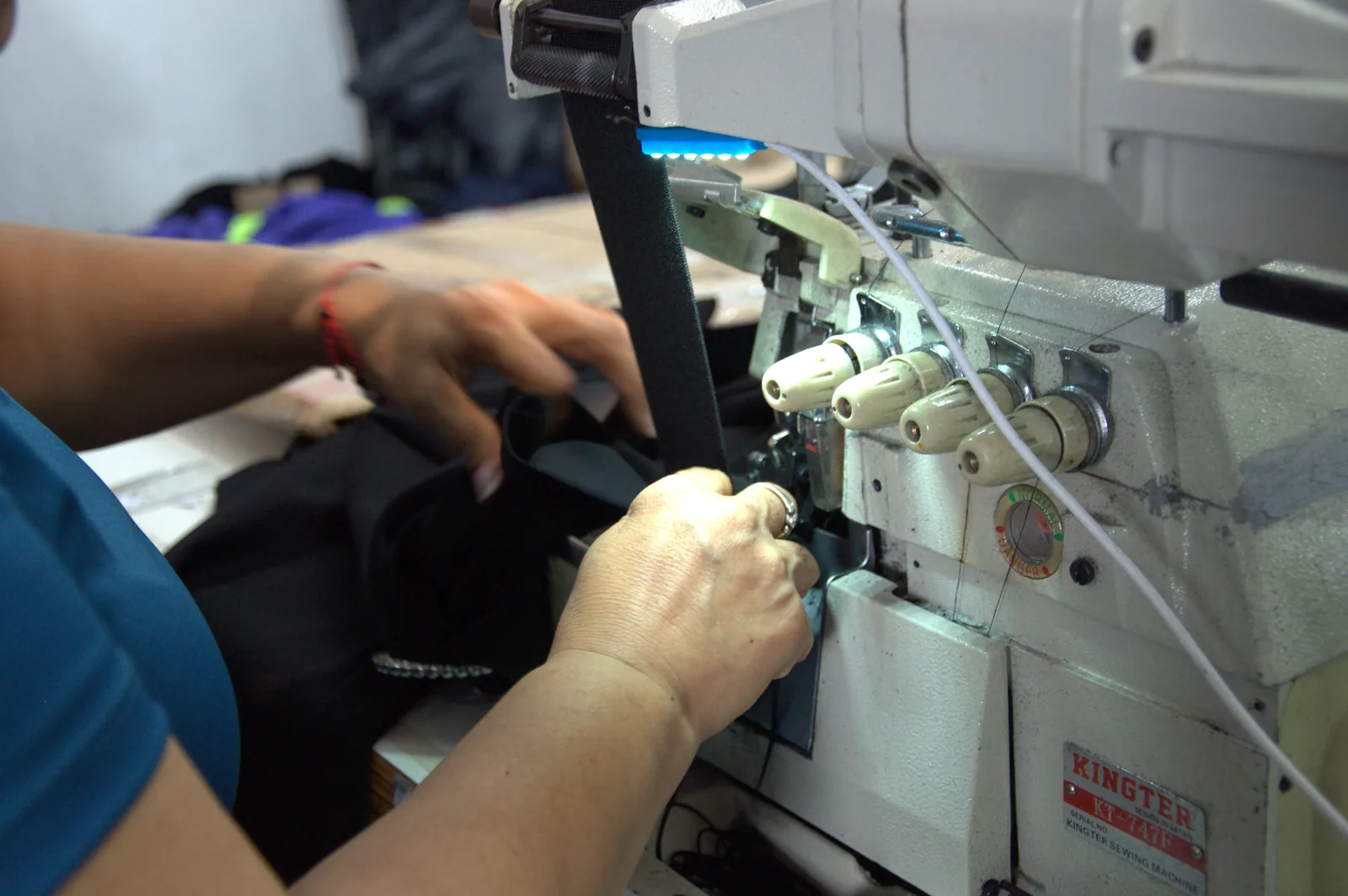
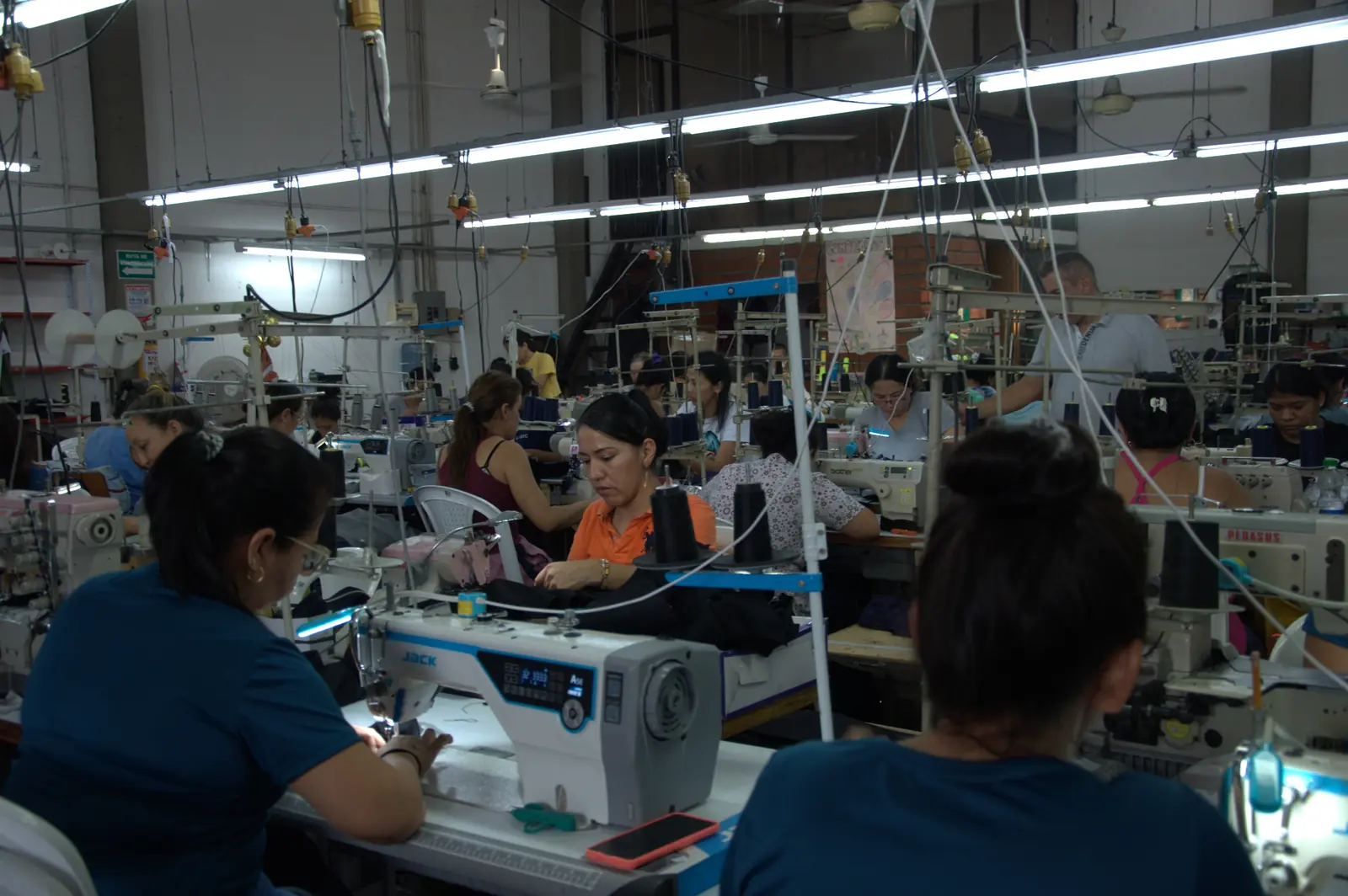
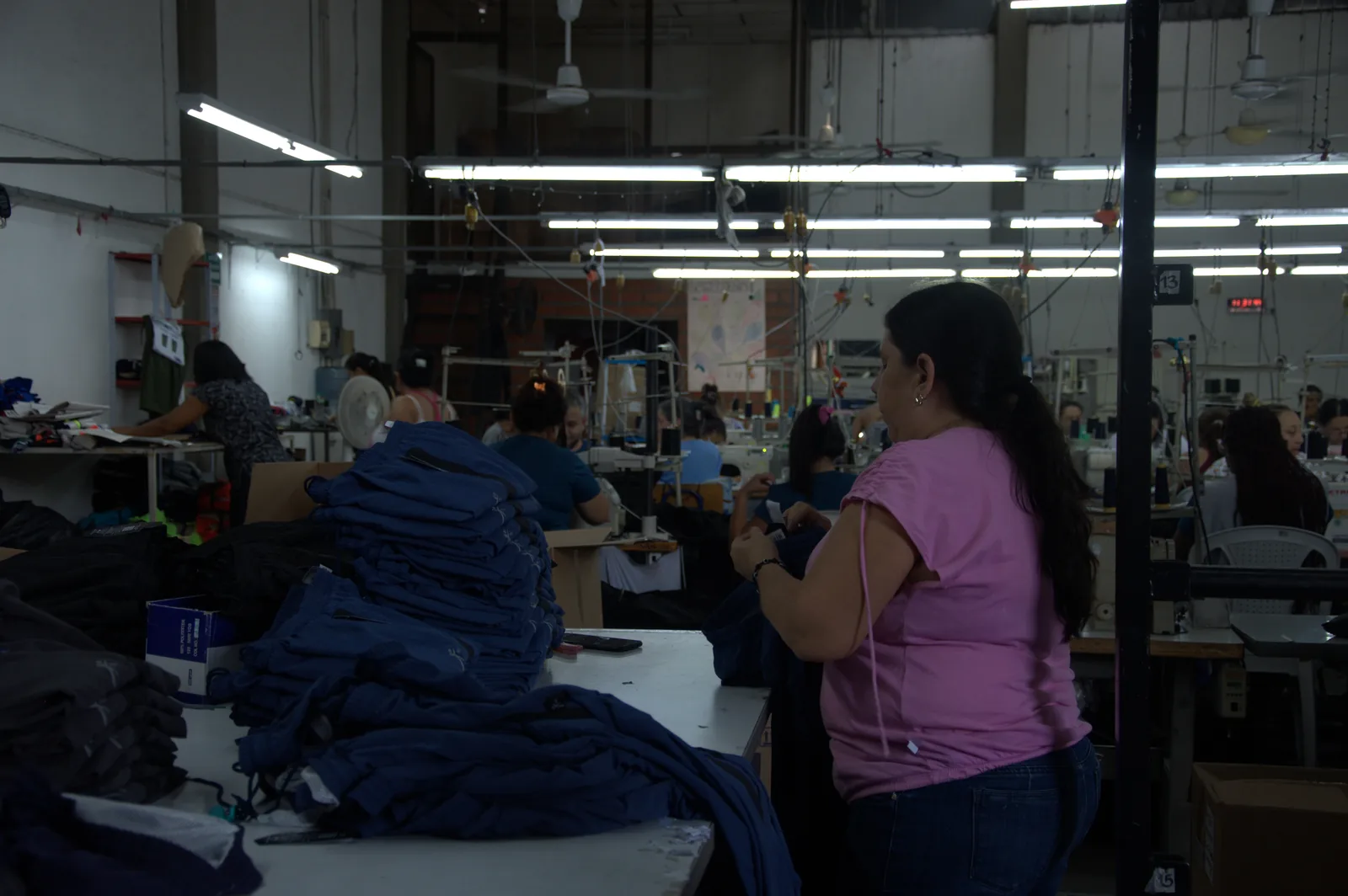
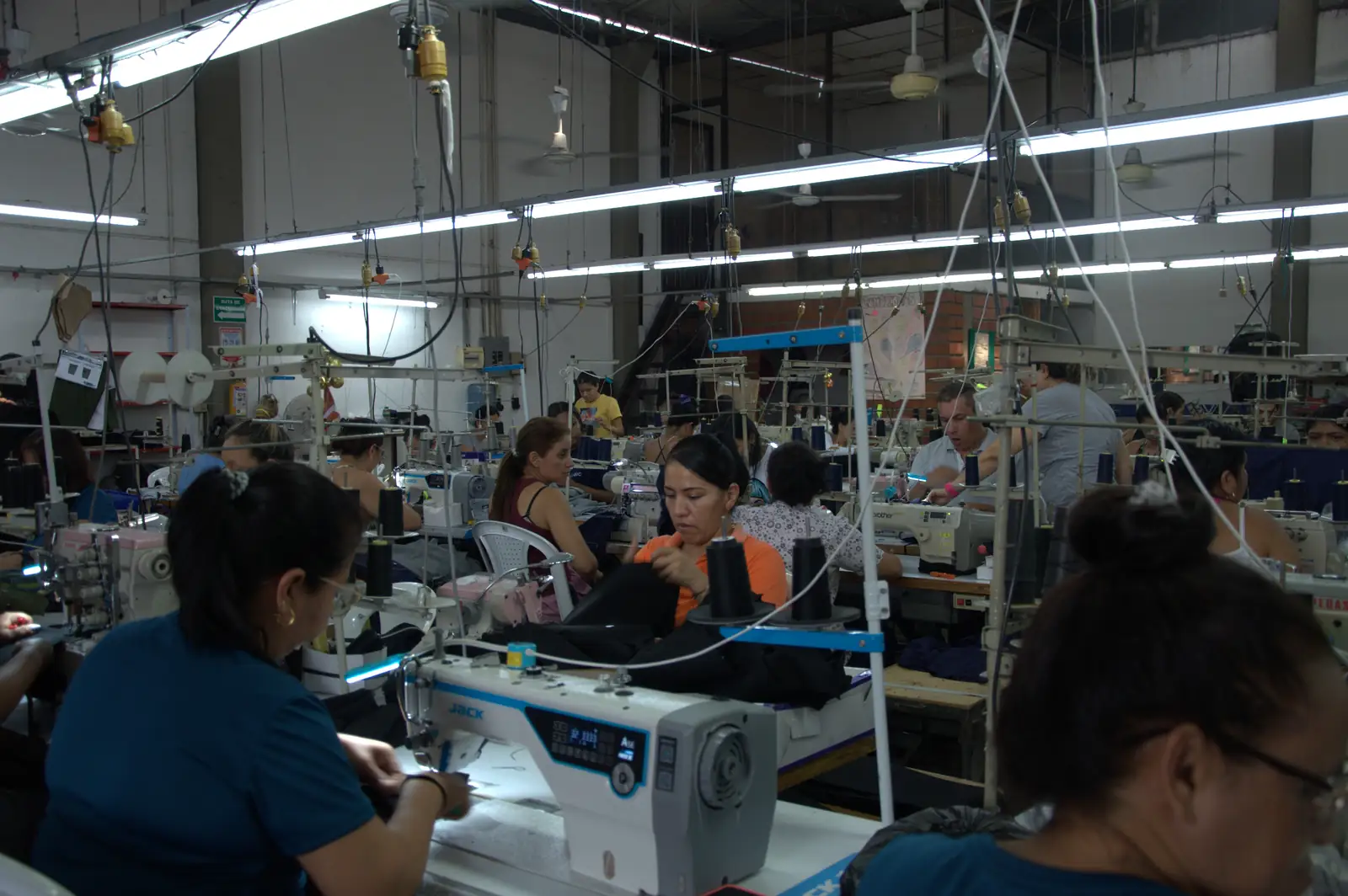
GAT Fashion Lab is neither of the two models on this page. We develop and produce garments to the specification of the brand that commissioned them, in Cali, Colombia, and have done for over twenty years. There is no blank catalogue to relabel here, which we say plainly because it saves the wrong enquiry a week. What we are useful for is the step after white label, when the garment itself has to become yours, which is the way we work as a white label clothing supplier.
Describe what you want built in our quoting tool and the estimate comes back the same session. No charge to ask. From Colombia to the world.