
White label clothing is a garment that already exists, made once and sold to many buyers who each add their own label. Private label clothing is developed for one brand and produced only for that brand. The difference is not the label. It is who owns the design.
Both terms get used as if they meant the same thing, and the confusion is expensive. Brands ask for one, budget for the other, and find out which one they bought when a competitor turns up with the identical garment. Our plant in Colombia takes both kinds of order, and from the inside the two briefs look nothing alike. What follows is that difference described from the production side, which is narrower and more useful than the dictionary one.
What white label clothing is
White label clothing is a finished garment produced without any maker's branding and sold to whoever wants to buy it. The buyer adds the labels, the hangtags and the packaging, then sells it as their own. The manufacturer designed it, the manufacturer holds the pattern, and the same garment goes out to every other buyer who orders it.
The term comes from retail rather than from fashion. White labeling is a business model before it is a product: a supplier builds something generic and resellers put their own name on it. In grocery that produced the store brand. In apparel it produces the blank tee, the basic hoodie and the plain polo that a dozen brands sell with a dozen different logos on the chest.
That is worth stating bluntly, because it is the part that surprises people. Buying white label means buying a garment your competitors can also buy. You control the label and the price. You do not control the product.
What private label clothing is
Private label clothing is developed for one brand. You bring a design, a reference garment or a sketch, and the factory turns it into a pattern, a physical sample and then a production run that carries your name and nobody else's. The pattern belongs to your brand and the maker does not resell it.
The common description of private label as "ready-made garments you can customise" is where most of the confusion starts, and it is simply wrong. Customising a finished garment is white label with extra steps. Private label means the garment is built to your specification: your fabric, your fit, your construction, your finishing. It costs more and takes longer for exactly that reason.
What you get for the extra time is a product nobody else can order. That is the point of the model, and it is why brands planning to be around in five years tend to end up here. The production side is covered in private label clothing manufacturing.
White label versus private label, side by side
The two models split on six things that matter to a brand owner, and a table is the fastest way to see them together.
| What it decides | White label | Private label |
|---|---|---|
| Who designs the garment | The manufacturer | Your brand, with the factory's technical team |
| Who else can sell it | Anyone who orders it | Nobody |
| What you can change | Label, hangtag, packaging | Fabric, fit, construction, trims, finishing |
| Time to first delivery | Days or weeks, the garment exists | Two to eight weeks for an approved sample, then 30 to 45 business days of production |
| Up-front cost | Lower, nobody pays for development | Higher, development is real work |
| What you own at the end | Inventory | Inventory and a pattern |
Read the last row twice, because it is the one that compounds. After three seasons of white label you have sold garments. After three seasons of private label you have a library of patterns that belongs to you and a factory that already knows how your brand fits.
Private label vs white label examples
The clearest examples sit in mass retail, where the scale makes them visible. Target sells Universal Thread, Original Use and Prologue in its own stores. Those are not suppliers you can hire. They are Target's own private label brands, designed for Target, produced for Target and available nowhere else. That exclusivity is the reason a retailer invests in building them instead of reselling somebody else's product.
The white label version of the same shelf is the unbranded blank that a print shop buys by the hundred, prints and sells under its own name, while the shop across town buys the identical blank from the identical supplier. Nothing is wrong with that model. It is fast, it is cheap to enter, and it is how plenty of brands test whether anyone wants what they are selling. It just does not build anything a competitor cannot copy by placing the same order.
Most brands we work with start on one and move to the other. They validate demand with something generic, and once the numbers hold they come back wanting a garment that is theirs.
White label manufacturing: what the phrase means on a factory floor
"White label manufacturing" gets searched a great deal and answered badly, usually by pages selling sourcing directories. The honest version from the production side: a factory doing white label work is running its own catalogue. It developed the styles, it holds the patterns, it produces them in volume, and it sells the same garment to everyone. Efficient, and completely uninterested in what your brand wants to look like.
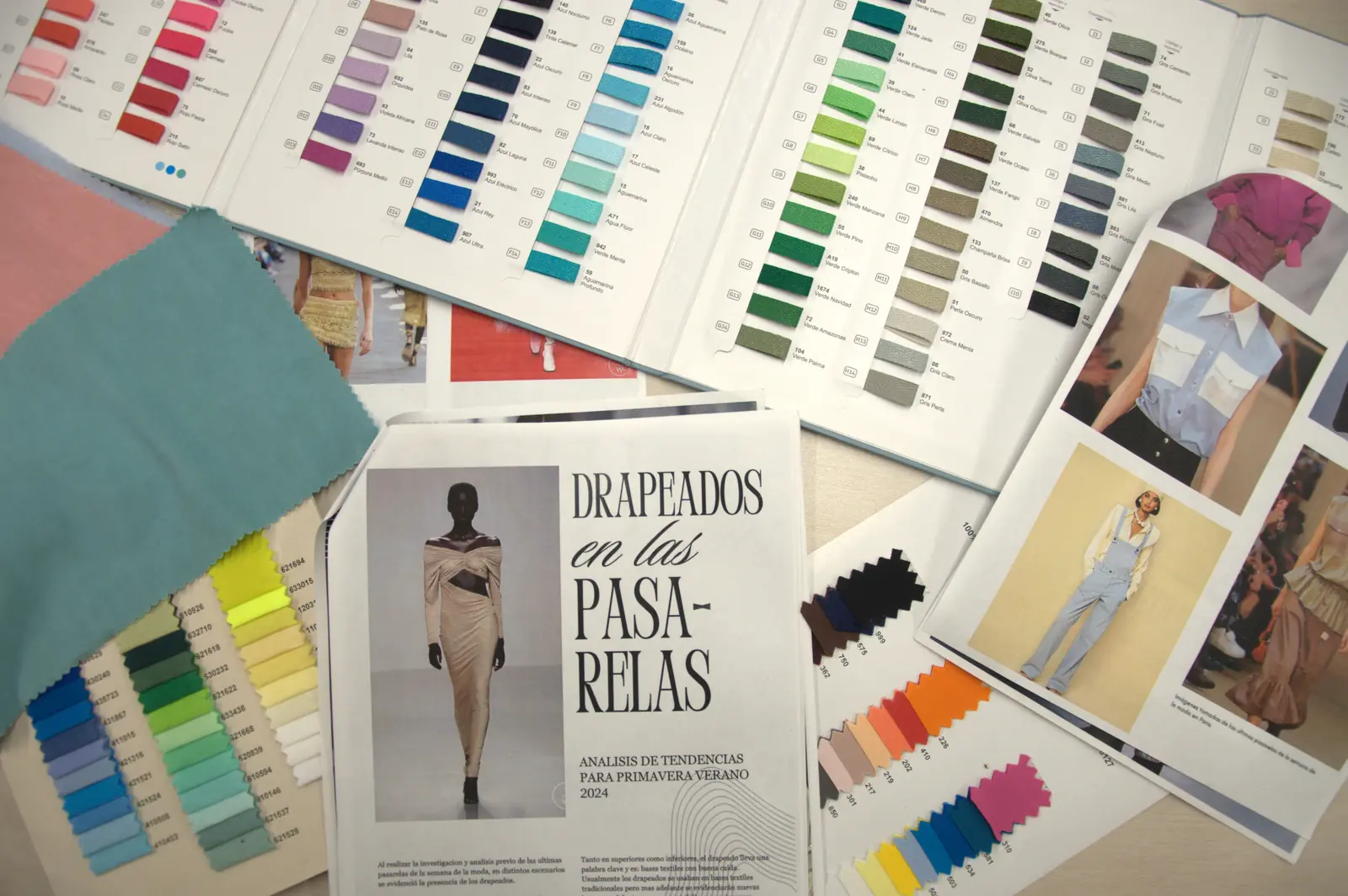
A factory doing private label work runs your catalogue instead, and that changes what happens before a single machine starts. Someone has to read your reference, draft the pattern, source fabric and trims that hit your price and your hand feel, sew a sample, then wait while you decide whether it is right. Development is the job. Production is what happens once the argument is settled.
In numbers, on our side: we start at 36 pieces per style and colour, we recommend 100 to 300 so the development cost spreads properly, and we run styles into the thousands for brands past that stage. A physical sample you have signed off on lands in two to eight weeks, depending on how much of the garment has to be invented. The production run then needs 30 to 45 business days, counted from that approval, and every lot passes four quality checkpoints before it ships. The restock clock runs on its own. Once a style sells through, the next batch still needs 30 to 45 business days, which is what the 100 to 300 band protects.
Where we are not involved is worth saying too. Your photography, your store and your advertising stay yours. We make the garment.
Which model fits your brand
White label makes sense if you are testing an idea, if speed matters more than difference, or if the garment genuinely is a commodity in your category. Blanks for printing are the honest use case, and treating them as more than that is how brands end up with a warehouse of product they can only defend on price.
Private label makes sense when the garment is the product. If your customer buys you because of how something fits, how a fabric feels, or a detail nobody else has, a catalogue garment cannot carry your brand no matter what the label says.
The segment question comes up constantly and the answer holds across all of them. Women's, menswear, activewear or designer, the model does not change with the category. What changes is how much development the garment needs: a women's blouse with a fitted block takes more pattern work than a boxy tee, so it sits further into private label territory whether you planned it that way or not.
Brands producing for the United States usually ask a second question, about landed cost. We quote EXW by default, which values the goods at our facilities in Colombia, and DDP is available when it is agreed up front. That is how we ship for Daniel González and Uncommon Runner. Import duties and customs charges are set by the destination country, so treat any landed figure as provisional.
Frequently asked questions about white label and private label clothing
What does white label mean?
A product made by one company and sold unbranded to others, who put their own name on it. In clothing, the garment already exists before you arrive and stays available to every other buyer after you leave.
Is white label the same as private label?
No. White label sells the same garment to many brands. Private label develops a garment for one brand and produces it only for that brand. Both end up with your logo on the label, which is why they get confused, and only one of them stops a competitor from selling the identical product.
What is white label vs private label in terms of cost?
White label costs less up front because nobody is paying for development. Private label carries pattern making, sampling and sourcing before a single production piece exists. You are trading speed and price against exclusivity and fit, and it only pays off if your customer can tell the difference.
What is the difference between private labeling and white labeling as business models?
Private labeling is a brand commissioning a product it will own. White labeling is a supplier building a product many brands will resell. The words describe who initiated the design, not who prints the tag.
Can I get design exclusivity on a private label garment?
Yes, and it should be in writing before production starts. Exclusivity in practice means the factory does not sell your pattern or your development to anyone else. Ask for it explicitly, because a verbal understanding is worth very little when a similar order comes through the same plant.
Do I need technical files to start?
No. A reference image is enough to begin. Our team builds the tech pack during development, which is the part most brands assume they have to arrive with.
White label womenswear and designer lines
White label women's clothing applies the same arrangement to the category with the most fit variation of all. Blouses, dresses and tailored pieces carry more pattern work per style, so a supplier listing womenswear as white label is usually offering a fixed block you rebrand, not a fit developed for your customer. Check the size chart before the price list: if it is generic, so is the garment.
Designer white label sits one step up. The base garment is better constructed, the fabric list is shorter, and exclusivity is negotiated instead of assumed. It still is not your pattern, which is the line that separates the model from custom manufacturing.
How we work
GAT Fashion Lab has been making clothing in Colombia for over twenty years, for brands at home and for brands that export. One team carries development, sourcing, production and quality auditing, which means you deal with a single counterpart instead of coordinating five suppliers. Two limits are worth knowing before you write to us: there is no catalogue here, so nothing can be bought off a shelf, and denim and structured outerwear such as coats sit outside what we do.
To see what your garment would cost and how fast it could ship, describe it in our quoting tool and we will come back with numbers. There is no cost, the first estimate takes minutes, and an advisor picks it up from there. From Colombia to the world.