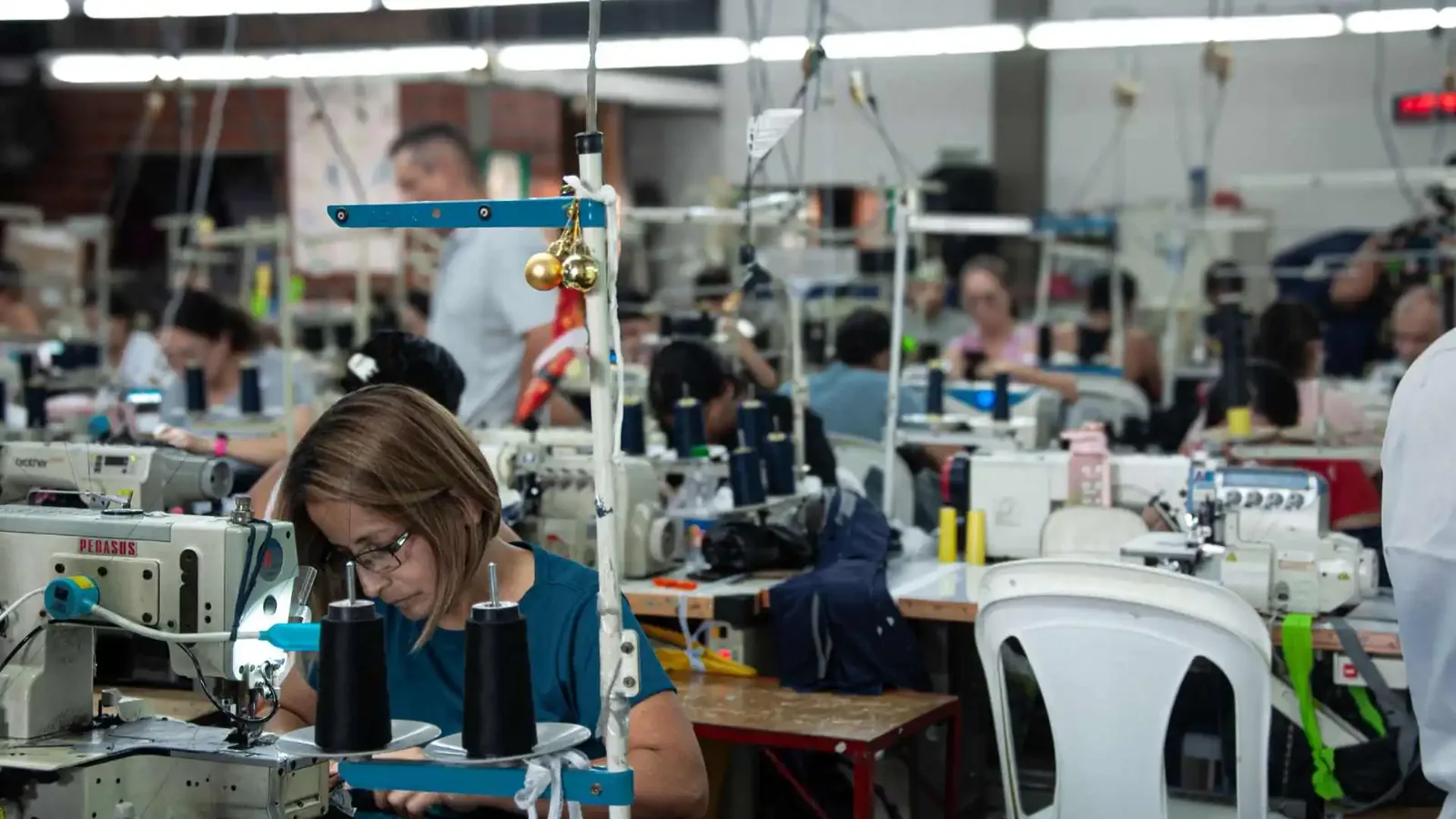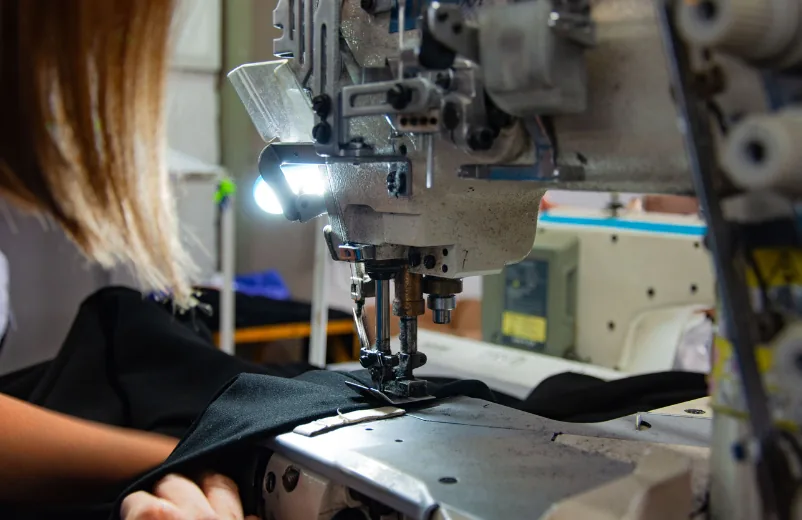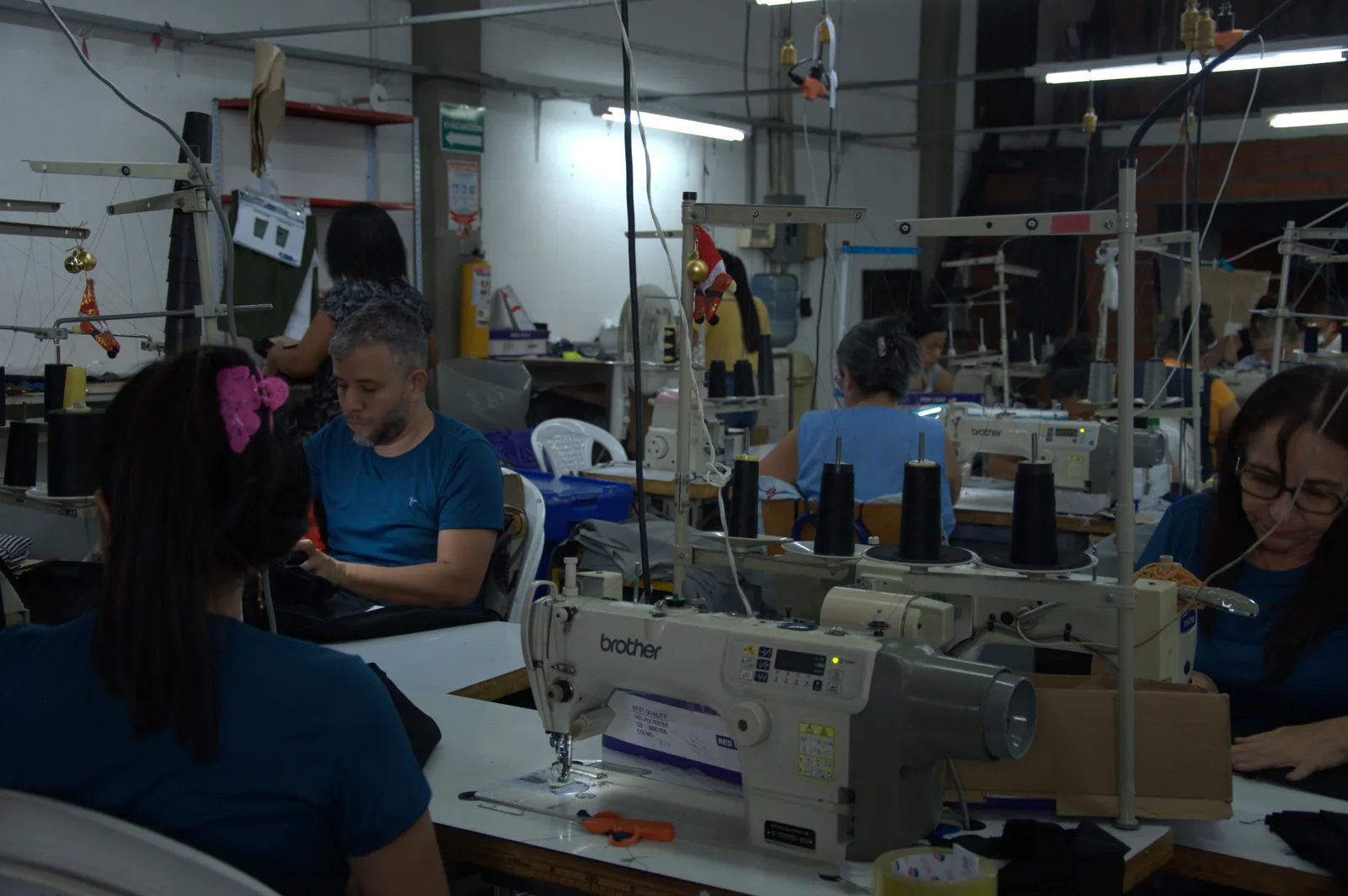

Colombian garment production is concentrated in Medellín, Bogotá, Cali and the Atlantic coast, and most plants never appear in search results. The routes that reach them are the sector's trade fairs, ProColombia's supplier directory, and referrals from fabric suppliers. Confirm the service model before you compare any price.
We are one of these factories, so treat this as a guided tour rather than an impartial ranking. What we can give you that a directory cannot is the vocabulary that decides whether your first email gets answered, and the questions that separate a real producer from an office with a sample room.
Where the industry is, and what each region does
| Region | What it is known for |
|---|---|
| Medellín and Antioquia | The largest concentration. Knitwear, denim, activewear, and the country's biggest trade fairs |
| Bogotá | Tailoring, outerwear, corporate and uniform production, plus most head offices |
| Cali and Valle del Cauca | Swimwear, activewear, knit tops, and full package development for export brands |
| Atlantic coast | Swimwear and lighter garments, with proximity to Caribbean shipping |
The practical use of this table is filtering. A plant built for denim will quote your swimwear reluctantly and produce it worse than a specialist would, and geography is a fast first proxy for what a workshop is equipped to do.
Know which service you are asking for
This is the step that determines whether the conversation works, and it is where most foreign enquiries fail. Four models exist and the words get used loosely.
- Maquila or CMT. Sewing labour. You send the pattern, the graded sizes, the fabric and the trims. They cut and sew.
- Full package. One supplier carries development, pattern, sourcing, production, quality and dispatch. You send a reference and approvals.
- Private label. They already developed a garment and sell it to you with your label on it.
- Dressmakers and ateliers. Individual garments made to measure. Excellent for one piece, not a production route.
Asking a maquila for a full package price gets you a number that excludes fabric, development and trims, and it will look dramatically cheaper than a full package quote for exactly that reason. Full package against CMT compares the two.
The four routes that reach an actual plant
Trade fairs
The most efficient day you can spend. Colombiamoda in Medellín is the largest event in the country and brings together manufacturers, fabric mills and trim suppliers in one venue. Inexmoda organises it and several others through the year. Ixel Moda in Cartagena and Bogotá Fashion Week lean more towards brands and design, and still put you in a room with the right people.
Institutional directories
ProColombia is the government's export promotion agency and maintains a supplier directory for textiles and apparel. It is free, the listings are verified to a basic standard, and its staff will answer questions about exporting from Colombia. For a foreign brand this is usually the best cold start available.
Fabric and trim suppliers
The best referrals in this industry, and the least used. Mills and trim distributors know who buys consistently, who pays on time and who produces well, because they see all of it. The catch is that you have to be able to talk about fabric first.
Brands already producing here
Ask brands whose product you admire who makes it. Many will not say, and some will. It costs an email.
What to have ready before you write
A plant reading an enquiry is deciding whether the conversation will cost more than it returns. You improve your odds enormously by including four things, even provisionally: what the garment is, roughly how many units, what fabric direction you have in mind, and when you need it. A reference photograph covers most of the first one.
You do not need a technical file. Under full package it gets built during development, and arriving with one drawn for a different factory sometimes creates more work than it saves.
Six questions before you compare prices
- Which service is this quote for? Maquila or full package. Everything else depends on the answer.
- What is the minimum, per style and per colour? Two numbers, and only one usually gets quoted.
- Where does production physically happen? An address, and whether you can visit it.
- Lead time in business days, counted from what? From sample approval and from purchase order are very different promises.
- Is the price EXW or DDP? Values at the plant in Colombia, or delivered to your country. Comparing one against the other is comparing nothing.
- Who inspects quality, and when? During the run or after it.
Why brands produce in Colombia
For a United States brand the arguments are proximity and time zone. A shipment is days rather than weeks, the working day overlaps almost entirely, and you can fly down and be on the floor the same afternoon. Minimum orders also tend to be far lower here than in Asia, which matters more to a growing brand than a small difference in unit price.
What Colombia is not is the cheapest option on the planet. If your model depends on the lowest possible unit cost, Asia will beat it. The case for producing here rests on speed, oversight and being able to order quantities you can actually sell. Why US brands manufacture in Latin America takes that further.
Frequently asked questions about Colombian clothing manufacturers
Where are most clothing manufacturers in Colombia?
Medellín and the surrounding Antioquia region hold the largest concentration, followed by Bogotá, Cali and the Atlantic coast. Each has developed different specialities, so the right city depends on your garment.
What is the minimum order with a Colombian manufacturer?
It varies widely by plant. Ours opens at 36 pieces of a style in one colour, which is low for the sector, and 100 to 300 is where costs settle. That band is about supply as much as price: reordering the minimum means waiting 30 to 45 business days again, and a style that sells through in three weeks has nothing behind it. Larger export-oriented plants often start in the several hundreds.
Can a foreign brand produce in Colombia?
Routinely, and many do. What you need is a supplier that handles export documentation, and clarity on whether you are buying EXW or DDP. ProColombia exists precisely to make this easier for foreign buyers.
Is it cheaper to manufacture in Colombia than in Asia?
Usually not on unit price alone. It is frequently cheaper on total landed cost for brands selling in the Americas, once freight, lead time and the cost of holding inventory are counted, and it is far cheaper on minimums.
How do I verify a Colombian factory is real?
Ask for the production address and go, or send someone. Failing that, ask them to describe a recent order from reference to dispatch, and ask which stages are subcontracted. A producer answers both without hesitating.
What is a maquila in Colombia?
Sewing services, sometimes including cutting, on materials the client supplies. It is the local term for CMT, and it is a different purchase from full package.
Columbia or Colombia: the spelling that ruins the search
Searches for "columbia clothing manufacturers" and "columbian clothing manufacturers" almost always mean Colombia, the country. Columbia with a u is a river, a US state capital and a sportswear brand, so the results mix three unrelated things together. If you are looking for a plant in Medellín, Cali or Bogotá, the spelling is Colombia, with an o, and adding the city name filters out the rest.
Buying wholesale clothing in Colombia versus having it made
Wholesale in Colombia means buying finished stock somebody else designed, usually out of the San Victorino district in Bogotá or the Medellín trade fairs. The unit price is low and the goods ship the same week, but the garment is not yours: the identical reference sits in a hundred other stores. Manufacturing means the pattern, the label and the fabric belong to you, and nobody else can order that reference.
How we work
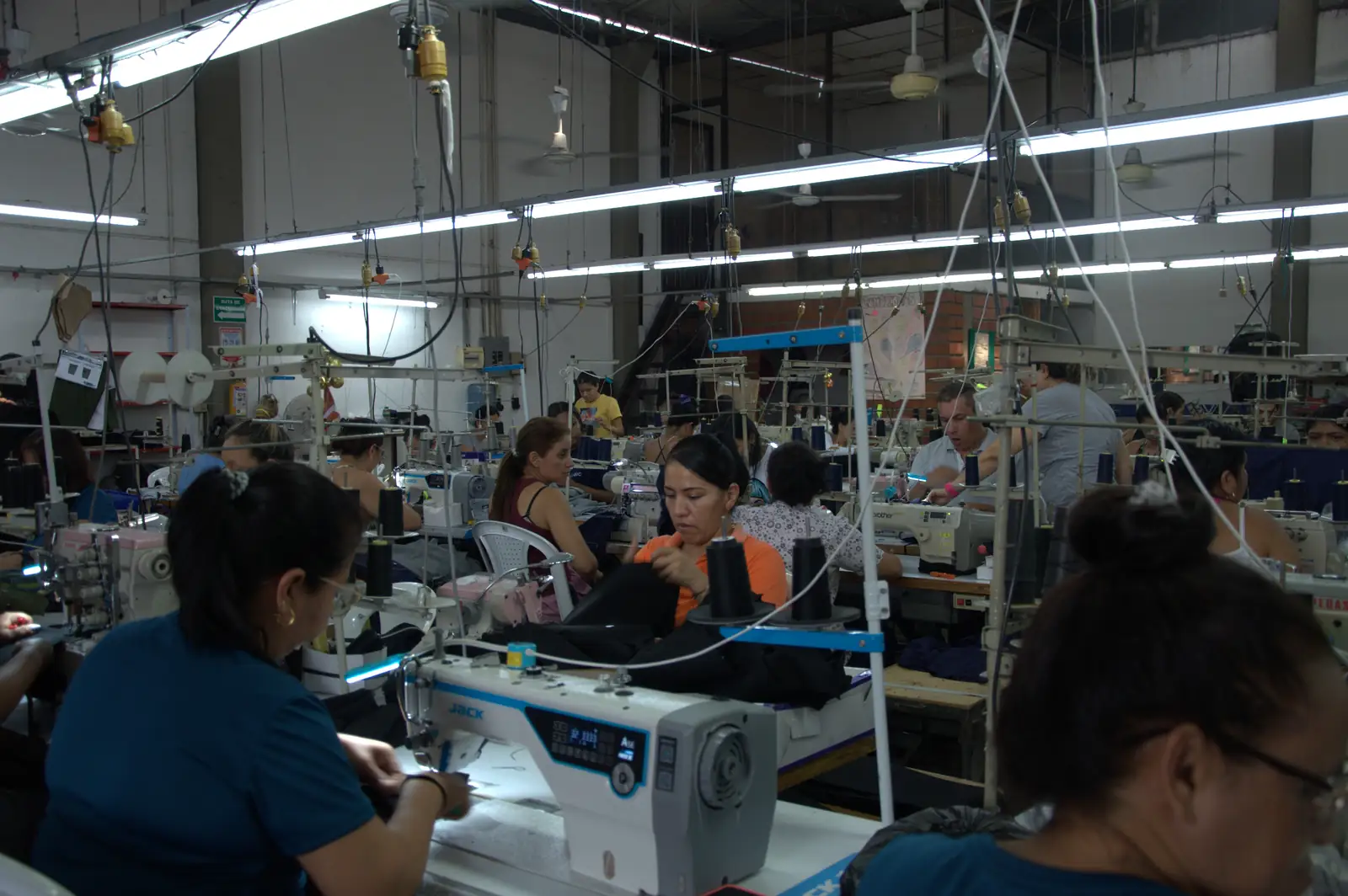
GAT Fashion Lab is a full package manufacturer in Cali, working with a team of more than 130 people and over twenty years of production for recognised brands here and abroad. We develop the garment from your reference, buy the fabric and trims, produce, inspect at four points during the run, and dispatch. What we make is defined by the machines on our floor, which is a more useful answer than a category name. Cut and sewn from woven or jersey fabric, yes: blouses, dresses, tops, shirts, tees, and sports jerseys and team kit. What needs flatseam construction, no, which rules out leggings and compression wear. Knitwear knitted to shape, no. Denim, swimwear, shapewear, lingerie, leather and structured tailoring, also no. Colombia is famous for several of those, and we would rather point you elsewhere than take the order.
To see a real number for your garment produced here, describe it in our quoting tool. No cost, minutes to an estimate, then a person. From Colombia to the world.