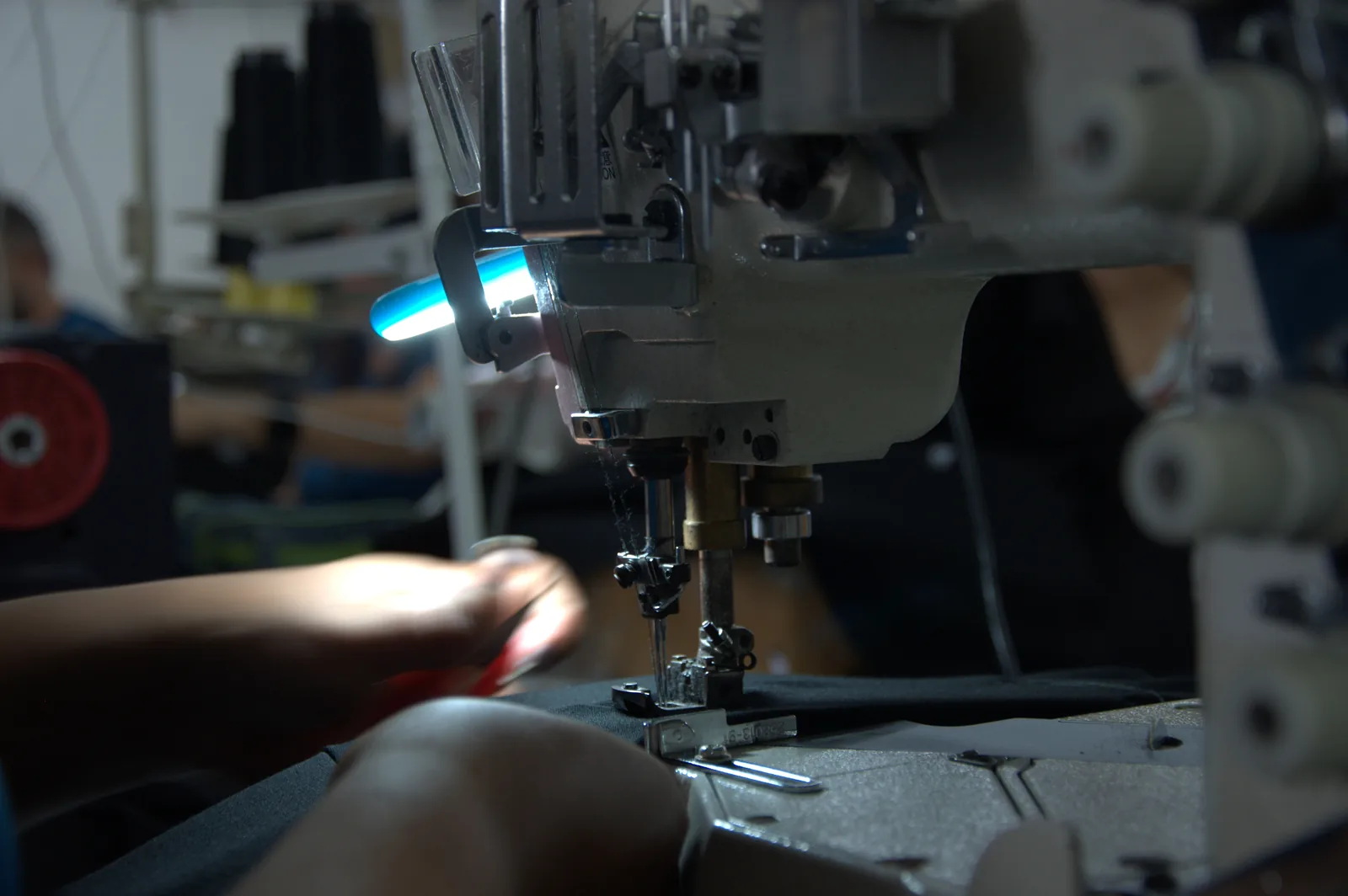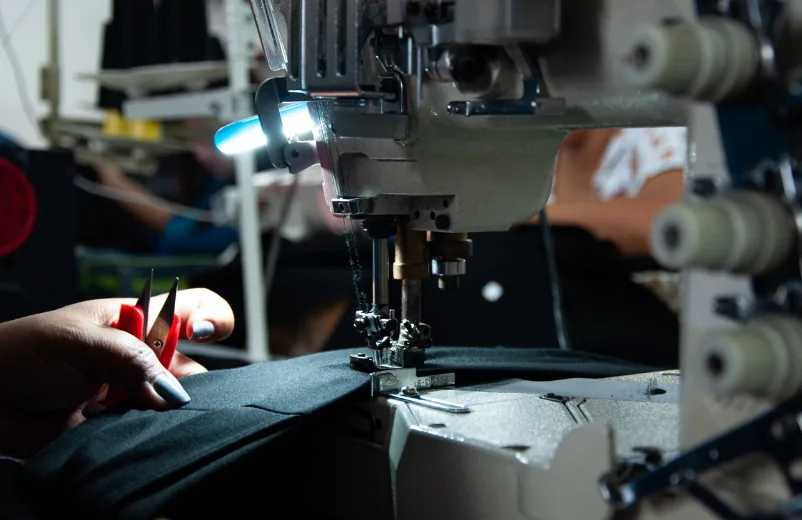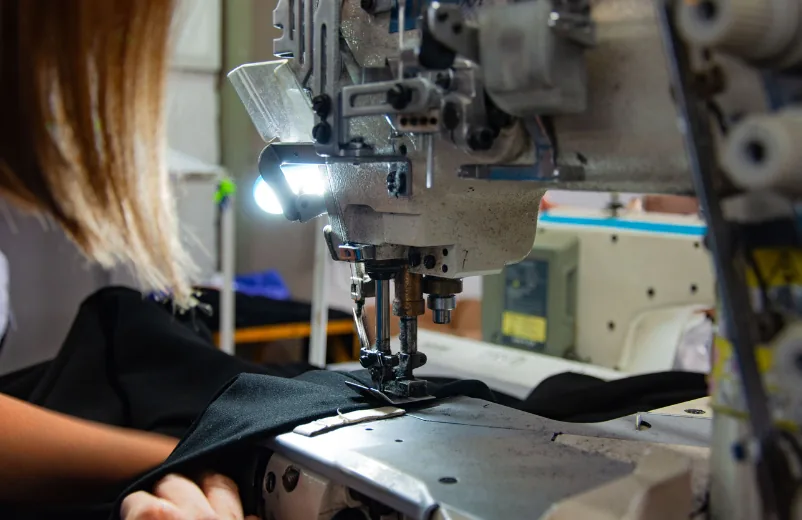

FPP manufacturers are found through trade fairs, national export directories and referrals from fabric suppliers. The harder part is verification, because the label is unregulated: any supplier can call itself full package, and plenty do while subcontracting the parts that make the model worth paying for.
What full package covers as a service is explained in what full package production is. This page is about the search and the vetting, which is where the money is actually lost.
The four things a real FPP supplier does
Before you can vet one, be precise about what you are buying. A full package manufacturer takes a garment from your reference to inspected stock and, critically, does these four itself or has genuine control over them.
- Development. Pattern, grading and technical file drawn for your garment.
- Sourcing. They buy the fabric and the trims, carrying the purchasing risk and the mill relationships.
- Production. Cutting and sewing, on machines they control.
- Quality. Their own people inspecting, during the run rather than after it.
A supplier that outsources all four is a broker. That can still be a useful arrangement, and it is a different product at a different price, and you should know which one you have.
Where to look
- National export promotion agencies. Most producing countries run one with a supplier directory. Free, lightly verified and a person answers. The best cold start there is.
- Trade fairs. A day in a hall replaces weeks of email, and you can hold their product.
- Fabric and trim suppliers. The most informative channel. Mills know which plants buy consistently and whose orders come back.
- Brands already producing. Ask brands at your scale whose quality you want. Some answer.
Full package availability varies enormously by country. It is the norm in Colombia, Turkey and Portugal, and much rarer in markets built around cut-make-trim, where you will find sewing capacity and have to buy development elsewhere.
How to tell a plant from a broker
Six questions. A producer answers all of them without pausing.
| Ask | What the answer reveals |
|---|---|
| Where is the production unit, as an address? | A broker hesitates or gives an office |
| Can I visit, and when? | The single most reliable filter there is |
| Who draws the pattern, and where do they sit? | Development in-house is the core of the model |
| Which mills do you buy from? | A real sourcing operation has relationships and will name categories |
| Who inspects, and at what points in the run? | After the run means faults become remakes |
| Walk me through a recent order, reference to dispatch | A producer tells a specific story. A broker generalises |
What to confirm before the first order
- Minimum, per style and per colour. Two numbers, and only one usually gets quoted.
- What the quote includes. Fabric, trims, labels, packing, development, samples. Get the list, not the total.
- How many samples are covered. Almost nobody approves on the first one.
- Lead time in business days, from what milestone. From sample approval and from purchase order are different promises.
- Commercial term. EXW, FOB or DDP. Comparing across terms compares nothing.
- Who owns the pattern afterwards. Ask explicitly. It should be you.
- The defect policy. What happens, who pays, and on what timeline.
- Payment schedule against milestones. Tied to sample approval and dispatch, not to dates.
Frequently asked questions about FPP manufacturers
What is an FPP manufacturer?
A supplier that handles full package production: development, material sourcing, manufacturing and quality control, delivering finished garments. FPP stands for full package production.
How do I find full package clothing manufacturers?
Through national export directories, trade fairs, fabric supplier referrals and brands already producing. Availability varies by country, so the region you search in matters as much as how you search.
How do I know a full package manufacturer is genuine?
Ask for the production address and visit. Ask who draws patterns and where they sit. Ask which mills they buy from. A plant answers all three specifically, and a broker does not.
Is full package more expensive than CMT?
Per garment, yes. In total, frequently not, because a CMT quote excludes fabric, trims, development and the coordination time you will spend. Add those before comparing.
What should a full package quote include?
Fabric, trims, labels, development, an agreed number of samples, production, quality inspection and packing, stated under a specific commercial term. If any of those are missing, they are still costs, just yours.
Do I keep the pattern after production?
You should, and it is worth putting in writing before the first order rather than discovering the answer when you want to move production.
How we work
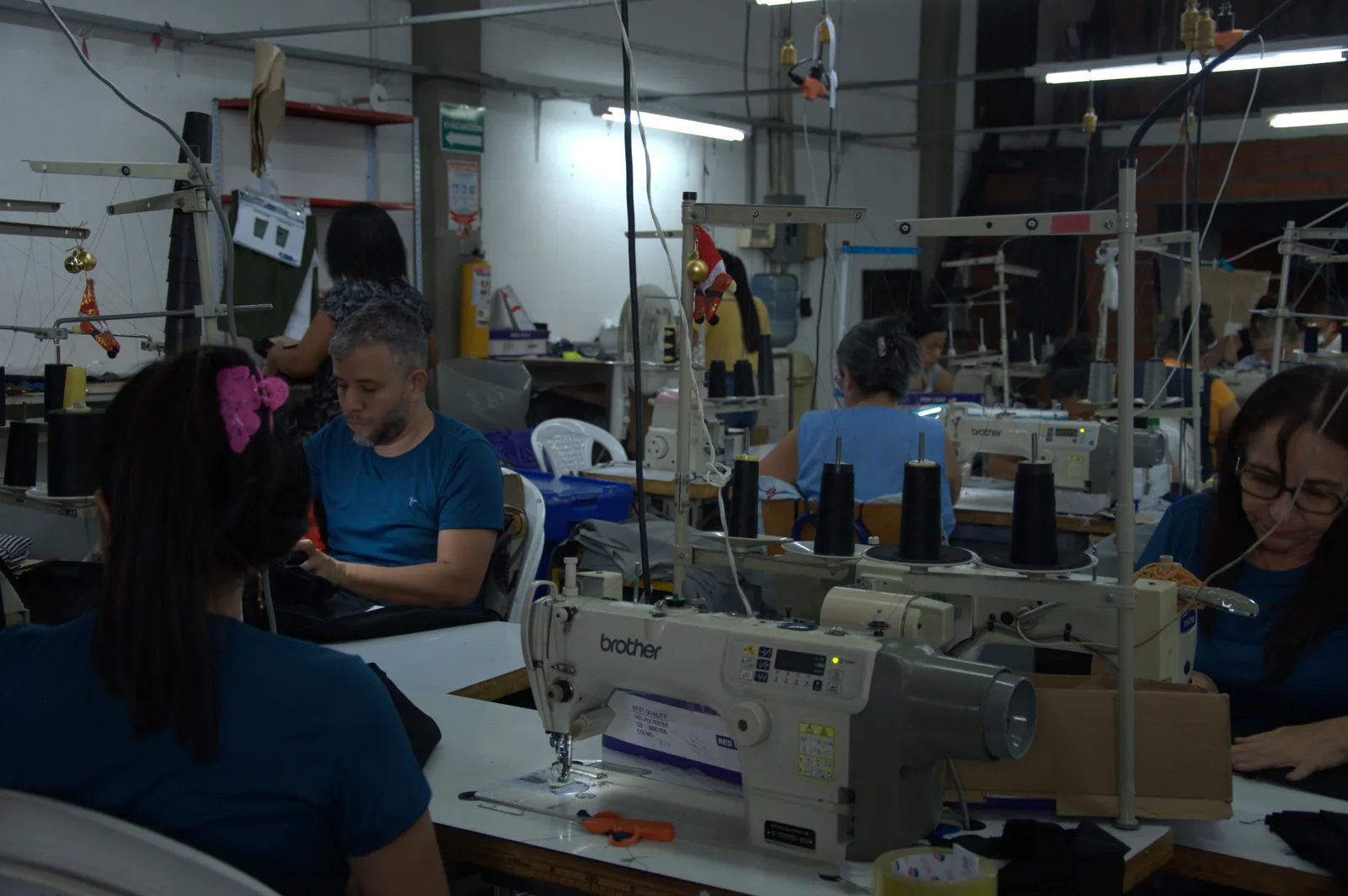
Applying the six questions above to ourselves: GAT Fashion Lab produces in Cali, Colombia, at an address you are welcome to visit. Pattern making sits in the same building as the cutting table. We buy fabric and trims directly. Quality is checked at four points during the run by our own people. Orders open at 36 pieces of a style in a single colour, development runs two to eight weeks, production 30 to 45 business days from sample approval. Ordering at the floor means the next batch is that same 30 to 45 days away, so treat 36 as a test quantity rather than a supply plan. Denim and tailored outerwear are outside what we make.
To get a full package number for your garment, describe it in our quoting tool. No cost, an estimate in minutes, then a person. From Colombia to the world.