
Four channels reach a custom clothing manufacturer: trade fairs, referrals from fabric and trim suppliers, brands already producing, and national export directories. Search engines build the long list and settle nothing, because plants with full order books have no reason to compete for search traffic.
The harder problem is not finding names. It is telling a manufacturer from an intermediary, and comparing quotes that describe different work. Both are solved by the same handful of questions.
First, decide what you are buying
Custom manufacturing means the garment is built to your design, with a pattern that belongs to you. That is a different purchase from private label, from white label, and from a decorator putting your logo on stock. Suppliers use all these words loosely, sometimes because the enquiry invited it.
Two questions place any supplier correctly, whatever they call themselves. Who owns the pattern? and who buys the fabric? Custom means the first is you. Full package means the second is them. The ten types of manufacturer maps the rest.
The four channels
Trade fairs
One day replaces weeks of email. You meet the people, hold their product and ask the awkward questions face to face. Every producing region runs sourcing and textile fairs through the year. The caveat everywhere: not every exhibitor makes what they display, so ask for the address of the cutting floor.
Fabric and trim suppliers
The best-informed channel and the least used. Mills sell to every plant in their region, so they know who buys steadily, who pays and whose work comes back. The entry price is that you have to be able to talk about fabric before you can ask.
Brands already producing
Find brands whose quality you want and whose scale resembles yours, and ask who makes it. Many decline, some do not, especially outside your direct competition. It costs one email.
National export directories
Most producing countries run a government agency whose job is connecting foreign buyers to local plants. Free, with basic verification, and a person answers. For a brand with no contacts in a country this is the highest-yield cold start and it is almost never used.

Why most enquiries get no reply
If you emailed plants and heard nothing, the message was the problem rather than the plants.
Whoever reads it is calculating one thing: whether you will cost more in hand-holding than you return. "I want to start a clothing brand, what are your prices" answers that badly. A reference photograph, an approximate quantity, a fabric direction and a delivery window answers it well, even if all four are provisional.
You do not need a technical file to make contact. You need to have decided what the product is. That distinction matters, because a lot of advice pushes new brands to arrive with patterns already drawn, which is expensive, premature and frequently discarded because the factory would have specified it differently.
How to compare quotes that are not comparable
The most common costly mistake is comparing a cut-make-trim price against a full package price and concluding the first supplier is cheaper. It is not. It excludes the fabric, the trims, the pattern and the development, all of which you will still have to buy.
Normalise before you compare:
- Is fabric included? If not, add your fabric cost and its freight.
- Is development included? Pattern, grading, tech pack, samples. If not, price it separately.
- Is it per style or per style and colour? The minimum changes the total more than the unit price does.
- EXW or DDP? Valued at their plant, or delivered to you. Between those two sits freight, insurance and duty.
- How many samples are in the price? Almost nobody gets it right in one.
Six questions that expose an intermediary
An intermediary is not necessarily a bad choice, and some add genuine value. What you cannot afford is not knowing which one you have.
- Where is the production unit, as an address?
- Can I visit it, and when?
- Which processes happen in that building, and which are subcontracted, and where?
- Walk me through a recent order, from reference to dispatch.
- What is your minimum, per style and per colour?
- What happens when a unit comes out defective?
A producer answers all six without pausing. An intermediary generalises on the first three.
Frequently asked questions about finding custom clothing manufacturers
How do I find a manufacturer to make my clothes?
Through trade fairs, referrals from fabric suppliers, brands already producing, and national export directories. Search results are useful for building a list and unreliable for choosing from it, because the best plants do not optimise for search.
How do I find a clothing manufacturer for a small brand?
Filter for minimums first, before anything else. Plants organised around short runs are a distinct group, and they describe short runs as normal work rather than as a favour. Everything else is secondary to whether they will take your quantity.
What is a custom clothing manufacturer?
One that builds a garment to your design, with a pattern developed for you rather than sold from a catalogue. It differs from private label, where the factory already owns the design, and from a decorator, who prints on existing stock.
How do I compare custom manufacturers online?
You cannot, fully, and treating an online comparison as sufficient is how brands end up with the wrong plant. What you can do online is build a shortlist and normalise the quotes. What decides it is a sample in your hands and a visit.
Do I need a tech pack to contact a manufacturer?
Not for the first conversation, and not at all under full package, where the technical file is drawn during development. Under cut-make-trim you will need one before a firm quote, along with the fabric, and our free tech pack template covers what goes in it.
How long does it take to find a manufacturer?
Weeks to months if you start from search results. Days if you start from a fair, a mill referral or an export directory, because those channels hand you contactable plants instead of marketing pages.
How we work
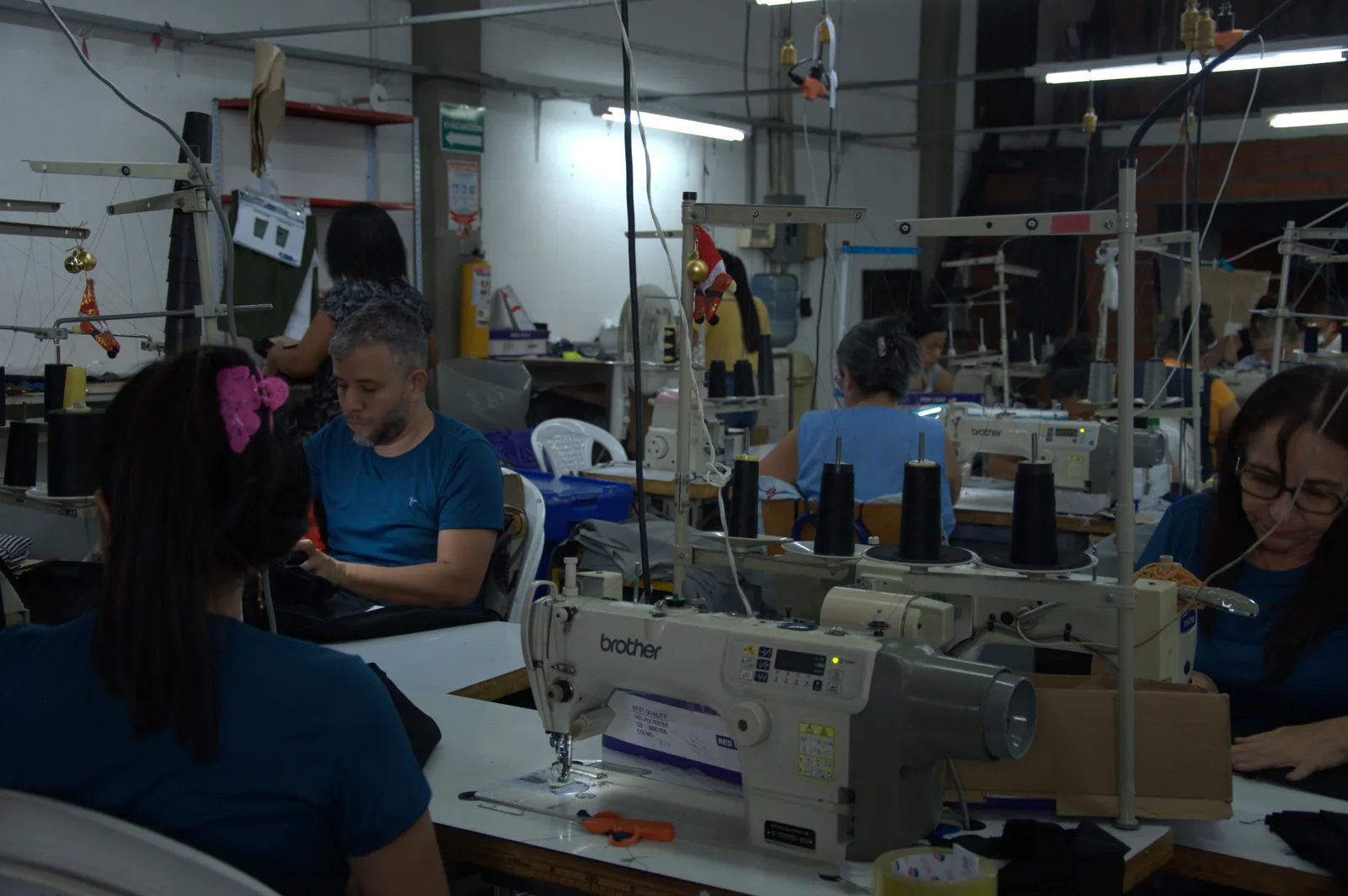
We are one of the plants those channels lead to. GAT Fashion Lab produces full package in Cali, Colombia, and has for over twenty years, with development, sourcing, production and quality inside one team. Orders open at 36 pieces of a style in a single colour, with the caveat that a repeat of that quantity sits another 30 to 45 business days out, which is why we point brands towards 100 to 300. What we do not do: denim, tailored outerwear, and anything from a catalogue.
If you would rather have one real number before continuing the search, describe your garment in our quoting tool. Free, minutes, then a person. From Colombia to the world.