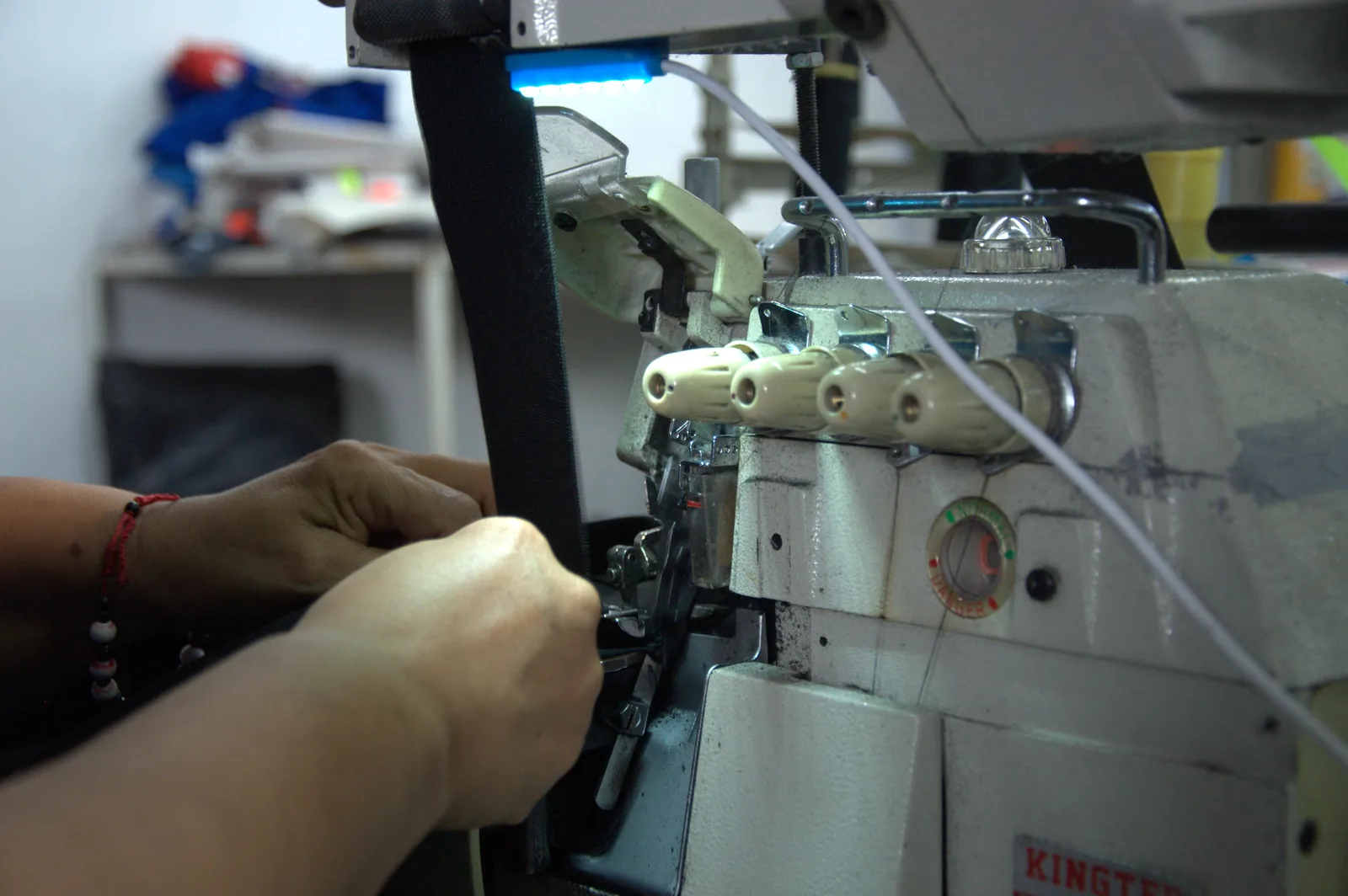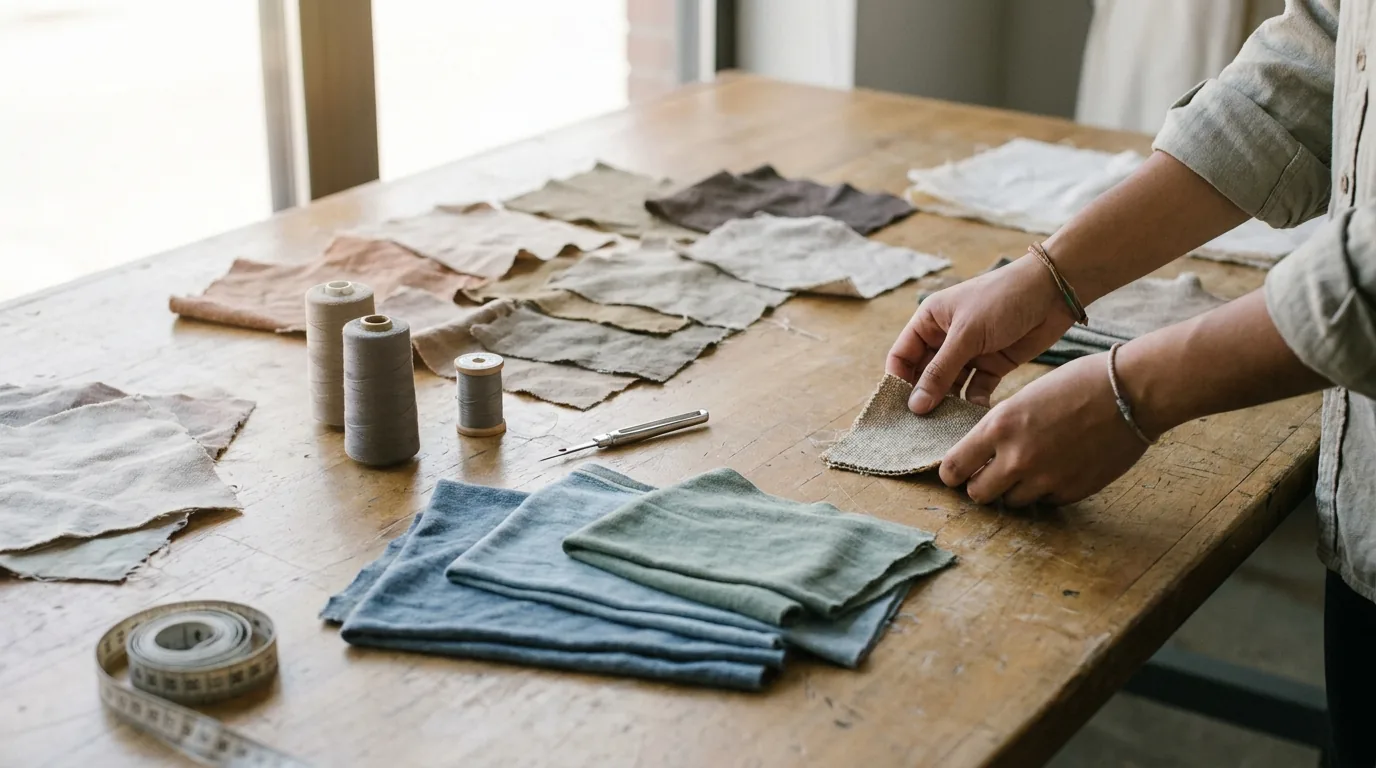

A tech pack is the standardized document where you write down every specification needed to manufacture a garment: flat sketch, bill of materials, a measurement chart with tolerances, construction notes, colorways, labeling and packing. Filling it in properly is what separates a sample that comes back right the first time from one that gets returned three times. It puts the drawing, the measurements, the materials and the construction in one place, and leaves nothing to the interpretation of the person cutting and sewing.
The cost of not having one gets paid in sample rounds. Brands that standardize their specifications go from an average of 3.2 sample rounds per style to 1.8, according to World Fashion Exchange, and every round you avoid counts twice, since a sample runs roughly US$80 to US$200 and each extra iteration adds two to four weeks to the development calendar, according to MakeMine. We see the other side of that number every week: clients who arrive with a clear tech pack move through development up to twice as fast as clients who arrive with only an idea. Below you will find the full anatomy section by section, how to fill the measurement chart with an actual method, the US labeling requirements most tech packs forget, a worked example of a tee with every field completed, and where to download a template. If you would rather have a team build it with you from your idea, that is what fashion product development is for.
Tech pack, spec sheet and sketch: what each one is
The three terms circle the same idea, and it pays not to confuse them. The tech pack is the complete master document. The spec sheet, or measurement chart, is usually only one section inside it. And a fashion sketch or croquis is the illustration with a body and an attitude, useful for selling the idea and useless for producing it, because it says nothing about inches, fabrics or seams. To manufacture, a factory works from a document that translates that drawing into measurable instructions.
The anatomy of a tech pack, section by section
A complete pack reads like an assembly manual. Each block speaks to a different person on the floor: the patternmaker, the cutter, the operator sewing it and quality control. These are the ones that cannot be missing.
Cover sheet
The first page identifies the style: style name and code, season, brand, base size, date and version number. It looks like paperwork until sample number three arrives built to the specifications of version one. Version control is what prevents that.
Technical drawings, or flats
The flat is the backbone of the pack: the garment seen front and back in 2D, with no body, plus detail callouts for anything not visible at a glance, such as stitch type, pockets, collars, cuffs and openings. A thin flat with no blown-up details leaves seams and finishes to the judgment of whoever is sewing, and that is where the errors start.
Bill of materials (BOM)
The BOM inventories every material that goes into the garment: body fabric with its composition and weight, linings, interfacings, threads, knitted collars or cuffs, and every trim from buttons and zippers to drawcords and hardware. If you do not have the exact fabric name, describe the result you are after, meaning the drape, the structure, the stretch and the hand, so the manufacturer can propose an equivalent. Each material carries its own purchase minimum, so a clear BOM also flags your sourcing bottlenecks early.
Measurement chart (POM)
The finished garment measurements, point by point and size by size. It is the section that causes the most rejected samples when it is filled in casually, which is why it gets its own part below: how to take each measurement, with what tolerance, and how to grade from one size to the next.
Construction and stitching notes
The stitch type and machine for each join, the visible topstitching, the seam allowances, the hem type and the finishing. This is where a tee stops being "a basic" and starts having a brand-level finish. Be specific. "Double-needle hem at one inch" communicates something. "Good finish" communicates nothing.
Colorways
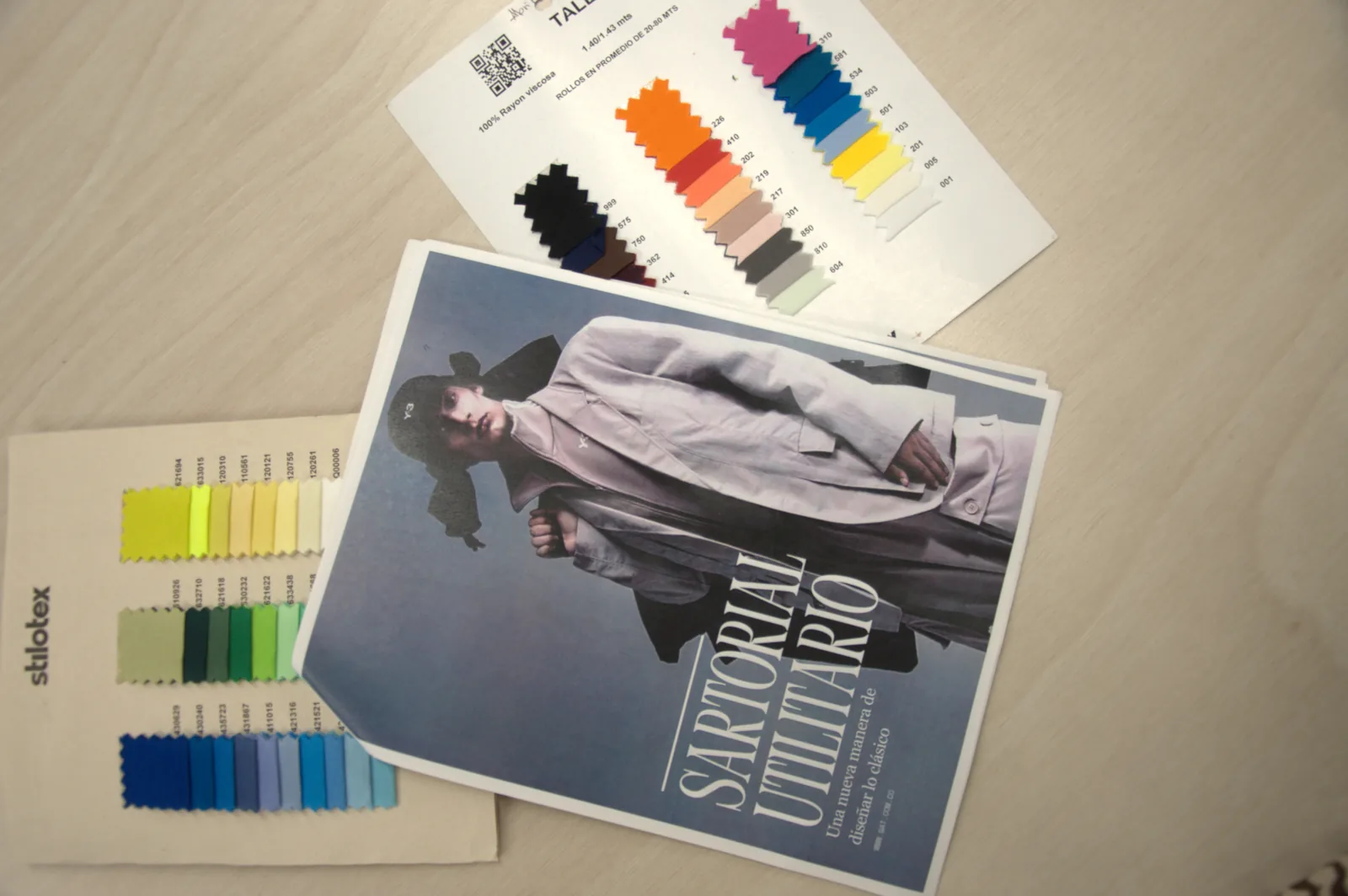
Every color combination of the same style, with its reference code, usually Pantone TCX for fabric or whatever standard your factory works to. "Blue" is ambiguous and comes back in a different tone from the one you approved. A code closes that door.
Labeling: brand label, care label and country of origin
The main label and the care label, each with its exact placement. Branded trims carry their own minimums and lead times, so leaving them until the end is one of the most common causes of a delayed delivery. They belong in the pack from day one. If you sell into the United States, this section also carries legal weight, and we come back to it further down.
Packing
How each garment is folded, tagged and packed: polybagged individually, on a hanger, in a carton, with or without a hangtag, and how the master carton is marked. It is the last section and the most forgotten, and it decides how your product arrives at the store or at your customer's door.
How to fill the measurement chart (POM) point by point
Including "a measurement chart" is not enough. The problem is that "chest width: 20.5 inches" means nothing if two people put the tape in different places. A properly defined point of measure carries three things: the method used to take it, the permitted tolerance, and a diagram showing where the tape goes. Without those three, every measurement is an argument waiting to happen.
The method depends on the geometry of what you are measuring, as FashionIndex sets out.
| Method | When it is used | Example measurement |
|---|---|---|
| Straight | Linear points across the garment laid flat | Full length, chest width |
| Curve | Curved seams and edges, following the line | Armhole, rise, neckline |
| Half measure | Openings measured across the garment folded flat | Sleeve opening, waist |
| Full circumference | Tubular pieces measured all the way around | Neck, waistband, cuff |
Tolerance is the margin of error you accept before rejecting a sample. A tee tolerates a quarter inch either way without drama. A structured woven shirt does not. Each POM carries its own, for example plus or minus half an inch on a length and plus or minus a quarter inch on a shoulder width, and that number tells quality control what to pass and what to send back. The diagram closes the loop: a silhouette with arrows marking exactly where each measurement starts and ends.

Grading: from base size to the full size run
This is the step that makes your M and your XL feel like they came from the same brand. Grading starts from the base size, the one you developed and approved on the sample, and defines how much each measurement grows as you move up or down. Not every measurement grows equally. Chest gains more than neck opening, and sleeve length more than cuff width.
The way to write it down is an incremental rule per measurement. On a tee, a common rule is adding about one inch of chest circumference per size, with smaller increments at the shoulder and neck. That constant step is what holds the proportion across the whole run. Without explicit grading rules the factory improvises the gradation, and you end up with an S that fits one customer and an XL that fits a different brand.
What a fabric spec has to survive: shrinkage, pilling, colorfastness
A tech pack that names a fabric but not its performance is only half written. The three properties worth specifying, because they are the ones that fail in a customer's hands rather than on the cutting table, are dimensional stability, pilling resistance and colorfastness.
Dimensional stability is verified with named laboratory methods rather than opinions, principally AATCC Test Method 135 for dimensional change after home laundering, with ISO 5077 as the international equivalent. You can see the current method list at AATCC. Writing the accepted percentage into the pack, and asking your mill for the test result, is what stops a size M becoming a size S in the first wash. Choosing the fabric itself is a bigger subject, and we cover it in the fabric guide for clothing brands.
US labeling rules your tech pack has to carry
This is the section most tech pack guides skip, and it is the one that can hold a shipment at the border. If you are selling in the United States, the label content is not a design decision, it is a legal requirement, and it has to be specified before the garment is made rather than after.
Under the Textile Fiber Products Identification Act, textile products generally have to disclose the fiber content by generic name and percentage, the country of origin, and the identity of the manufacturer or the business responsible, which can be shown as a registered identification number (RN). The Federal Trade Commission sets it out in its guidance on labeling requirements under the Textile and Wool Acts. Separately, the Care Labeling Rule requires a permanently attached care label with regular care instructions, and the seller has to hold reasonable evidence supporting those instructions, which the FTC explains in its care labeling guidance. In practice this means three fields in your BOM that a lot of first tech packs leave blank: the exact fiber breakdown, the country of origin wording, and the wash and dry instructions your fabric can actually survive.
There is a second reason the fabric section carries legal weight. Whether your import pays duty depends on where the yarn and the fabric were made, not on where the garment was sewn. Under the United States-Colombia Trade Promotion Agreement, apparel made in Colombia enters the US duty free when it meets a yarn-forward rule of origin, with a de minimis allowance of up to 10% by weight for fibers or yarns from outside the region and a short supply list for materials not commercially available, according to the International Trade Administration. A tech pack that records fabric origin as carefully as it records fabric weight is a tech pack that can answer a customs question a year later.
A worked example: one tee, filled end to end
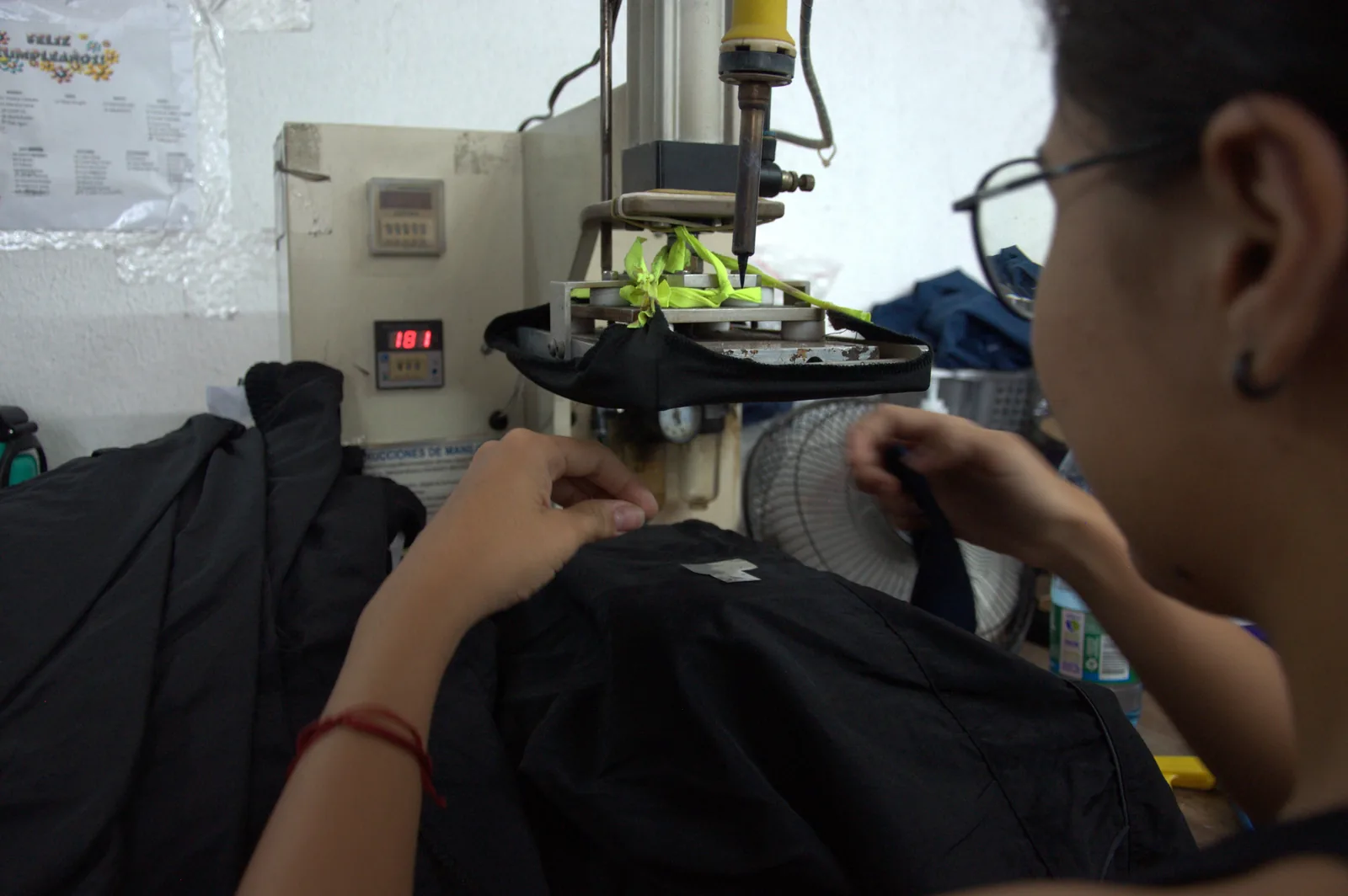
Theory lands better against a real document. Take a crew-neck tee, style code GAT-TEE-001, base size M. This is how each section reads, with illustrative values, since your garment will carry its own.
The BOM lists what it is made of: 180 GSM combed 100% cotton jersey for the body, 1x1 rib in the same shade for the neck, tone-on-tone polyester thread, a woven label at the inside neck, a satin care label at the left side seam, and a DTF transfer of 10 by 12 inches at the front.
The measurement chart turns the construction into numbers quality control can verify with a tape.
| Point of measure (POM) | Base size M | Tolerance | Method |
|---|---|---|---|
| Full length, HPS to hem | 27.5 in | ± 0.5 in | Straight |
| Chest width, 1 in below armhole | 20.5 in | ± 0.5 in | Straight |
| Shoulder width | 17.75 in | ± 0.25 in | Straight |
| Sleeve length from shoulder | 8.75 in | ± 0.25 in | Straight |
| Sleeve opening | 6.75 in | ± 0.25 in | Half measure |
| Neck opening, inside | 7 in | ± 0.25 in | Half measure |
The grading extends that base size across the run: 19.5 inches of chest width in S, 20.5 in M, 21.5 in L and 22.5 in XL, with smaller increments at the shoulder and sleeve. The colorways are black (Pantone 19-4007) and white (11-0601), each with its artwork adjusted for contrast. And the packing closes it out: folded in thirds, label visible, polybagged individually with a card hangtag. With that document in hand, nobody on the floor has to guess.
Why the first sample fails, and how to prevent it
The sample almost always comes back for the same handful of reasons, and almost all of them were preventable on paper.
- Vague measurements. "Standard medium" is not a spec. The factory needs exact numbers per POM, with the method and the tolerance.
- Colors without a code. A color name comes back in a different tone from the one you approved. A Pantone reference does not.
- Artwork without placement or size. A print "on the chest" can land in five different places if you do not define dimensions and a reference point.
- No grading rules. The factory improvises the gradation and the extreme sizes drift out of proportion.
- Branded trims added late. Labels and hangtags have their own lead times and minimums, and they stall a delivery when they show up at the end of the process.
- A flat with no callouts. Seams and finishes get left to the judgment of whoever is sewing them.
The underlying read: the first sample does not fail because of bad manufacturing, it fails because of information that was missing from the pack. Closing those gaps before anything gets cut is what takes a project to production in two rounds instead of five.
And you do not have to solve all of it alone. We advise on building the measurement chart and the rest of the pack. We value it when you arrive with your own tech pack, and if you arrive with an idea or a sketch, our team shapes it and builds the pack with you. That document gets handed over, along with the approved physical sample, at the close of product development.
Where to download a free tech pack template
For your first pack you do not need expensive PLM software or a technical design course. Several studios and platforms publish free templates in Excel or Google Sheets that you can adapt to your garment. Three worth starting from, with one honest caveat: some ask you to create a free account before the file downloads.
- Bomme Studio's free template, one of the more complete ones, with a cover sheet, flats, bill of materials, measurement chart, construction notes and labeling.
- Techpack.us templates, split by garment type such as tee, sweatshirt and hoodie, so you start closer to what you are actually producing.
- Techpacker's template and walkthrough, which sits inside a working product-development platform and is useful if you expect to manage several styles at once.
Download whichever fits, fill it in with the anatomy above, and resolve whatever is still open during development. And if you would rather not build it alone, we do not ask you to arrive with a finished pack. Our team builds it with you from your idea and hands it over, together with the physical sample, at the close of product development. You request it when you start your quote.
How the tech pack fits a manufacturer like GAT
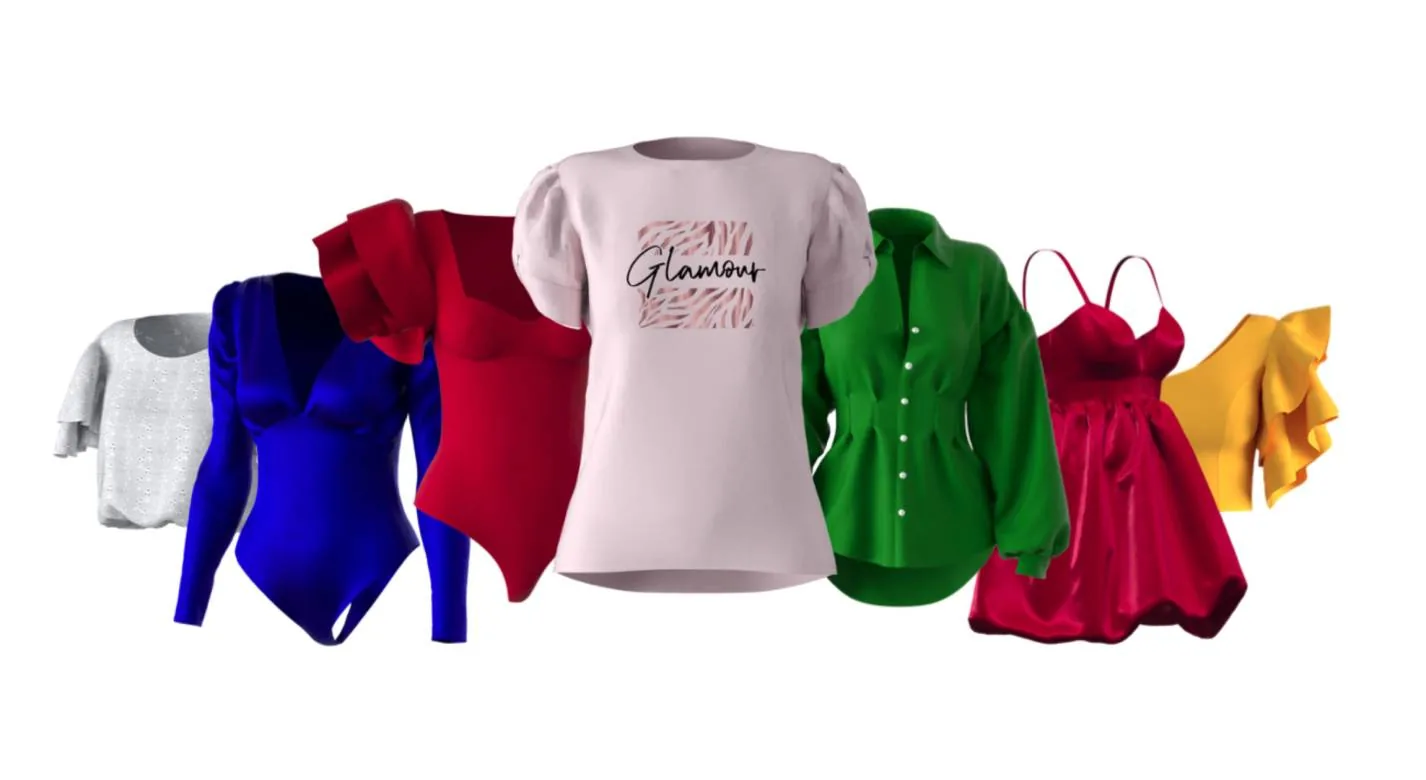
You do not need production-ready specs to start. Building the technical package is precisely the first phase of product development: starting from your idea or a reference image, we select fabrics and trims, make the patterns (100% digital), produce the physical sample and write the complete pack. Every order passes through an approved physical sample before production and through a four-point quality audit, so what you sign off with your hands is what you receive. At the close of development, the patterns and the specs become your property.
Working with a precise pack and a factory in your time zone also changes how fast you can react. The fashion cycle compressed from six-month refreshes to much shorter replenishment cycles, and manufacturing proximity now outweighs the old marginal cost advantage, according to the McKinsey and Business of Fashion analysis reported by Supply Chain Dive, which records a 20% rise in investment toward nearby production destinations serving the United States over five years. A well-built pack plus a factory that exports close is what lets you restock in season rather than wait on a container. If your plan includes selling abroad, that route is covered in GAT International, and the wider comparison sits in Asia vs nearshore manufacturing.
Frequently asked questions about tech packs
Are a tech pack and a spec sheet the same thing?
Not quite. The tech pack is the complete master document with every specification needed to make the garment. The spec sheet, meaning the measurement chart, is one section inside it. A fashion sketch is the illustration of the idea, without production instructions.
What is a POM in a tech pack?
POM stands for point of measure. It is each specific measurement of the garment, such as full length, chest width or sleeve opening, defined with the method used to take it, the permitted tolerance and a diagram showing where the tape goes. A properly filled POM table is what prevents the most rejected samples.
How many sample rounds are normal?
With a complete tech pack, two rounds is a realistic target, and brands that standardize their specifications bring the average down from 3.2 to 1.8 per style. Without a pack, five or more rounds stops being unusual, and each one adds two to four weeks to the calendar.
Do I need a tech pack to get a quote from GAT?
No. A tech pack is ideal, but we also quote from reference images or annotated sketches. If you do not have one, product development builds it for you.
Who owns the patterns and specs GAT develops?
You do. Once the full development service is paid, we transfer ownership of the patterns (editable digital patternmaking files) and the technical packages for your project. Our internal processes, base blocks, methodologies and software are not included.
Does a good tech pack reduce cost?
Yes, on two fronts. It lowers development cost, because if you arrive with specs, patterns and fabrics defined, much of the work already exists. And it cuts sample spend, since a detailed pack saves on the order of US$300 to US$750 per design by avoiding repeat rounds.
The only thing left between your pack and a production floor is a real cost, not an internet estimate. Get a free production estimate: with your design and your pack, or with an image if you do not have one yet, our quoting tool gives you a figure in minutes. And if you want to compare who builds the technical package and who only sews, the comparison sits in clothing factory vs full package service.