
For a US fashion brand, the real trade-off between Asia and nearshore manufacturing is not a headline unit price. It is control, iteration speed and total landed cost. Asia is built for scale on large, repeatable runs. Nearshore production in Colombia gives you a shared working day, faster sample rounds, lower minimums and no multi-week ocean crossing. Which one wins depends on your volume, your timeline and how much your product still changes between seasons.
This playbook compares the two on the things that actually decide how a collection turns out, with the numbers sourced where sources exist and flagged where they do not. It also closes with the part most manufacturers skip: the cases where an Asian factory is genuinely the better call, and we will tell you so rather than pretend otherwise.
Where US apparel sourcing actually stands
Start with the facts rather than the pitch. Asia still supplies the overwhelming majority of US apparel imports, at 73.0% of total value in the January to October 2025 period, up slightly from 71.6% a year earlier. What has moved sharply is the composition inside that number: China fell to 11.3% of US apparel imports by value in October 2025, down from 19.8% in October 2024, while Mexico sat at 3.5% and the CAFTA-DR bloc at 9.5%, according to the sourcing data compiled by Sheng Lu at the University of Delaware from US Census and OTEXA figures.
Sourcing teams say they intend to keep moving. In the 2025 Fashion Industry Benchmarking Study, which surveys executives at leading US fashion companies, around 80% of respondents planned further reductions in China sourcing over the following two years, more than 80% already source from ten or more countries, and roughly 60% expected to add still more countries in 2026, while only 17% planned to increase US-made sourcing despite the tariff pressure, according to the United States Fashion Industry Association.
Here is the honest part, and we would rather you hear it from us. Colombia does not appear in the top tier of US apparel suppliers by volume. It is a real, duty-eligible, same-time-zone option, and it is not a like-for-like replacement for a Bangladeshi or Vietnamese mega-factory on a hundred-thousand-unit basic program. Colombian fashion exports across all destinations reached US$836.7 million between January and November 2025, up 2% year on year, with the United States as the leading destination, according to Analdex. That is a specialized, well-established industry rather than a volume commodity origin, and the brands it serves best know exactly why they are here.
Transit and freight: what distance actually costs
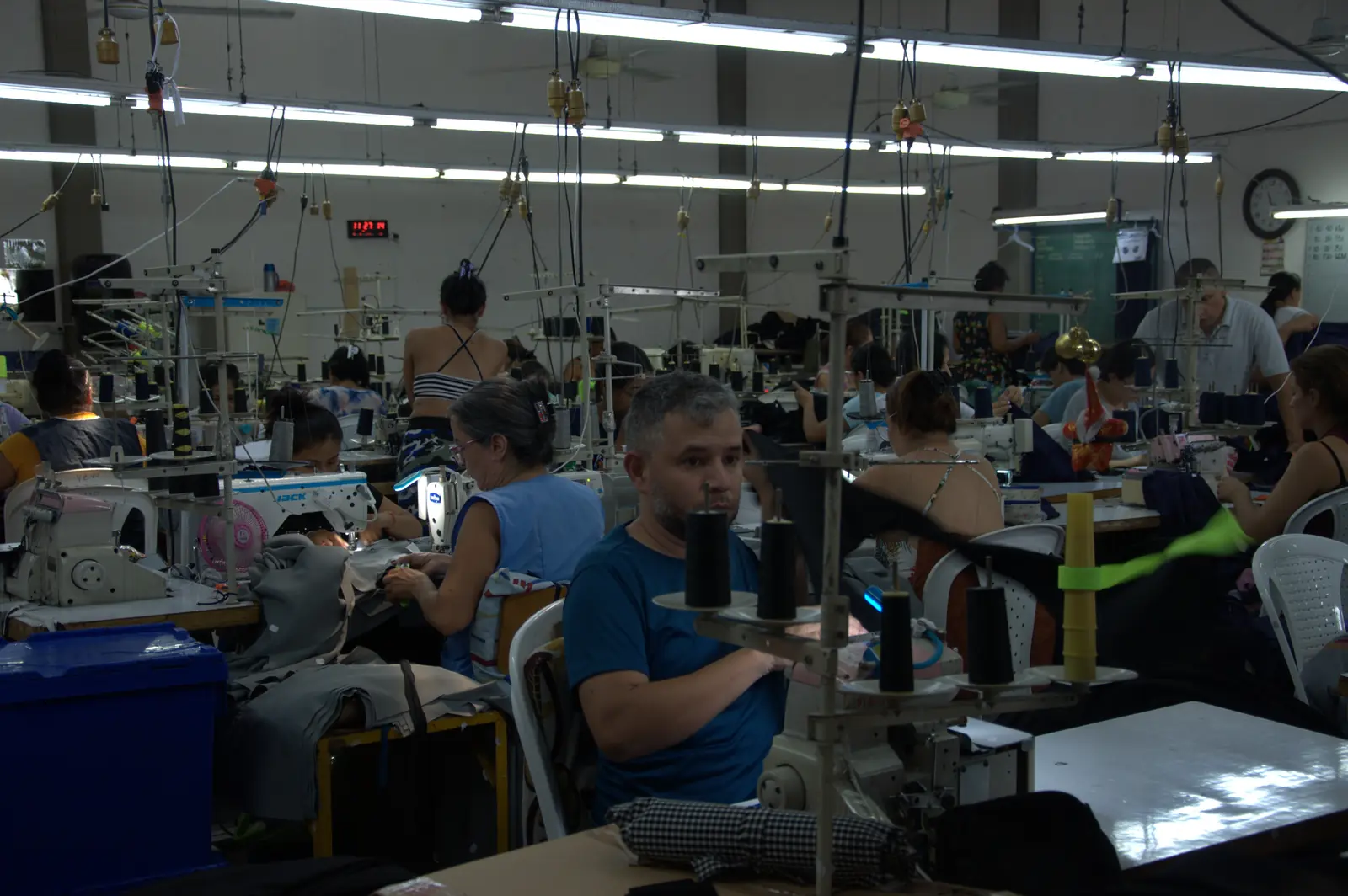
The most visible difference is distance. Producing in Asia means finished goods sit on the ocean for weeks before clearing customs and reaching your warehouse, and every sampling round shipped back and forth adds its own transit on top.
Freight is the part you can price. In the week of 23 July 2026 the Drewry World Container Index composite stood at US$4,374 per 40-foot container, with Shanghai to New York at US$7,598 and Shanghai to Los Angeles at US$5,878 in the preceding week, according to the Drewry World Container Index. Those rates move every week, which is itself the point: a landed cost built on transpacific freight is a landed cost with a variable you do not control.
The Caribbean lane looks structurally different. There is no published spot index for Colombia to the United States, because the lane is smaller and less commoditized, but carriers run direct scheduled service rather than transpacific rotations. Seaboard Marine, for example, publishes a weekly direct service between Miami and Colombia in its schedule. We will not put a transit-day figure on this page, because published estimates for the Colombia lane disagree with each other and your real number depends on the port pair and the carrier. Ask your forwarder for the specific rotation before you build a calendar on it.
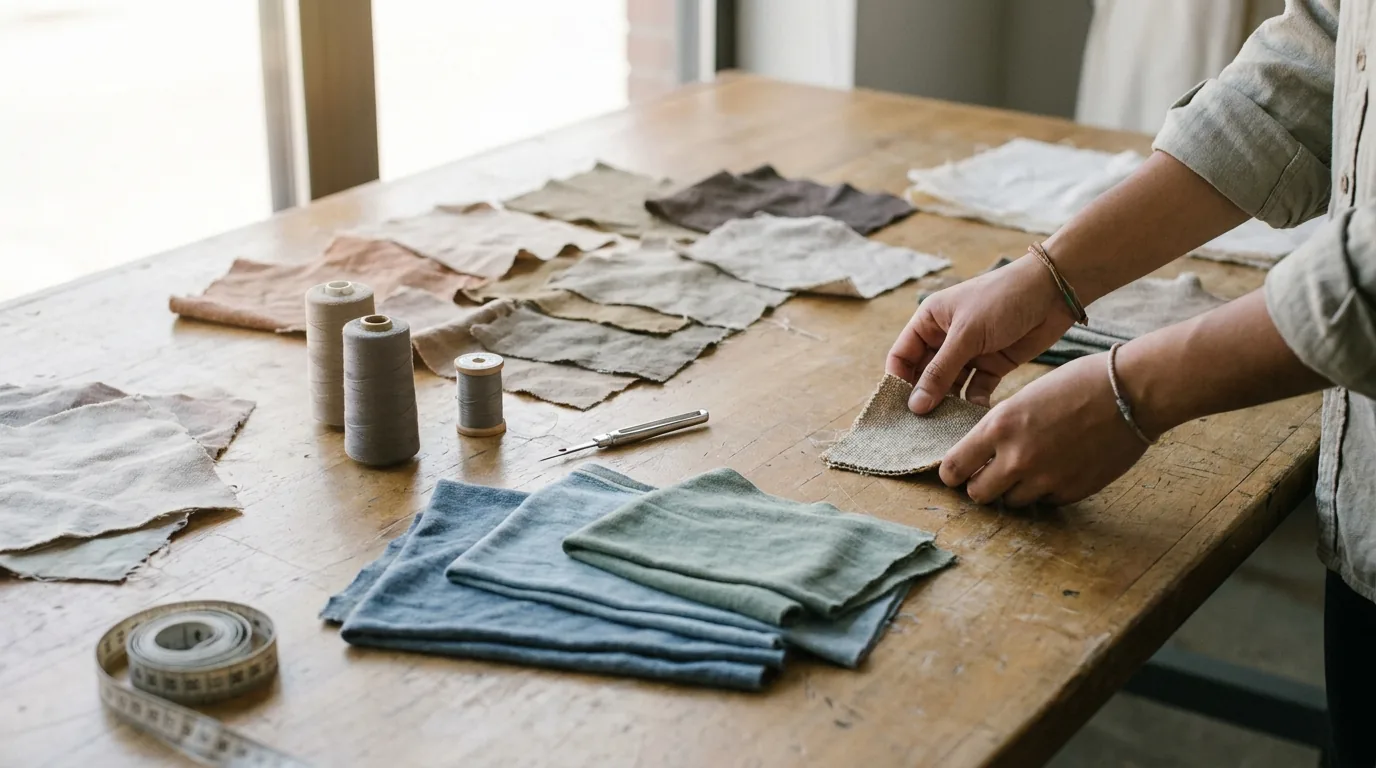
What we can commit to is the execution window on our side. Product development usually takes 2 to 8 weeks and production 30 to 45 business days. The single variable that moves that timeline most is fabric and trim sourcing, meaning whether the material is in stock, has to be shipped in, or has to be made. Every project is different, and when a launch has demanded it we have met tight windows before, including 5,000 garments in under 28 days and samples in under a week. Reordering is where proximity compounds: instead of restarting a months-long overseas cycle, a proven style comes back in that same 30 to 45 business day window.
Duty and rules of origin: the part most comparisons skip
A unit price comparison that ignores duty is not a comparison. Apparel is one of the most heavily tariffed categories entering the United States, with an average effective rate that the American Apparel and Footwear Association puts at more than five times the average across all US imports. That multiple applies before any of the policy changes of the last two years.
Under the United States-Colombia Trade Promotion Agreement, in force since 2012, apparel made in Colombia enters the United States duty free when it meets the agreement's rules of origin. The relevant rule is yarn-forward: the yarn spinning, the fabric formation and the garment assembly all have to happen in the United States or Colombia. There is a de minimis allowance of up to 10% by weight for fibers or yarns sourced outside the region, a short supply list covering materials not commercially available regionally, and no tariff preference level caps limiting how much can enter duty free, according to the International Trade Administration and USTR.
Two clarifications that come up constantly. First, Colombia is not part of CAFTA-DR. That agreement covers Costa Rica, El Salvador, Guatemala, Honduras, Nicaragua and the Dominican Republic, as listed by USTR. Colombia has its own separate bilateral agreement, so the rules and the paperwork are not interchangeable with a Central American program. Second, and more important, duty-free treatment is not automatic because a garment was sewn in Latin America. It depends on where the yarn and the fabric were formed. If a project requires an imported fabric that does not qualify, we tell you before you commit rather than after your broker does.
We are also not going to build a pitch on a tariff number, because tariff numbers have been the least stable variable in sourcing. US tariff policy moved repeatedly through 2025 and into 2026, and in February 2026 a Federal Register notice formally ended a set of tariff actions imposed the previous year, as recorded in Ending Certain Tariff Actions. Any specific rate we printed here would be wrong within a season. Check the current schedule with your customs broker, and treat the duty question as one input among several rather than the whole case.
This matters for how you read the rest of this page. Duty treatment is not the main reason brands manufacture with us, and we would be overselling if we said it was. The main reasons are communication and control, which is what the next two sections are about.
Communication and time zone: the difference that quietly decides projects
When you and your manufacturer share a working day, a question asked in the morning gets answered the same afternoon. On a twelve-hour offset, every clarification costs a full cycle, and a misunderstanding about a collar construction can burn a week before anyone notices.
We sit in the same time zone as the US East Coast, we work in English, and we understand the market you are selling into. That means real conversations about fit, finish and construction rather than a chain of messages through an agent and a translation layer. The AlixPartners analysis of apparel nearshoring puts the same factors at the center of the shift, alongside tariffs, freight costs and geopolitical risk, and identifies Colombia as an emerging hub with a skilled technical workforce and real-time coordination with the United States, in its 2025 report.
Cultural affinity and direct communication are the core of the proximity advantage, more than speed and more than duty. It is also the hardest thing to put in a spreadsheet, which is why it gets left out of most sourcing comparisons and then decides the outcome anyway.
Sample iteration: where the gap hurts creative brands most
A collection is only as good as its samples, and sampling is where distance costs the most. Shipping a physical sample across the world, waiting for it, marking it up and shipping the next version can consume weeks per round, and a garment that needs three rounds is a garment that missed a season.
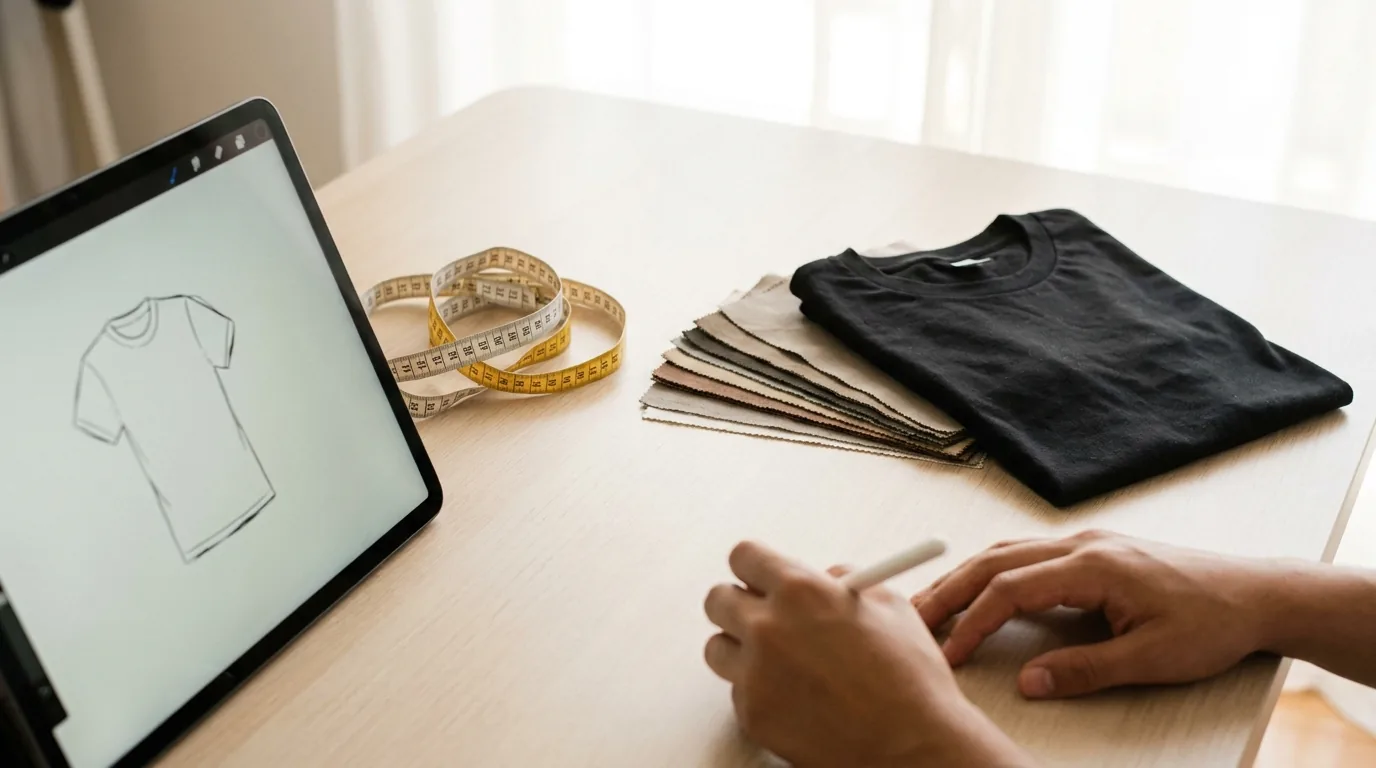
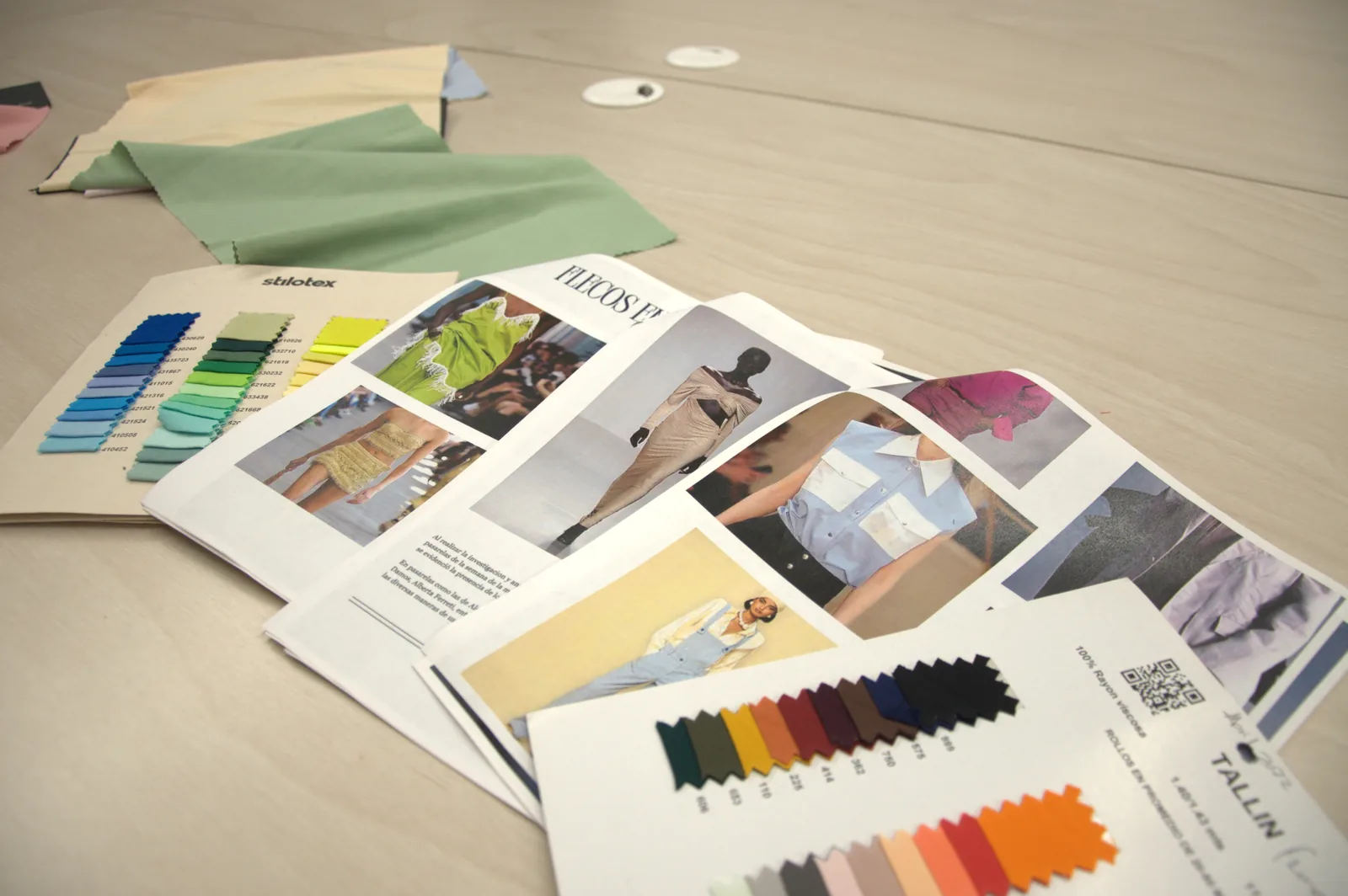
Working nearshore collapses that loop. We develop your sample locally, run a photographic fitting with a measurement report against the approved spec, and include up to two minor adjustments at no cost, plus up to two rounds of process tests for print, embroidery, DTF or sublimation, all approved by photo before anything gets sewn at scale. Fabrics and trims are approved the same way. For a designer whose product lives or dies on fit and finish, tighter iteration is usually worth more than any per-unit consideration, and it is the reason a lot of development-heavy brands end up here.
The document that governs all of it is the tech pack, and how complete yours is will change your timeline more than geography does. If you are building one, we walk through it in how to make a tech pack.
Minimums: what each model is built for
Asian full-package factories are engineered for volume, so their minimums generally start in the hundreds per style. The industry labels anything below 500 units per style as low MOQ and anything above 5,000 as high volume, according to Wearview. That structure works well if you are placing large, confident orders on a settled design. It becomes a wall when a style still needs to be proven or when you want to carry twelve styles instead of three.
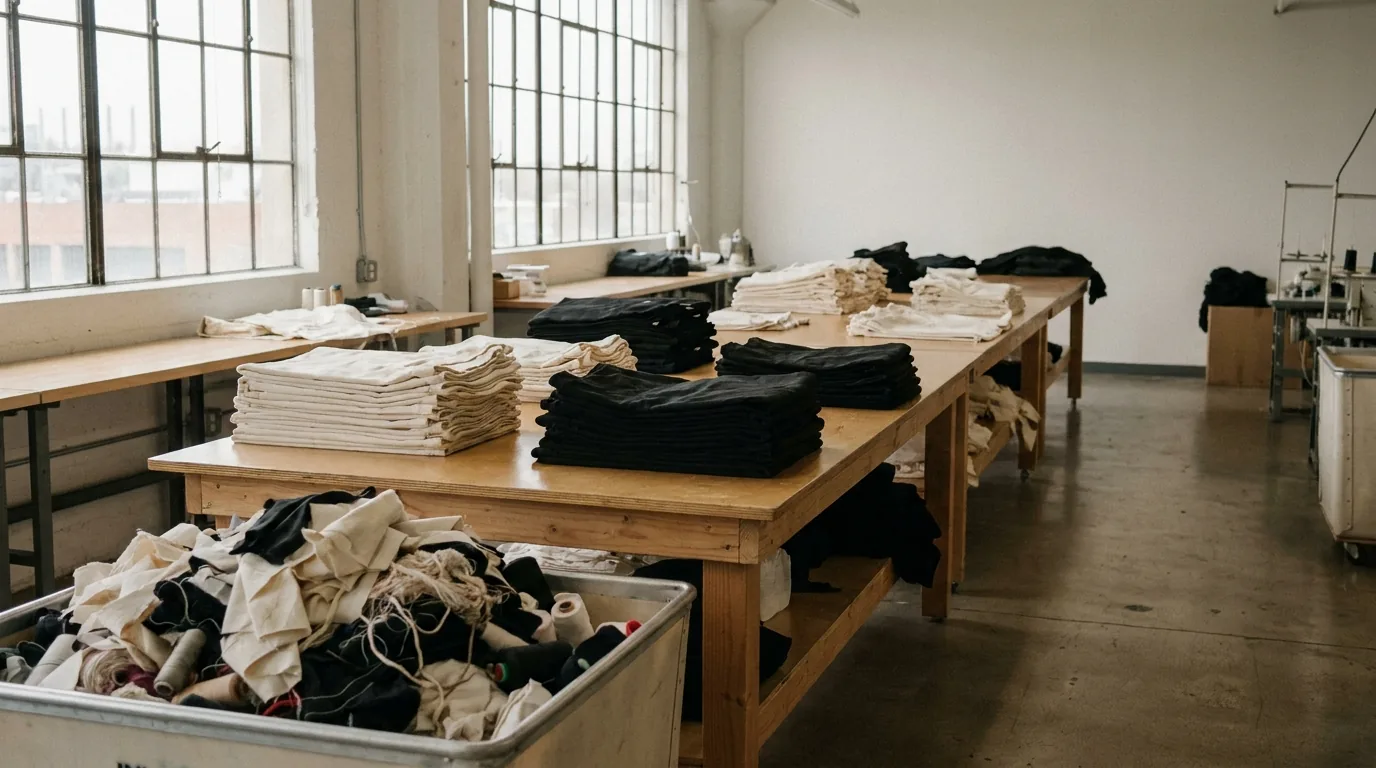
We produce from 36 units per style and color, with 100 to 300 as the range where the numbers work best on efficiency and cost, and up to the volume per style that a program needs, with monthly capacity in the range of 25,000 to 30,000 garments. The value of a flexible minimum is not that it is small. It is that the same ally covers a twelve-style range and a repeat volume order without you rebuilding a supply chain in between. How to size your own run is covered in how many units should you produce.
Quality control and who is accountable
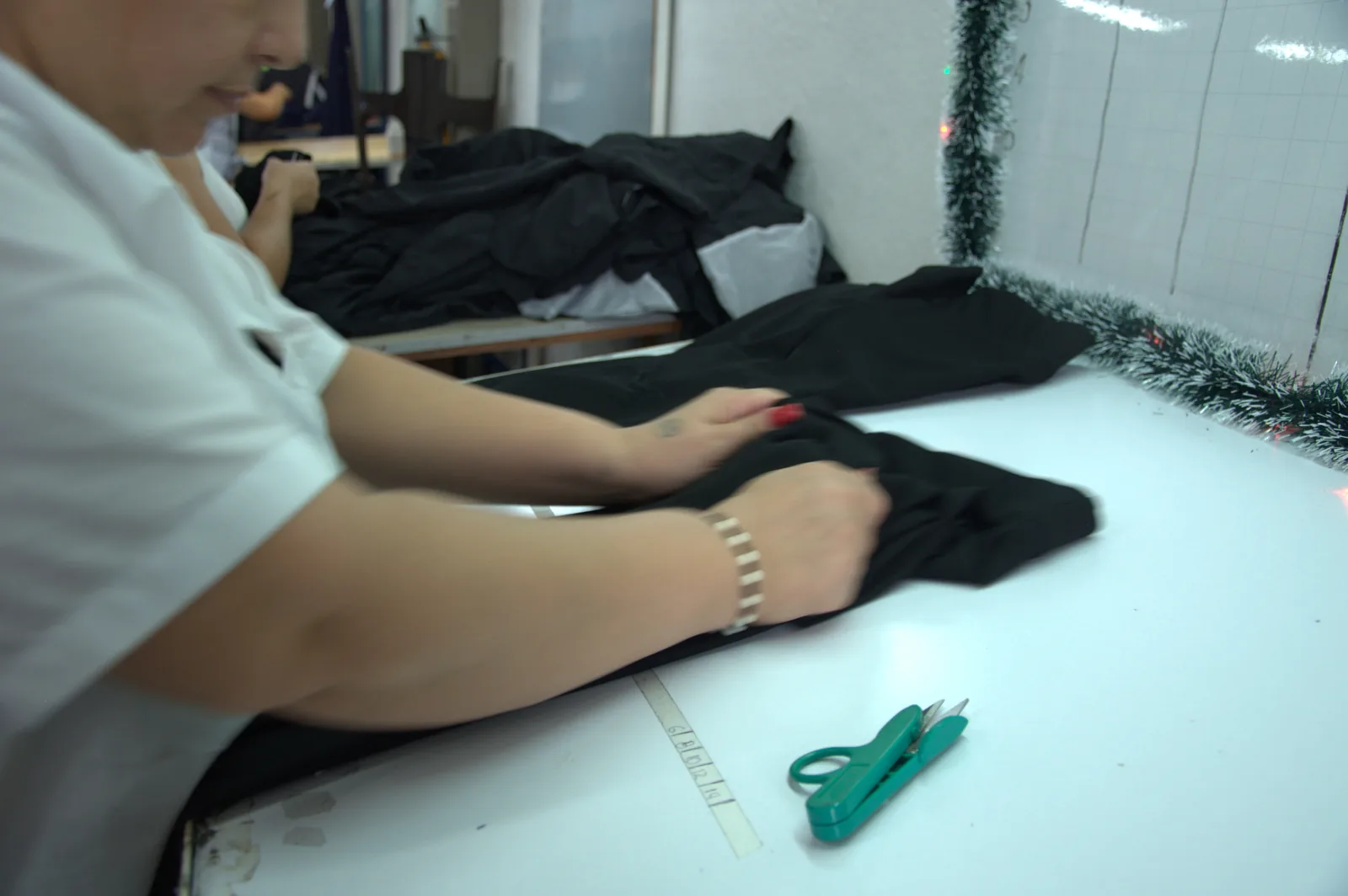
Distance also means you usually cannot see a problem until the container lands, and by then the only options are a discount or a claim. Nearshore, quality gets built into the process and checked while there is still time to correct it. We audit 100% of incoming fabric, audit the cut, audit construction from start to finish, and run a final audit before dispatch. And because every project begins with a physical sample you approve, that sample becomes the standard the entire production is measured against, with a single point of accountability rather than a chain of anonymous subcontractors.
You are also welcome to come and look. We receive visits at our offices in Cali, Colombia, where you can meet the team and see real product, and we coordinate the visit with you.
Inventory risk: the cost that never appears on the quote
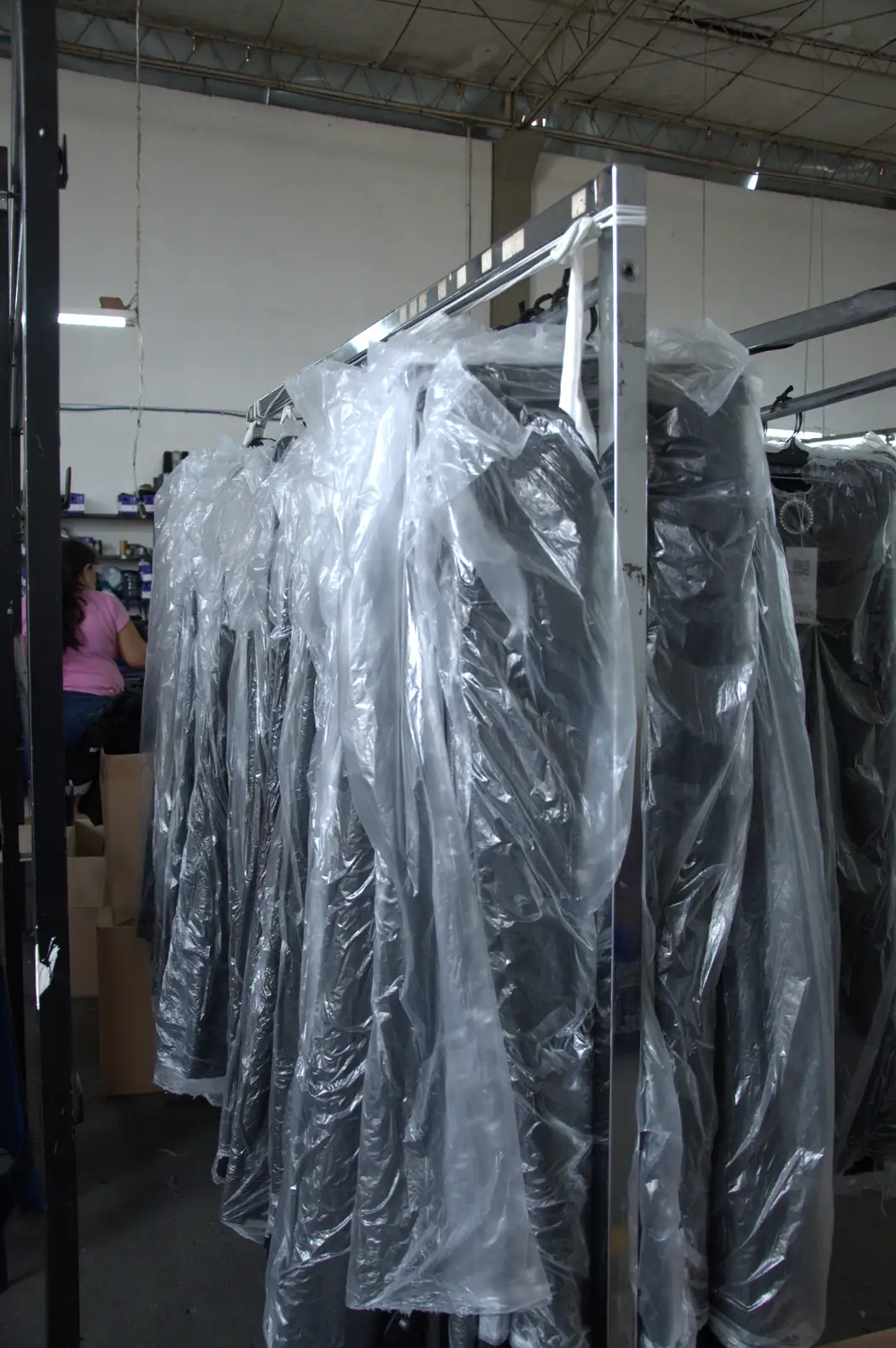
Ordering a large volume overseas to bring the piece cost down looks good until you add the capital tied up for months and the risk of holding whatever did not sell. That risk has a documented size. The world produces somewhere between 80 and 150 billion garments a year, and between 8 and 60 billion are never sold, with the Ellen MacArthur Foundation putting the annual value of discarded unsold inventory at around US$500 billion, as reported by The Interline.
If you also sell in Europe, that risk now has a date attached. From 19 July 2026 the EU's Ecodesign for Sustainable Products Regulation prohibits large companies from destroying unsold clothing, accessories and footwear, with medium-sized companies covered from 2030, and requires companies to document and publish annually what they discard, according to the European Commission. Producing closer to real demand, and being able to replenish a winner in 30 to 45 business days rather than reordering blind six months ahead, is the operational answer to both problems. We go deeper into that in sustainable fashion and responsible manufacturing.
A side-by-side comparison
| Factor | Asia, large full-package factory | Nearshore Colombia |
|---|---|---|
| Best fit | Large, repeatable runs of settled designs | Development-heavy ranges, frequent iteration, in-season replenishment |
| Typical minimum per style | Hundreds, often 500 or more | From 36, with 100 to 300 recommended |
| Working hours overlap with US | Little to none | Same or adjacent time zone |
| Sample round-trip | Add international transit to every round | Approved by photo, physical sample shipped once |
| Ocean freight | Transpacific, indexed and volatile | Caribbean lane, direct scheduled service |
| Duty into the US | Depends on origin and current schedule | Duty free under the TPA when yarn-forward rules are met |
| Reorder cycle | Restart the full overseas cycle | 30 to 45 business days on a developed style |
How to run the comparison on your own numbers
The useful exercise is not comparing two unit prices. It is comparing two landed costs against two calendars. Build both columns with the same six lines:
- Unit price at the quantity you would actually order, not the quantity that unlocks the best price.
- Freight and insurance per unit at the volume you would ship.
- Duty, based on where the yarn and the fabric were formed rather than where the garment was sewn.
- Capital tied up, meaning the deposit multiplied by the months between payment and first sale.
- The cost of the sample rounds you realistically need, including their transit time.
- The share of the order you expect to sell at full price, which is the line that quietly decides the whole comparison.
Most brands find the two columns are closer than the unit prices suggested, and that the difference sits in the last two lines rather than the first.
When an Asian factory is genuinely the right choice
Here is the honest part. Nearshore is not the answer to every question. An Asian factory is often the better fit when:
- You are producing very large volumes of basic, unchanging garments, meaning commodity styles where the design is settled and will not iterate.
- Your timeline is flexible and you can absorb long transit windows and capital sitting in transit and inventory.
- You already have mature, proven tech packs and do not need development, pattern work or close creative collaboration.
- Your model is built around the deepest possible per-unit economics at massive scale, and communication speed and small-batch flexibility are not priorities.
- Your product sits in a category built around specialized machinery we do not run, such as denim or structured outerwear.
If that is your situation, a factory built for exactly that scale will serve you well, and we will say so. We are the stronger ally when development, iteration, flexible minimums, direct communication and fast replenishment matter to how your brand competes, which for most growing US brands is most of the time.
Frequently asked questions about nearshore manufacturing
Is nearshore manufacturing more expensive than Asia?
We do not lead with price, because the honest comparison is total landed cost rather than a single unit figure: duty, freight, capital tied up, the sample rounds you actually need and the share of the order you sell at full price. We will be transparent about what a project costs once we have developed the sample and measured real consumption on your garment.
Does clothing made in Colombia enter the United States duty free?
It can, under the United States-Colombia Trade Promotion Agreement, when it meets the yarn-forward rule of origin, meaning the yarn, the fabric and the assembly are from the US or Colombia. There is a de minimis allowance of up to 10% by weight for outside fibers and a short supply list. It is not automatic, so we confirm the origin position for your specific fabric during development rather than leaving it to your broker.
Is Colombia part of CAFTA-DR?
No. CAFTA-DR covers Costa Rica, El Salvador, Guatemala, Honduras, Nicaragua and the Dominican Republic. Colombia has its own bilateral trade promotion agreement with the United States, so the rules and documentation are different from a Central American program.
How long does a nearshore production run take?
As a range, product development usually takes 2 to 8 weeks and production 30 to 45 business days. Every project is different, with fabric and trim availability as the biggest variable, and we adjust the plan to hit the date you need.
Can I move an existing style from an Asian factory to GAT?
Yes. If you already have proven patterns and a tech pack, we can produce from your existing package, which is lighter than developing from scratch, or refine it first with a counter-sample so you can compare our standard before committing to a run.
What garments do you not manufacture?
We specialize in upper-body garments in knits and wovens, along with dresses, jumpsuits, bottoms, activewear, streetwear and corporate programs. We do not manufacture denim, swimwear, lingerie, footwear, structured outerwear or tailored suiting. If that is your product, we will point you toward a specialist rather than force the fit.
Every brand's answer is different, so the useful next step is a real estimate rather than a generic quote. See how we handle production end to end in full package clothing manufacturing, read how we support export and payment in GAT International, or get a free estimate from our quoting tool and we will map your volume and your timeline honestly.