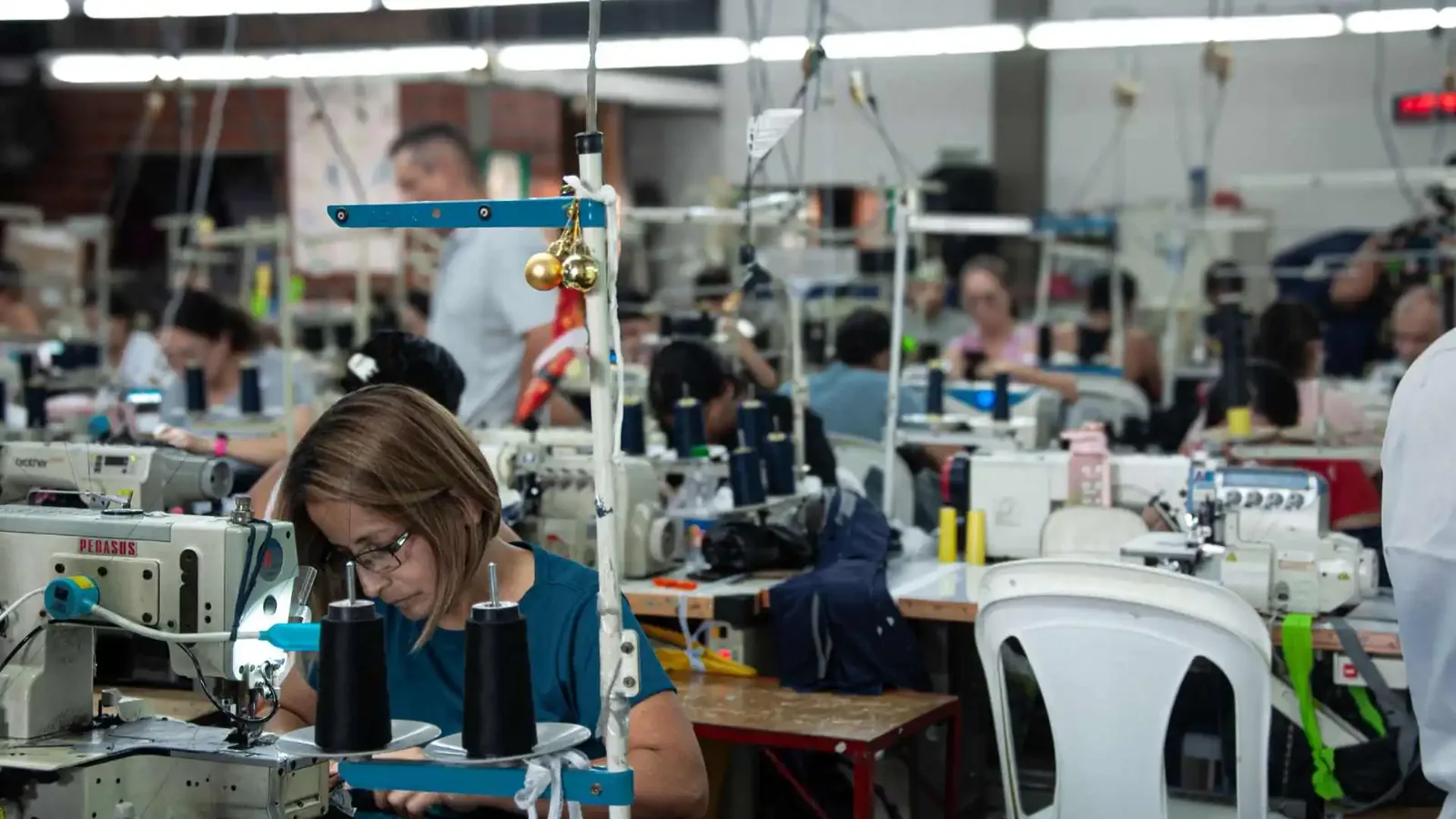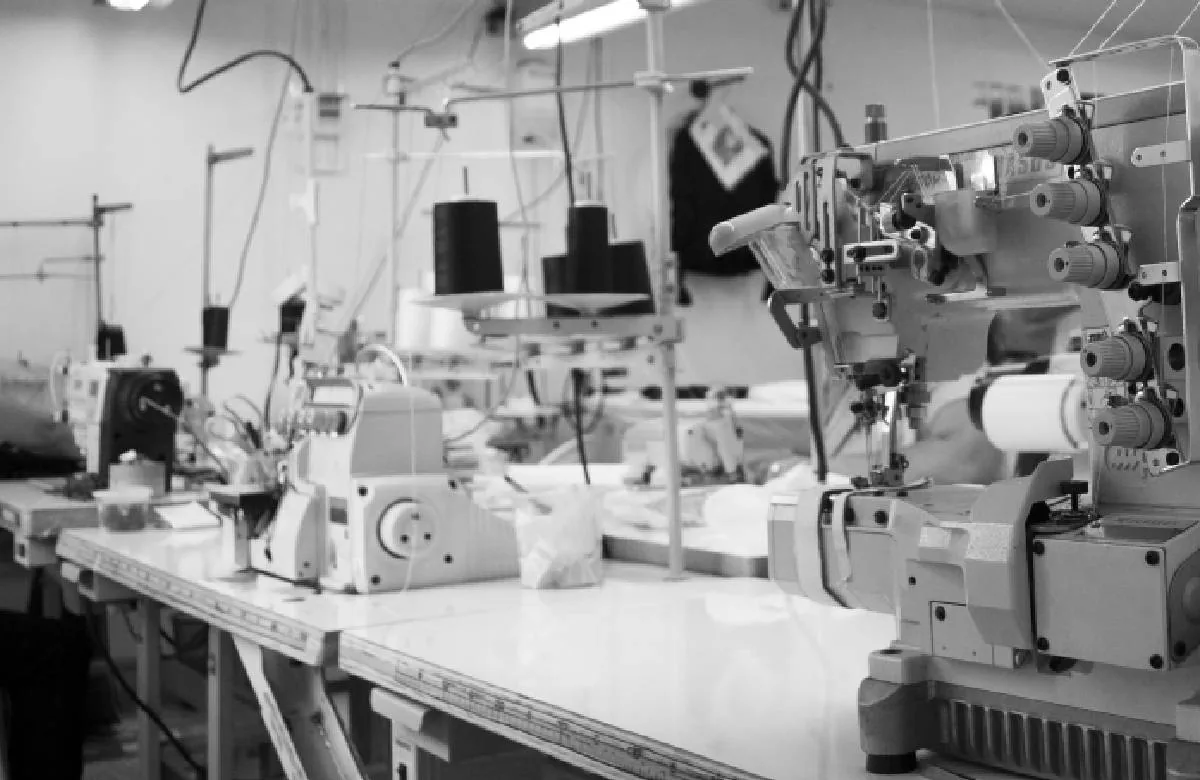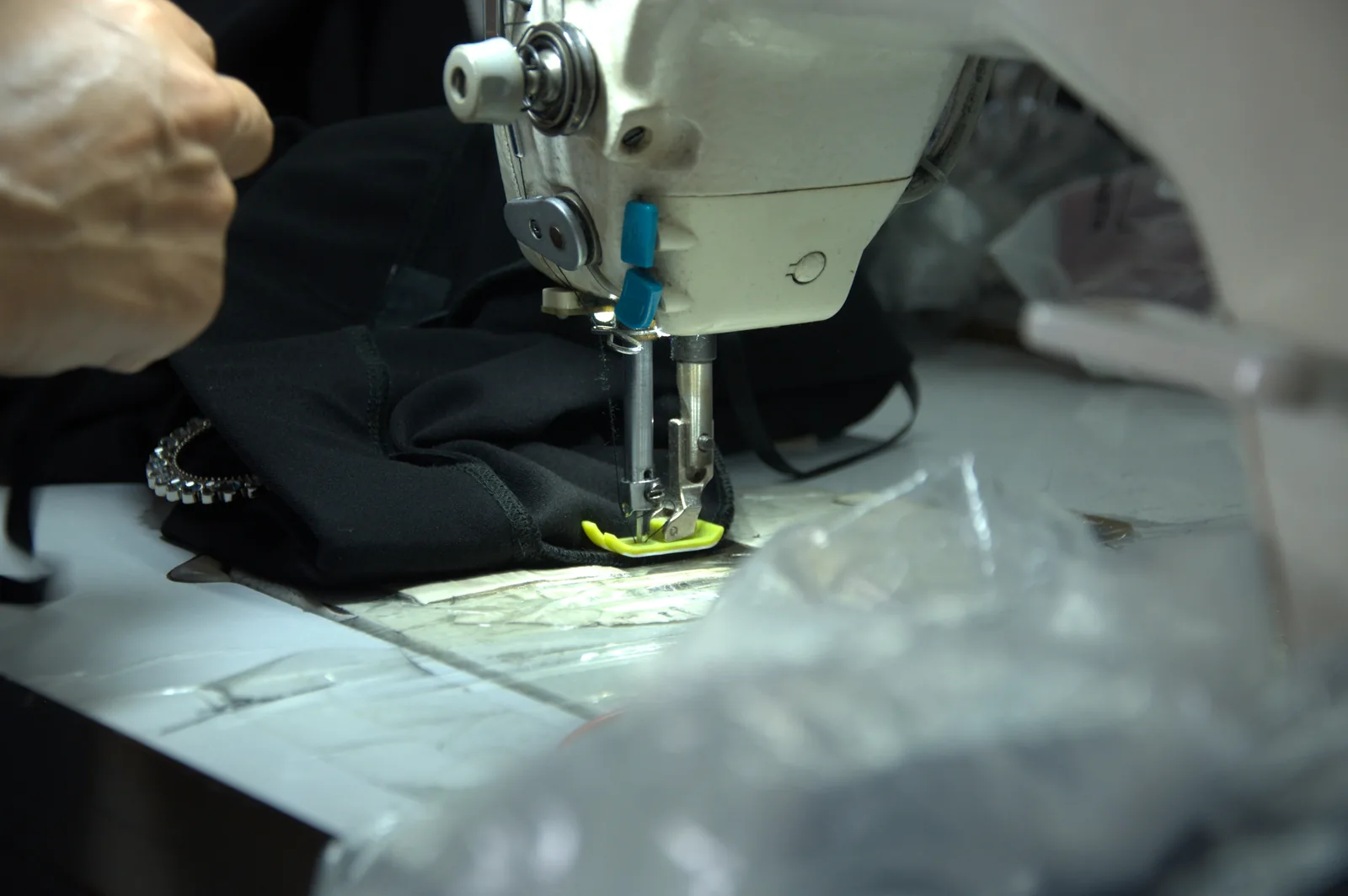

Bespoke means a garment cut from a pattern drafted for one person, by hand, with several fittings along the way. Custom clothing starts from an existing pattern, adapts it to your design, and repeats it across a production run. One is tailoring for an individual. The other is manufacturing for a brand.
The words get used as if they were interchangeable, and they are not. Confusing them costs real money, because a brand that asks a factory for bespoke is asking for something no factory can repeat at scale. We run a garment plant in Cali, Colombia, and quote both kinds of request every week, so this is the distinction as it looks from the cutting floor rather than from a dictionary.
What custom clothing actually is
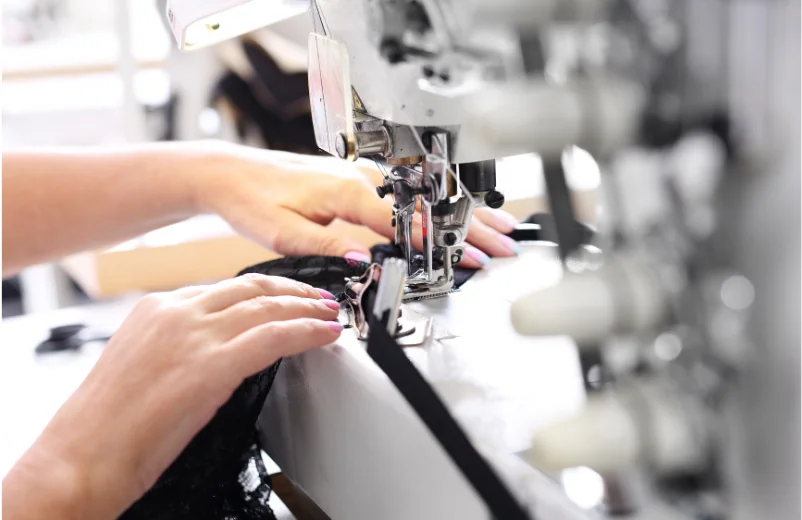
Custom clothing is production. You bring a design, a reference image or a tech pack, and the factory turns it into a garment that can be made again and again with the same result. The pattern usually starts from a base block and gets modified, the fabric comes from commercial suppliers, and the whole point is that unit two hundred looks like unit one.
That repeatability is what makes it a business. You can price it, restock it and sell it in a store. It is also the model behind most of what a brand puts on a rack, whether the label calls it custom, made-to-order or something else. If you want the mechanics of that process end to end, we break it down in what custom clothing manufacturing is.
What bespoke actually is
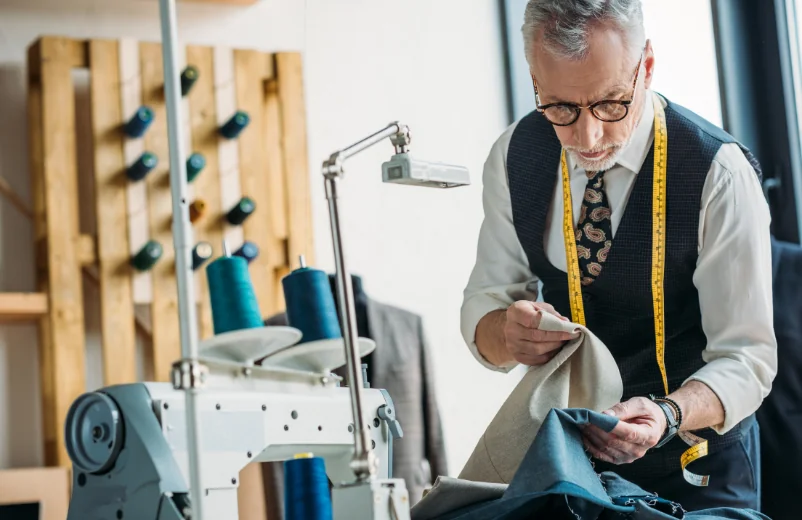
Bespoke is tailoring for one named person. The pattern does not exist before that client walks in, and it is drafted from their measurements rather than adapted from a block. Cutting and much of the sewing are done by hand, the fabric tends to come from specialist mills, and the garment goes through several fittings before it is finished.
It lives in eveningwear, in men's suiting, in couture and in footwear, and it exists for occasions rather than for shelves. There is no production run, because the pattern only fits the person it was drafted for. That is not a limitation of the model. It is the model.
Bespoke meaning: where the word comes from
The word has a literal origin that explains the whole idea. It comes from the verb bespeak, meaning to speak for something in advance, to claim it before it exists. A length of cloth that had already been claimed by a client was said to be "spoken for", and by the nineteenth century London tailors were using the term for garments made to a single customer's order.
So the bespoke meaning in fashion is not "expensive" and not "high quality", even though it usually implies both. It is a statement about ownership and sequence: the customer commits first, and the garment is made afterwards for them alone. Bespoke design, in the same sense, means the design itself is originated for that one commission rather than selected from something that already existed.
Worth knowing because the term gets stretched. A brand that lets you pick a collar and a lining from a menu is offering configuration, not bespoke. The pattern still came from a block.
Bespoke clothing and bespoke garments: what the terms cover
In practice you will see bespoke clothing used two ways, and it pays to know which one you are being sold.
- True bespoke. A pattern drafted from scratch for one client, cut by hand, fitted more than once, adjusted between fittings. This is what a Savile Row house means by the word.
- Made-to-measure sold as bespoke. An existing block adjusted to your measurements, usually cut by machine, with one fitting or none. It is a good product and a legitimate model. It is not the same thing, and the price difference between the two is large.
Bespoke garments in the strict sense share three traits that a factory cannot fake: a unique pattern, hand work at the critical seams, and fittings on the actual client. If any of those three is missing, what you have is custom clothing with a nicer word in front of it.
Bespoke vs custom clothing, point by point
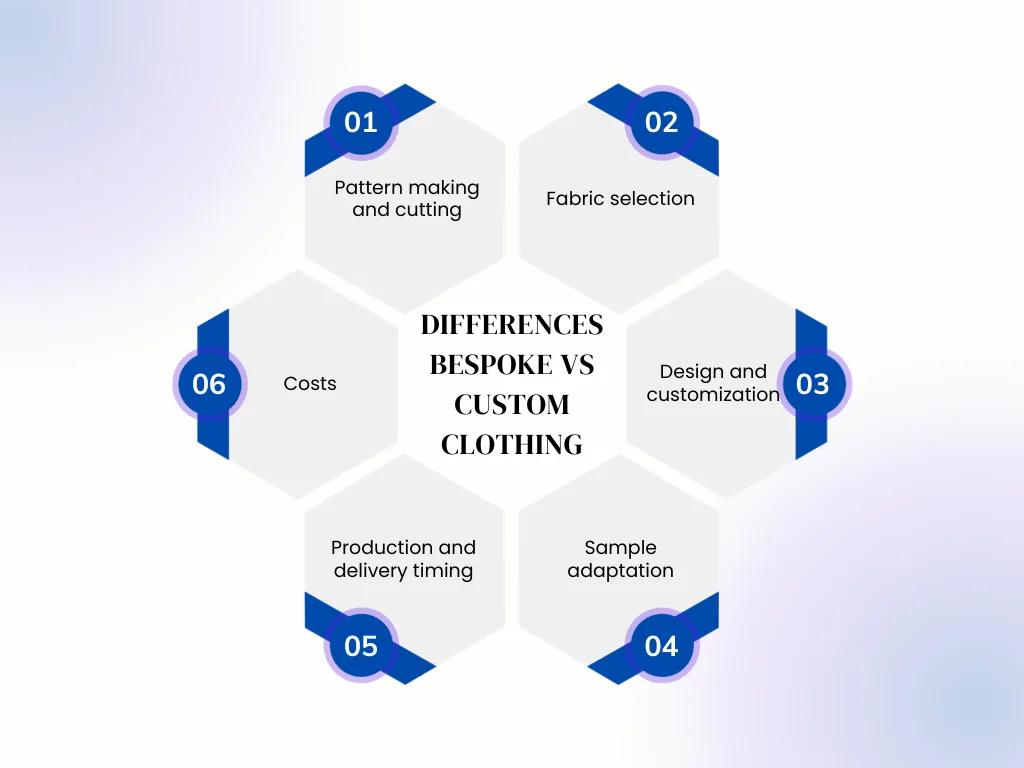
| What changes | Bespoke | Custom clothing |
|---|---|---|
| Pattern | Drafted from scratch for one person | Base block modified to your design |
| Cutting and sewing | Largely by hand | Machine, on a production line |
| Fabric | Specialist mills, luxury finishes | Commercial suppliers, chosen for the design and the cost |
| Fittings | Several, on the client | One or two samples, approved before the run |
| Timeline | Open-ended, driven by fittings | Agreed with the factory before production starts |
| Quantity | One | A run you can repeat and restock |
The row that decides everything for a brand is the last one. Bespoke produces a single garment. If your plan involves a size range, a restock or a wholesale account, the model has already ruled itself out, regardless of budget.
Bespoke manufacturing: why the phrase is a contradiction
People search for bespoke manufacturing and bespoke clothing manufacturers looking for a factory that will treat their brand the way a tailor treats a client. That instinct is right. The word is wrong, and the mismatch is why those searches usually end badly.
Manufacturing means repeatability: the same pattern, graded across sizes, cut in stacked layers, sewn by operators who each do one section. Bespoke means the opposite: no grading, no stacking, no repetition. A plant that genuinely produced bespoke would be a tailoring shop with one client at a time.
What that search is usually reaching for is full package production, where a factory develops the garment with you, sources the fabric, produces it and checks the quality, with one counterpart for the whole chain. You get the attention of a tailor at the development stage and the repeatability of a plant at the production stage. That is the model we run, and we explain it in what full package production is.
Which one fits your brand
If you are dressing one person for one occasion and the fit has to be exact, bespoke is the answer and a tailor is who you want. Nothing a factory does will beat a drafted pattern and three fittings.
If you are building a label, you need custom production, and the real questions become different ones: what is the minimum order, how long does development take, and who is responsible when a lot comes out wrong. We start at 36 units per style and colour, getting you an approved physical sample takes two to eight weeks, and the run itself takes 30 to 45 business days once you sign off. Every lot goes through four quality checkpoints before it ships.
Frequently asked questions about bespoke and custom clothing
What is bespoke clothing?
A garment made for one named client from a pattern drafted specifically for them, cut and largely sewn by hand, with several fittings before it is finished. There is no production run, because the pattern only fits that person.
What is the difference between bespoke and custom made?
Bespoke starts with a new pattern for one individual. Custom made starts from an existing pattern and adapts it, which is what allows it to be repeated across a production run. The practical difference is whether the garment can exist more than once.
Is made-to-measure the same as bespoke?
No. Made-to-measure adjusts an existing block to your measurements, usually with machine cutting and one fitting at most. It sits between off-the-rack and bespoke, and it is often sold under the bespoke label because the word carries more weight.
Can a factory produce bespoke garments?
Not in the strict sense, and any factory that says otherwise is selling you something else. What a factory can do is develop a garment specifically for your brand and then produce it consistently. That is full package production, and it is the model most brands are actually looking for.
Can you produce for a US brand from Colombia?
Yes, and it is a large part of what we do. Prices are quoted EXW by default, meaning the goods are valued at our facilities in Colombia, and we can also work DDP when it is agreed at the start. Import duties and customs charges depend on the authority of the destination country, so any estimate is subject to change.
Bespoke design meaning, in plain terms
Bespoke design means a garment drafted from one person's measurements, on a pattern that exists only for them. Nothing comes off a size chart and nothing gets graded into a run. The word is British tailoring vocabulary: the cloth was "spoken for" by a single client before anyone cut it.
That definition is what makes bespoke impossible to scale. Every piece restarts the pattern, and the fitting sessions belong to one body. Made to measure sits in between, adjusting a house block to your numbers, and custom manufacturing sits further out still: your design, your fit standard, produced in a size run for many customers.
How we work
GAT Fashion Lab is a fashion manufacturer in Colombia with more than twenty years in the business. We develop the garment, source the fabric and trims, produce it and audit the quality, with one counterpart from start to finish. What we do not do is worth saying too: we are not a tailoring house, we do not draft one-off patterns for individuals, and we do not work denim or structured outerwear such as coats.
If you are building a brand and want to know what your product would cost and how long it would take, tell us what you want to make in our quoting tool. It is free, the estimate arrives in minutes, and an advisor follows up. From Colombia to the world.