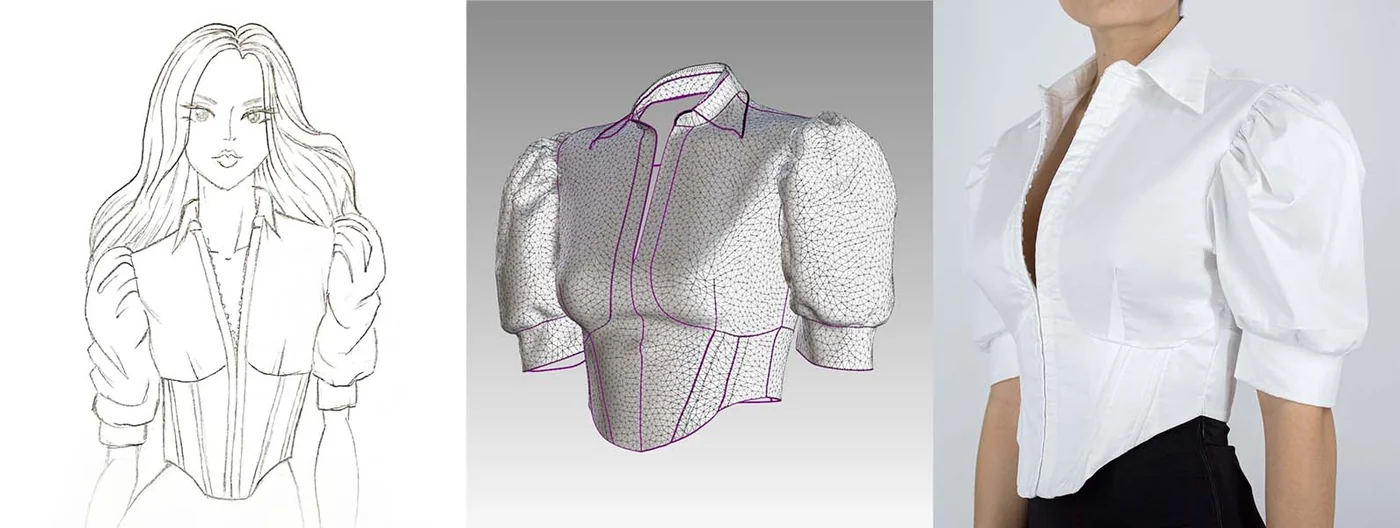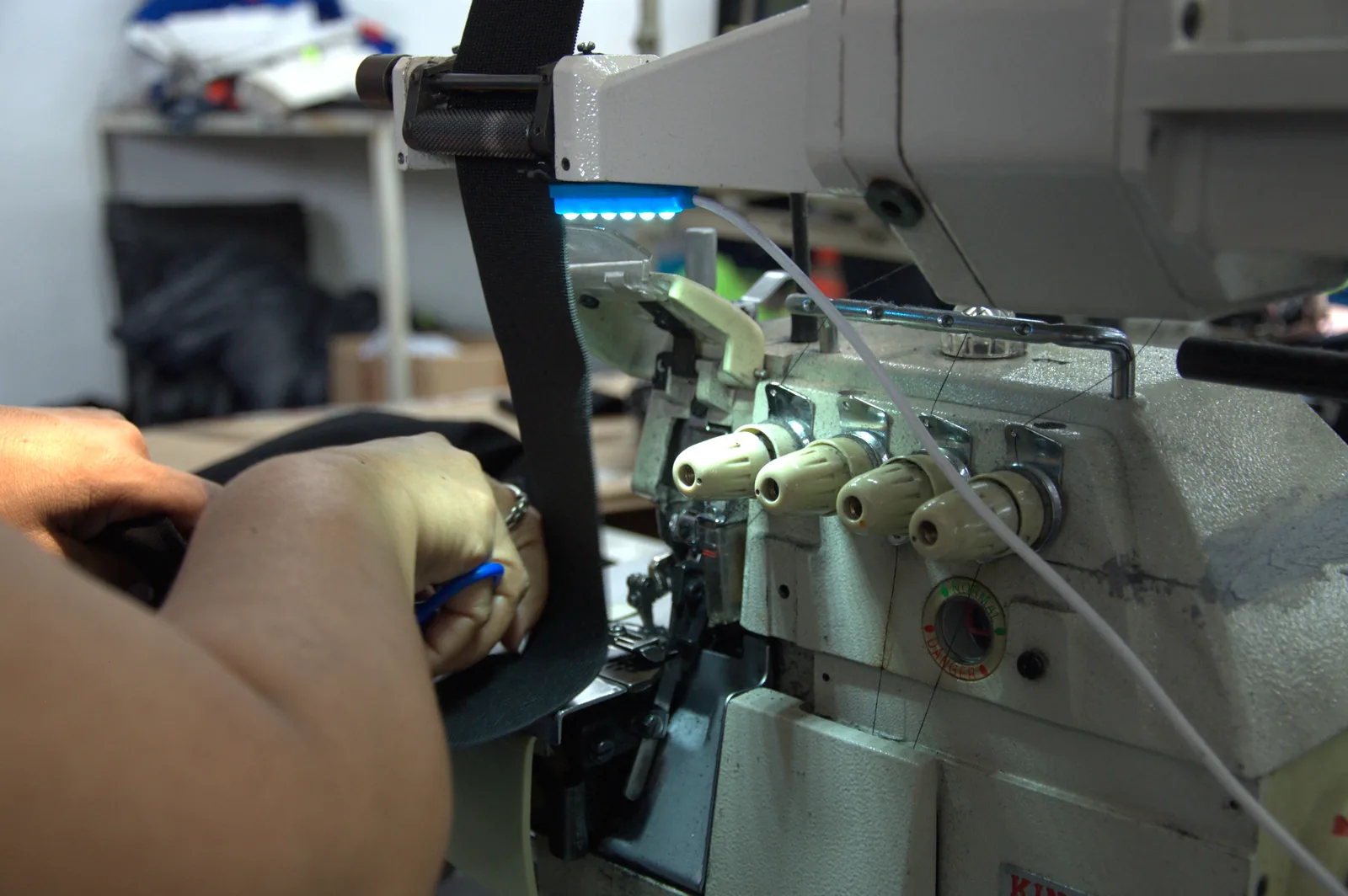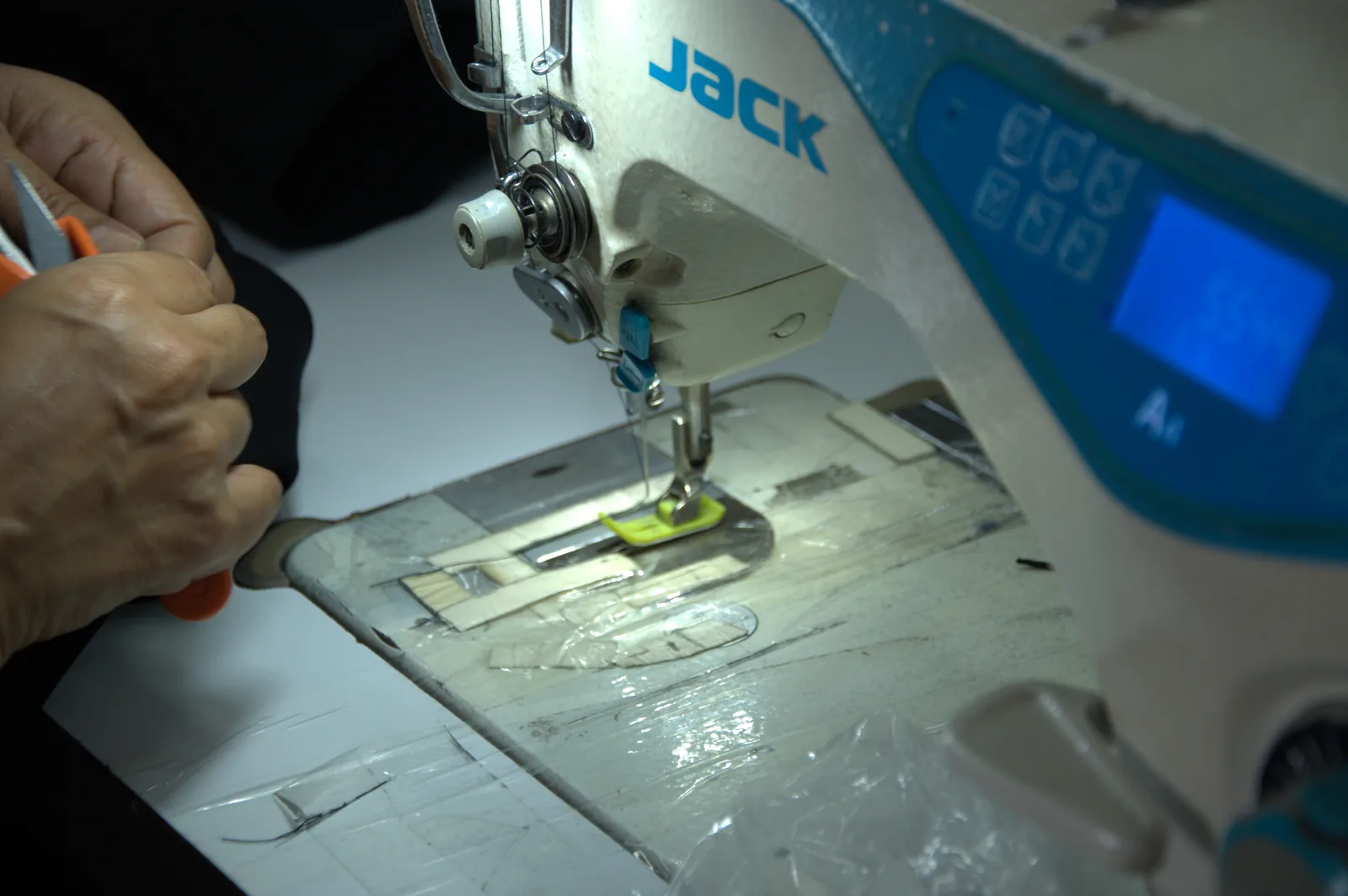

A clothing sample is a prototype garment made before production, to test fit, construction and appearance. A digital sample is the same garment simulated from its pattern on screen. The digital one settles fit and proportion in hours. The physical one is still needed to judge fabric, colour and finish.
Almost every expensive mistake in apparel is a decision that should have been made on a sample and was made on a spreadsheet instead. This page is about what each kind of sample proves, from a plant that makes both.
Why samples exist at all
A production run commits fabric, machine time and money against a design nobody has held. The sample is the only point where that design becomes a physical object cheap enough to reject.
Four things a sample settles that nothing else can:
- Fit. Whether the measurement chart produces a garment that works on a body, in movement rather than standing still.
- Construction. Whether the seams, the closures and the assembly order actually work at the chosen fabric weight.
- Appearance. How the design reads in three dimensions, which is regularly different from how it read as a drawing.
- Cost. The sample is where operation times get measured, which is what turns an estimate into a real unit price.
Skipping the sample to save time is the single most reliable way to produce a run of something that does not sell.
Digital samples: what they are
A digital sample is a simulation built from the same 2D pattern the factory would cut. The pattern pieces are stitched together virtually around a body, and the software simulates how the specified fabric drapes, pulls and sits.
The distinction that matters: this is not a drawing or an AI-generated image. It is generated from the pattern, which is why it predicts anything. Change the pattern and the simulation changes with it. That is also why a beautiful render built without real fabric parameters is a picture rather than a test.
What digital settles, and what it does not
| Question | Digital sample | Physical sample |
|---|---|---|
| Is the proportion right? | Yes, in hours, in as many versions as you want | Yes, in weeks |
| Does the pattern hang correctly? | Yes, and the fix goes straight into the pattern | Yes, after cutting and sewing it |
| How does it look in six colourways? | Six renders from one model | Six samples |
| How does the fabric feel? | No | Only here |
| Is the colour correct? | No. Screens emit light, fabric reflects it | Only here, under controlled light |
| How does it wear and wash? | No | Only here |
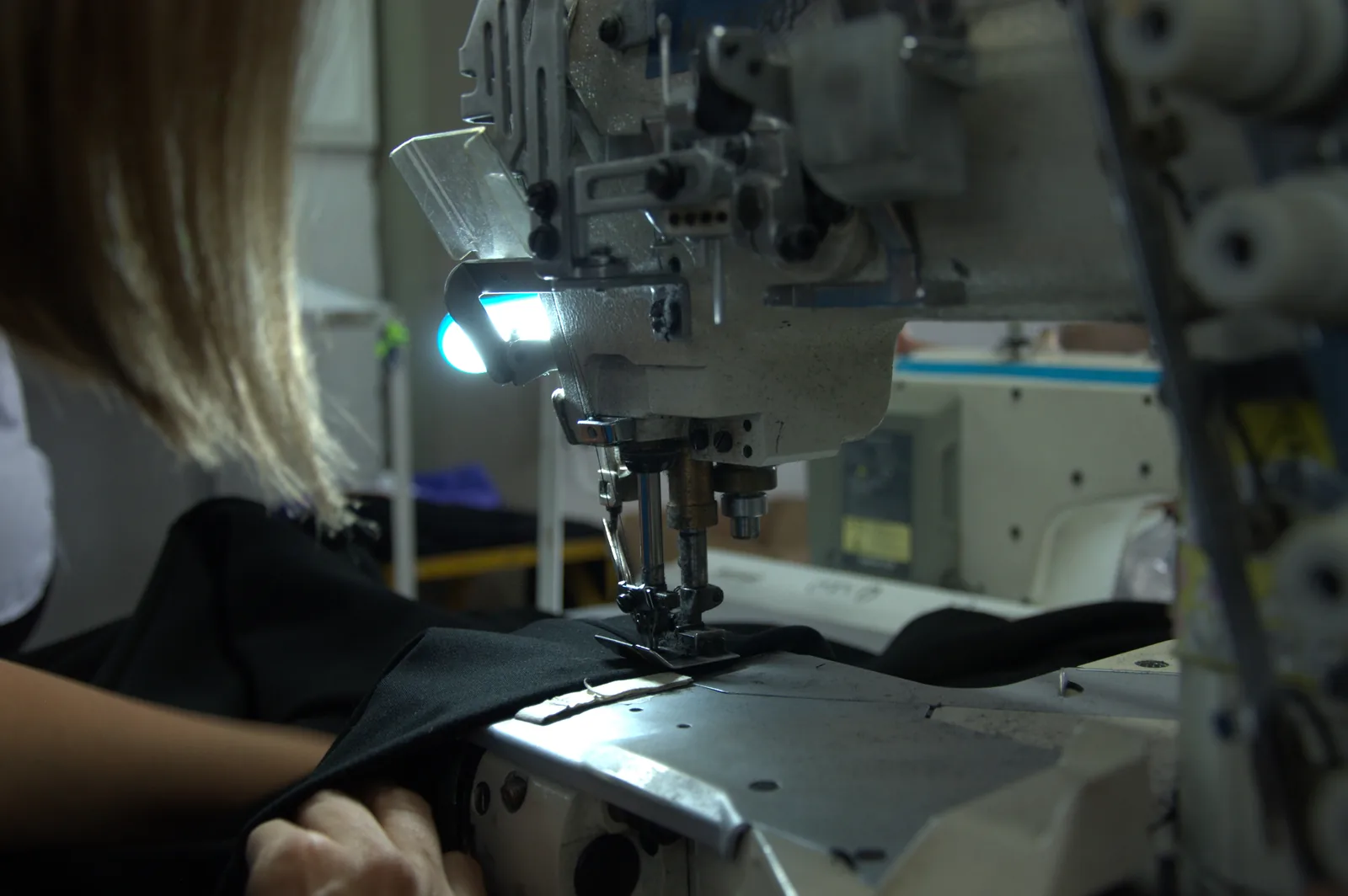
So the two are sequential rather than alternative. Digital removes most of the rounds. The last one stays physical, and anybody selling digital as a complete replacement is selling you a surprise at production.
What you get from working digitally
Iteration cost drops to near zero. Correcting a fit used to mean redrafting, cutting and sewing again. Now the expensive loop happens before anything is cut, and the physical sample arrives closer to right on the first attempt.
Fewer sample garments exist. Which is the sustainability argument, and it is a real one: cloth not cut is cloth not thrown away. It is also a smaller effect than fabric choice, so it is worth stating honestly rather than leading with it.
Decisions can involve more people. A render can reach a buyer, a co-founder or an investor the same day. A physical sample can be in one place at a time.
Presentation before production. Collections can be shown, and in some cases sold, before a single unit exists, which changes what a brand has to fund up front.
What it demands from you
Two things, and they are why some brands see no benefit from it.
The pattern has to be digital and correctly drafted. A simulation of a bad pattern is an accurate picture of a bad garment.
The fabric parameters have to be real. Weight, stretch, bending stiffness. Simulating with defaults produces a render that looks convincing and predicts nothing, which is worse than no render, because you will trust it.
Neither requirement is yours to solve if your manufacturer works this way. You need to be able to read what they send and say yes or no.
Frequently asked questions about clothing samples
What is a clothing sample?
A prototype garment made before a production run, used to check fit, construction, appearance and cost. It is the last point where a design can be corrected cheaply.
What is a digital sample?
A garment simulated on screen from its own 2D pattern, showing how the specified fabric would drape and fit. It replaces most physical sampling rounds without replacing the last one.
Why is sample making important in the fashion industry?
Because it is the only stage where the design exists as an object cheap enough to reject. Every decision deferred past the sample gets made on a full production run instead, at hundreds of times the cost.
Can digital samples replace physical ones?
Not entirely. They replace the rounds that test fit, proportion and construction. Hand feel, true colour and how a fabric wears can only be judged physically, so at least one physical sample stays in every development.
How long does a digital sample take?
Hours, from an existing pattern, against weeks for a physical one. The saving compounds with each correction, so the more a design needs adjusting the bigger the gap.
Is a digital sample the same as an AI-generated image?
No, and the difference is important. A digital sample is simulated from a real pattern and real fabric data. An AI image is generated from a description and contains no construction information at all.
Do I need special software to use digital samples?
Not if your manufacturer runs it. You receive renders and turntables and approve or correct them the same way you would a photograph of a physical sample.
Fashion sampling: what the stage is and why it exists
Fashion sampling is where a design becomes a physical garment before anyone commits to a production run. It normally takes three rounds: a first prototype that tests whether the pattern works at all, a fit sample corrected on a live model or a form, and a pre production sample that locks fabric, trims and finishing exactly as they will be made.
Fashion samples are the cheapest place to be wrong. A sleeve that reads short on a screen costs one round of corrections; the same sleeve found after cutting costs the whole run. That is the entire argument for the stage, and it holds whether the sample is sewn or rendered.
How we work
Every development at GAT Fashion Lab is simulated before it reaches the cutting table, and then sampled physically before it reaches production. That sequence is why fit corrections take hours here and why we still ask you to hold the garment before approving a run. The full timing, stage by stage, is in how long a clothing sample takes, and what our sample room hands back is described there.
To get a garment developed this way, describe it in our quoting tool. It costs nothing and the estimate arrives in minutes. From Colombia to the world.