
Clothing sample manufacturers with the line next door
A sample made in a studio that does not produce tells you how the garment looks. A sample made in the plant that will produce it tells you whether it can be built at all.
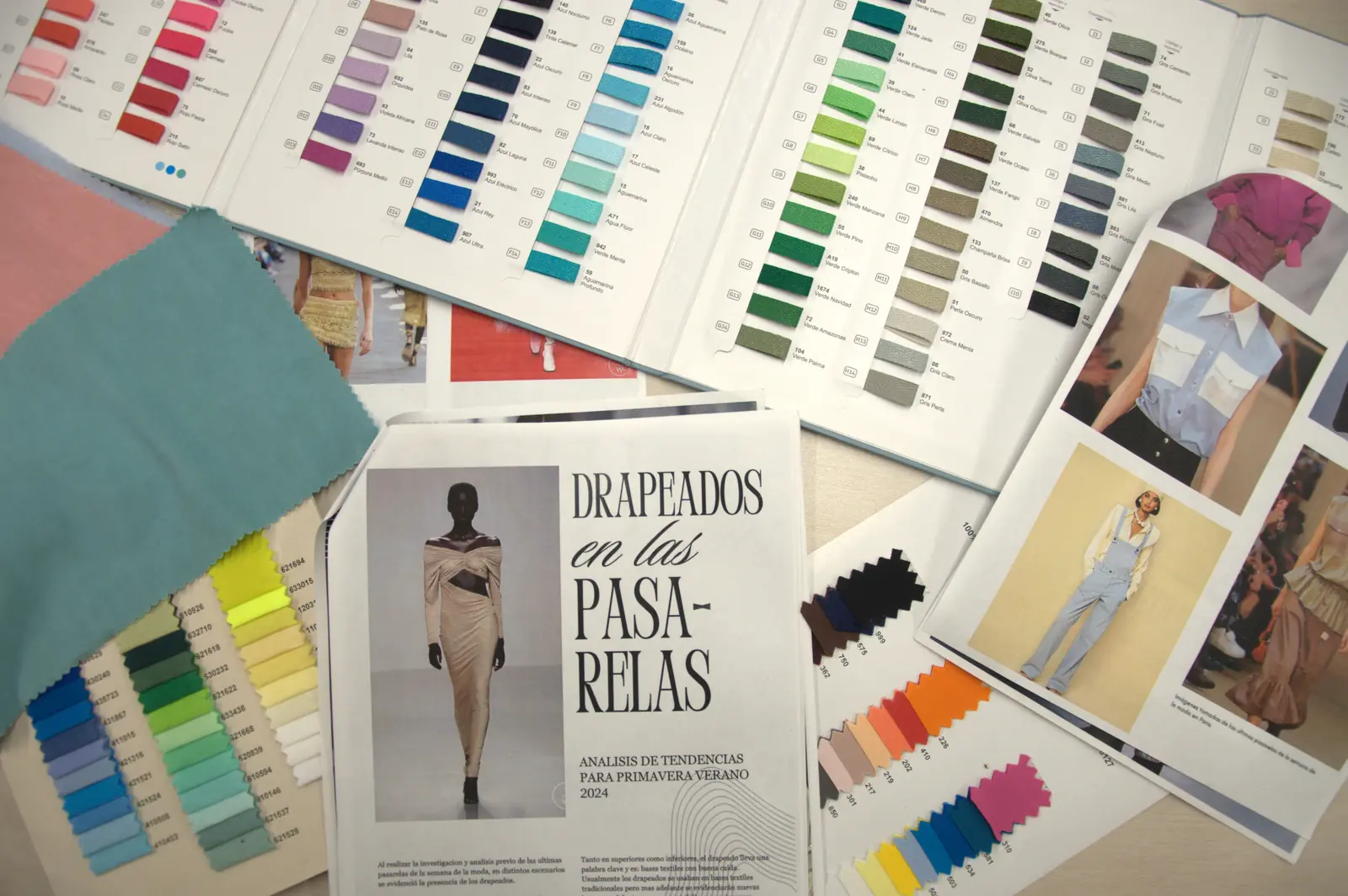
Clothing sample manufacturers turn a design into a physical garment before any production happens. We do it in our own sample room in Cali, on the same floor as the production lines: patterns cut for your piece, fabric and trims sourced, the garment sewn, corrected across rounds, and handed over with the tech pack. It takes 2 to 8 weeks depending on how many rounds the style needs.
What comes out of a sample round
- A sewn garment, in the fabric you are going to use, not an approximation in whatever was on the shelf.
- The pattern. Digital, graded, and yours once the project is paid in full.
- The tech pack, built during development: fabric, trims, measurement points and construction. If you arrived without one, you leave with one.
- A costing that means something. Once the piece exists, the price per unit stops being an estimate and starts being a number tied to real consumption and real operations.
- The approved standard. The sample you sign off becomes what the production run is measured against, and what the 4-point audit checks.
Why the sample room sits inside the plant
A pattern that looks correct on screen can be unsewable on a real machine, or sewable only with an operation that doubles the cost. The people who would have to build it are the ones who find that out, and they find it out fastest when they are twenty metres away.
That proximity also shortens the loop. A correction discussed in the morning can be cut in the afternoon. Compare that to a sample travelling between continents: each round costs weeks of courier time before anyone has learned anything, which is how a first collection loses a season without a single mistake being made.
Our team develops 120+ new styles every month. Most of them arrive as a photo and a conversation, not as a finished specification.
From the sample to the run
Sampling is stage one of a longer path, and it is the stage where a project is actually decided. Once the sample is approved, production runs 30 to 45 business days, from 36 pieces per style and colour. If a style sells and you come back for more, the restock needs its own 30 to 45 business days, which is why most brands open between 100 and 300 pieces rather than at the floor.
Where the sample leads next depends on what you are building. Product development is the full version of this stage for a collection rather than a single piece. Cut and sew picks it up when you supply the materials. Full package runs sourcing, production and export as one project. If you are weighing turnaround before you commit, how sample production time is actually spent has the detail.
Twenty years of sample rooms, 130+ people on the floor, and brands that arrived with a sketch: Monastery, Ela, Studio F, Pink Rose and TERS Apparel. Daniel González designs from the United States. The fabric is sourced globally, the sewing happens in Cali, the piece flies to him for a verdict, and the collection is produced once he signs off.











Frequently asked questions
Do I need a tech pack to order a sample?+
No. A reference garment, a clear photo or a sketch is enough to start. The tech pack is one of the things you get back, built while we develop the piece.
How many rounds does a sample usually take?+
Two or three. Planning for one is the single most common budgeting mistake we see: almost nothing is right on the first attempt, and the rounds are where the fit gets decided.
Can I order samples without producing with you afterwards?+
Yes, and some brands do exactly that. We would rather build the sample properly than tie it to a commitment you are not ready to make. That said, the sample is most useful when the plant that made it also makes the run.
Who owns the pattern?+
You do, once the project is paid in full. The digital pattern transfers to you, and your designs, photos and specs stay confidential under standard non-disclosure terms. Ask any sample maker this question before you start.
Can you sample a garment I want to reproduce?+
We can develop from your own reference or a piece you already own, and build a sample so you can compare fit and hand before producing. We will not reproduce a design protected by somebody else's intellectual property.
How do samples reach me outside Colombia?+
By courier, and Colombia is five to six flight hours from either US coast, so the round trip is measured in days. We quote EXW at our facilities in Colombia, and DDP when it is agreed up front.
Send the sketch, the photo or the garment
We tell you what it takes to build it, and the estimate is free.
Request a quote