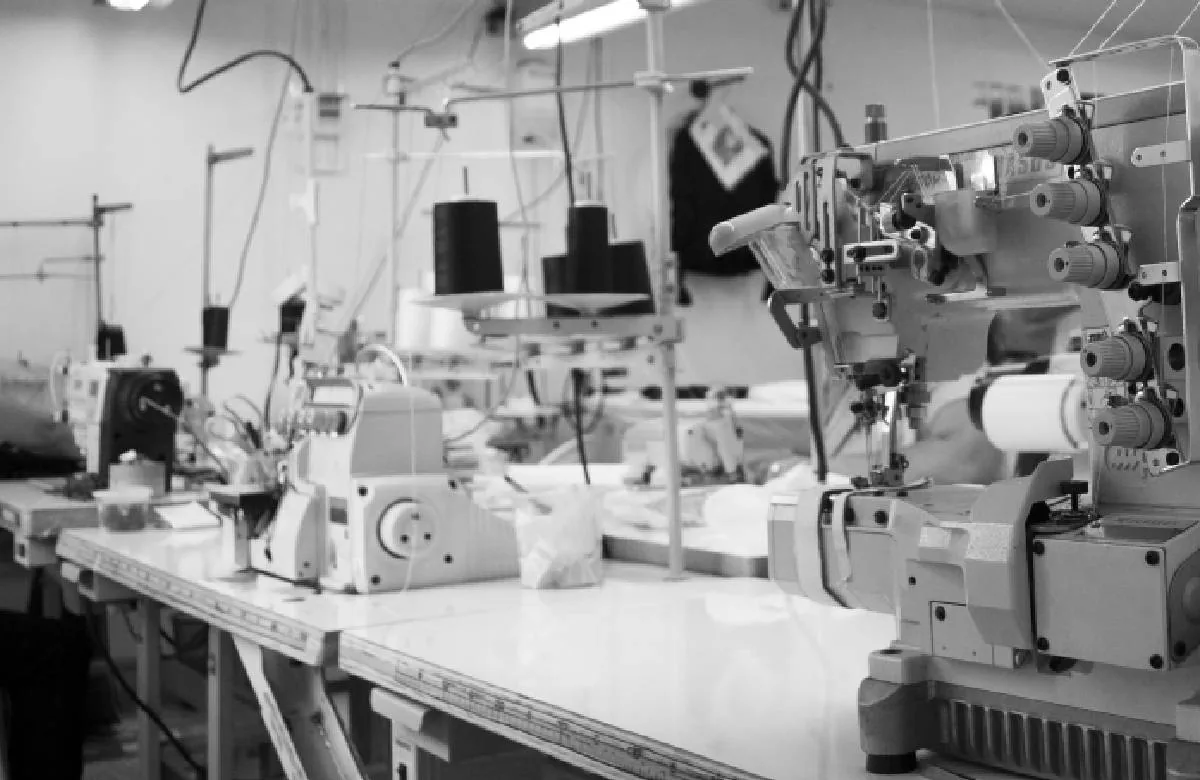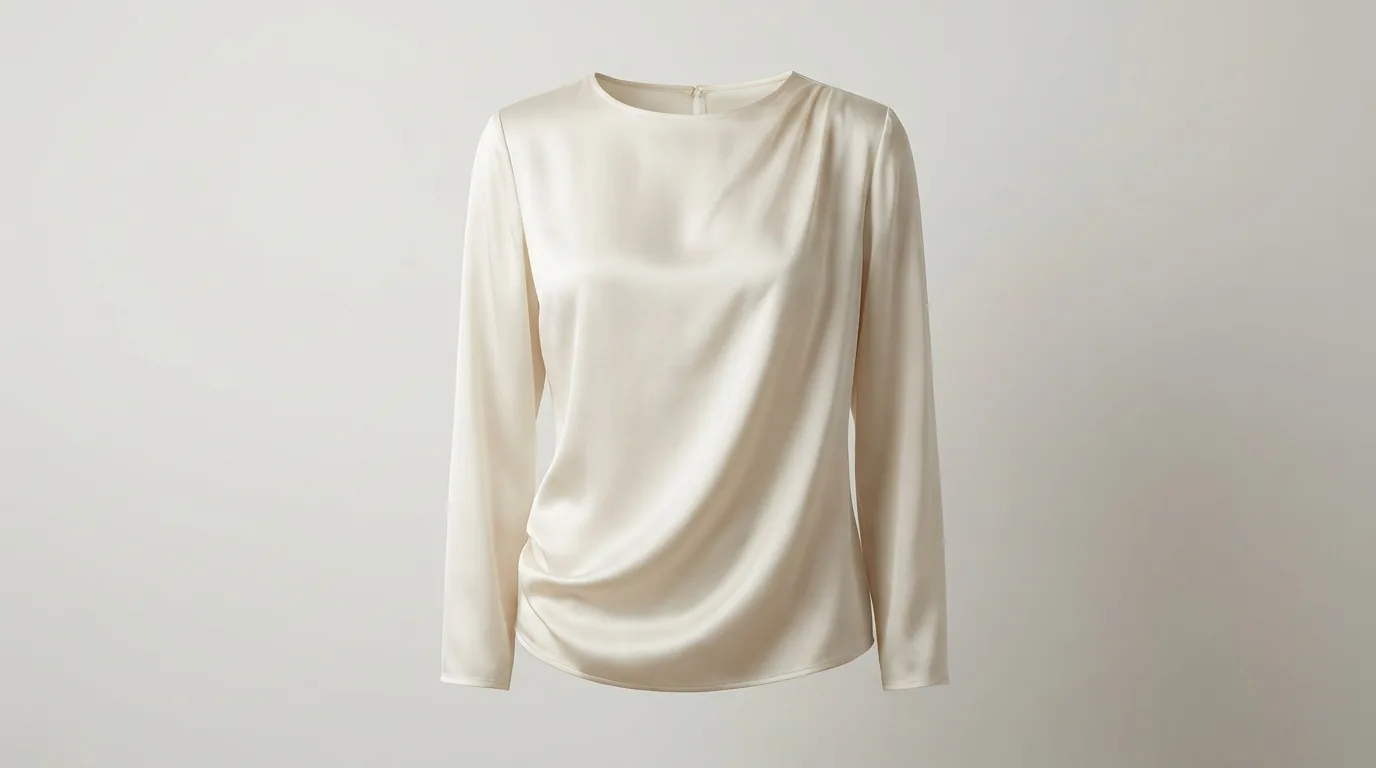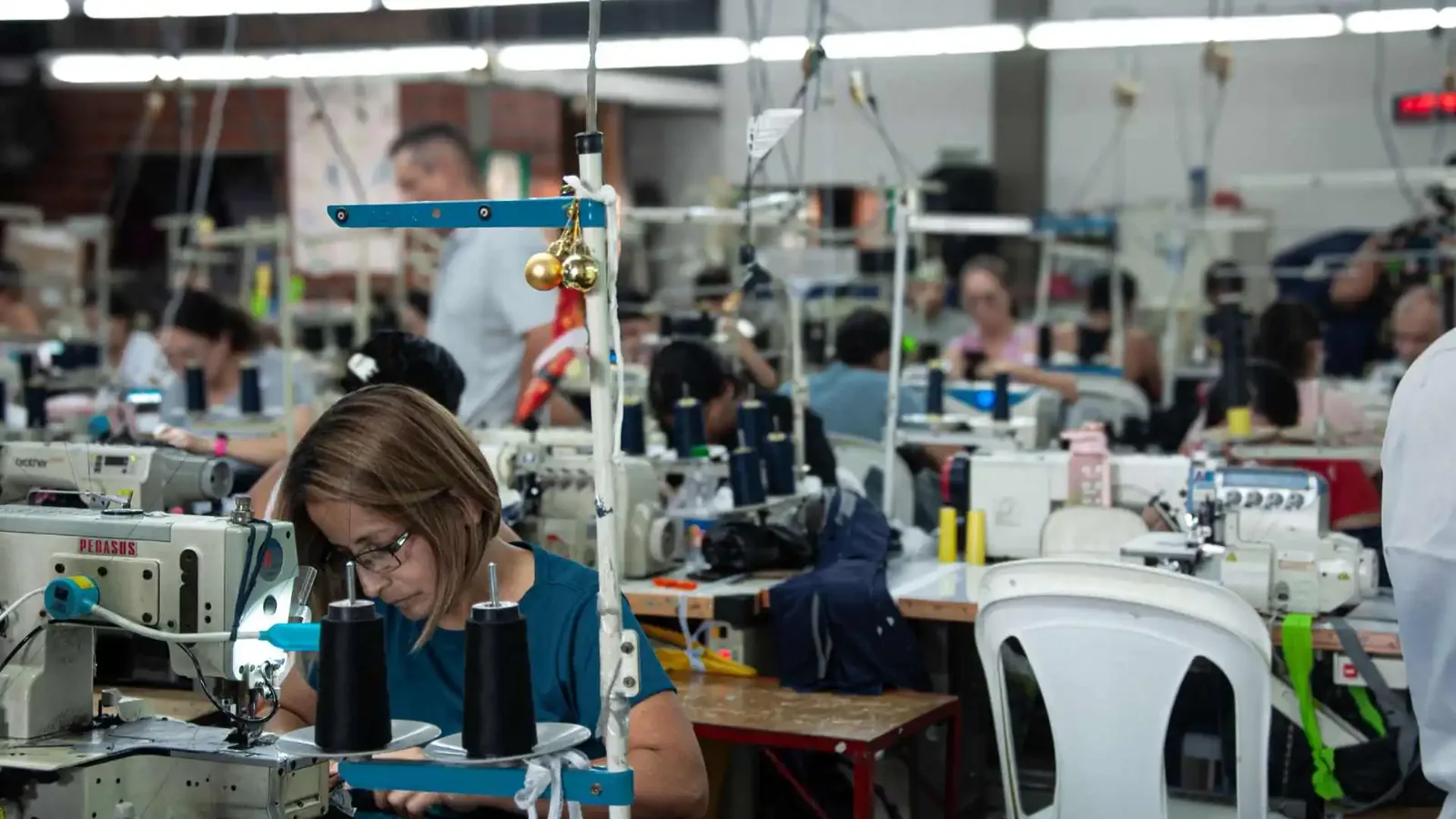

Private label means buying a garment the manufacturer already developed and putting your label on it. Custom manufacturing means the garment is built to your design, from your pattern and your chosen fabric. One is a catalogue with your name on it. The other is a product only you sell.
Both words get used loosely by suppliers, including by suppliers who only do one of them, and a quote that does not say which model it is describing is not comparable to anything. This page is the version we use internally to sort an enquiry, written from a plant that does the custom side and stopped doing the other one.
What private label clothing manufacturing is
A manufacturer develops a garment on its own initiative, produces it without any brand marks, and sells it to multiple buyers who each apply their own label, hangtag and packaging. The design work happened before you arrived and it was not paid for by you.
What you can usually change: colour, label, tag, packaging, sometimes fabric within the options the factory already runs. What you cannot change is the pattern. The garment's fit and construction are fixed, because they are shared across every buyer of that style.
Exclusivity is sometimes purchasable. A brand can pay for the right to be the only one selling a given style, which turns a shared garment into something closer to its own. Whether that is worth the premium depends entirely on how distinctive the style was to begin with.
What custom clothing manufacturing is
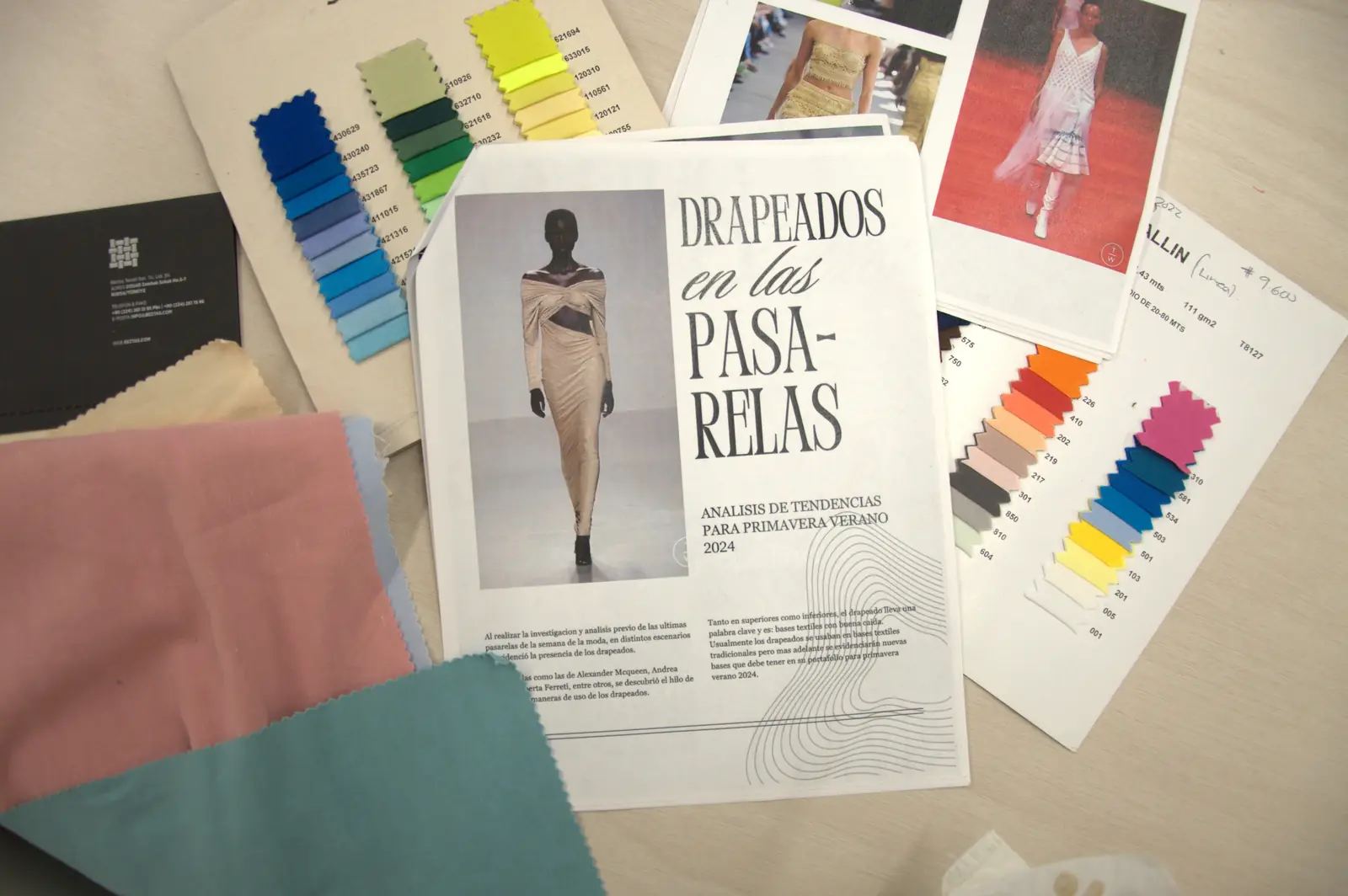
The garment does not exist until you commission it. You bring a design intent, and the process runs through pattern making, a technical file, fabric and trim sourcing, sampling, then cutting and sewing a production run.
Everything is open: silhouette, fit, fabric weight, neckline, seams, trims, sizing curve. Nothing is inherited, which is the advantage and also the reason it costs more and takes longer.
Custom and full package get confused constantly. Full package describes who does the work, one supplier carrying the whole chain including buying materials. Custom describes how much of the garment is yours. A supplier can be full package and still work from its own catalogue, and a supplier can do bespoke patterns while asking you to send the fabric. What custom clothing manufacturing covers goes through the stages one by one.
The differences that actually change your decision
| Private label | Custom manufacturing | |
|---|---|---|
| Who owns the pattern | The manufacturer | You |
| Time to first stock | Weeks. The garment already exists | Development plus production. Months, realistically |
| Upfront cost | Low. No development to pay for | Higher. You are funding pattern, samples and sourcing |
| Cost per unit | Lower at the same volume | Higher, and falls faster as the run grows |
| Minimum order | Usually modest, set by the factory's run | Set per style and colour, since each is a separate setup |
| What competitors can copy | Everything. They can buy the identical garment | Nothing directly. They would have to develop it |
| Best for | Testing a market, filling a range, basics | The pieces your brand is actually known for |
Contract manufacturing, and where it sits
Contract manufacturing is a third term that shows up in the same searches and means something different again: a factory producing to a client's specification under an ongoing agreement, usually at volume. In practice it overlaps heavily with custom manufacturing, and the distinction is commercial rather than technical. It describes the contract, not the garment.
If a supplier offers you contract manufacturing, the questions that matter are still the same two. Who drew the pattern, and who buys the fabric.
Streetwear and fast fashion, since the comparison comes up
Brands comparing custom streetwear production against a fast fashion supply chain are really comparing two different bets on inventory. Fast fashion volume buys a low unit cost against a forecast, and the risk is unsold stock. Custom production at smaller runs costs more per piece and lets you be wrong in smaller amounts.
For an emerging streetwear label the arithmetic usually favours the second, because the failure mode of the first is a garage full of one colourway. The exception is a piece you already know sells, where committing to volume is the whole point.
Which one to choose
Two questions decide it, and neither is about budget.
- Is the garment the reason someone buys from you? If yes, it has to be custom. A shared pattern cannot carry a brand identity, because it is not yours to carry it.
- Do you know what sells yet? If no, private label is a cheaper way to find out. Learn on someone else's development cost and commit to your own once the answer is in.
Most brands end up running both, and the split usually lands the same way: the signature pieces are developed, the range fillers are bought. Nobody develops a plain black tee from scratch unless the tee is the point.
Once the garment is yours, fabric becomes the decision that drives cost and drape. Our fabric guide goes through the options.
Frequently asked questions about private label and custom manufacturing
What is private label clothing manufacturing?
A manufacturer develops and produces a garment, then sells it unbranded to multiple buyers who add their own labels. You are buying a finished product and a name on it, not a development process.
Is private label the same as white label?
Not quite, and the difference is exclusivity. White label products are generic and sold identically to everyone. Private label allows some adaptation for the buyer and sometimes exclusive rights. The full comparison is here.
Is private label cheaper than custom manufacturing?
To start with, yes, and by a wide margin, because the development is already paid for. Over the life of a style the gap narrows, and it disappears entirely if you were going to sell enough volume to amortise your own pattern.
What is the minimum order for custom clothing manufacturing?
It is set per style and per colour, because each combination is a separate cutting and sewing setup. Ours opens at 36 of a style in one colour, which is unusually low. Read it as a test quantity: replacing those 36 takes another 30 to 45 business days, and that gap is the real argument for 100 to 300. Most plants start considerably higher.
Can I modify a private label garment?
Within limits the factory has already built. Colour, labelling, packaging and sometimes fabric, yes. Pattern changes, no, because the pattern is shared with the other buyers of that style. Wanting a pattern change is the signal that you have moved to custom.
Does GAT sell a private label catalogue?
No. We retired it. What we do is custom full package production, which means we develop and build the garment you specify rather than selling you one we already made. If a ready-made catalogue is what you need, we are the wrong supplier and we would rather say so early.
What "best private label clothing manufacturers" actually means for you
There is no single best, because the lists rank on volume and you are not buying volume. The supplier that fits is the one whose opening quantity matches your first order, whose categories include what you sell, and whose calendar lets you restock before the shelf empties. A plant that is excellent at 10,000 pieces is a bad fit at 300, and the reverse is equally true.
Rank candidates on four things instead: the minimum they will actually accept, whether they develop patterns or only sew, business days from approved sample to delivery, and whether they will name a brand they produce for today. That comparison sorts a shortlist in an afternoon.
How we work
Everything GAT Fashion Lab makes is developed for the brand that ordered it, in Cali, Colombia, and that has been the model for over twenty years. Development, sourcing, production and quality answer to the same team, so there is no handoff between four companies for you to manage. Two limits worth stating up front: no denim, and no tailored outerwear. Categories where the specification does most of the work, such as streetwear, are where the difference on this page stops being theoretical. For the private label side on its own, see how private label clothing manufacturing works with GAT.
To see what a garment of your own would cost, put it into our quoting tool. Free, minutes for an estimate, then a person. From Colombia to the world.