
A traditional clothing factory sells sewing capacity: you ship the fabric, the trims and the pattern, and it ships back stitched garments. A fashion full package service sells the finished product: it sources the materials, develops the pattern, cuts, sews, inspects and packs. The gap is not quality. It is how much of the supply chain you keep running.
Both models produce the same garment on the same machines, so a brand comparing two quotes rarely notices the difference until the fabric is late and nobody agreed on whose problem that is. GAT Fashion Lab quotes the wide version as full package clothing manufacturing and the narrow one as cut and sew manufacturing, and the article below is the checklist we use to decide which one a project belongs in.
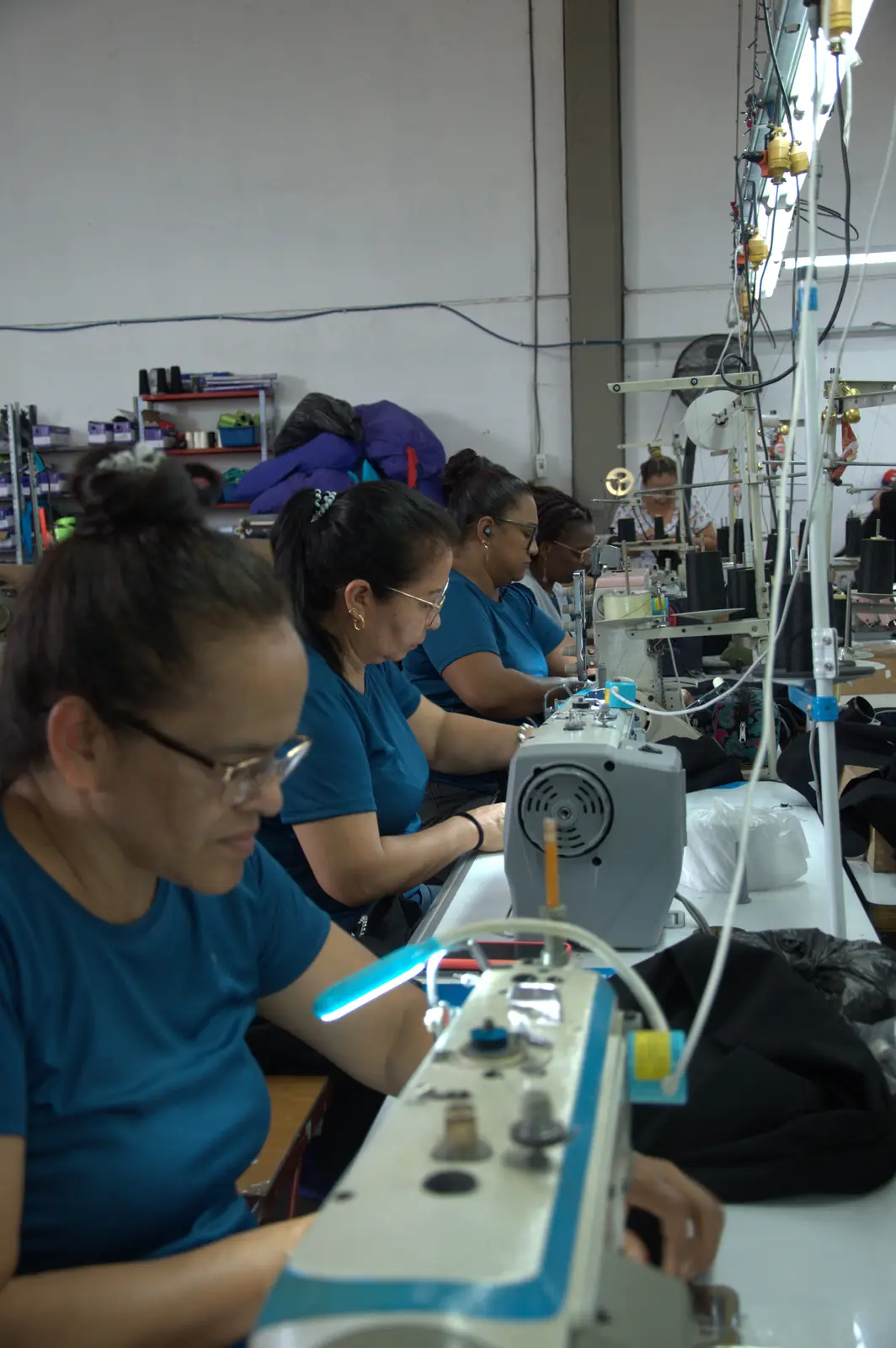
What a traditional clothing factory sells
The older arrangement is sometimes called tolling, and it is a labour contract dressed as a manufacturing one. The plant contributes machines, operators and floor space. Everything the garment is made of arrives from you.
- You buy the fabric and get it to the plant, on time and in the right width.
- You buy the trims: thread, zippers, buttons, elastic, labels, hangtags.
- You own the pattern, already graded across the sizes you plan to sell.
- You absorb the delay when any of the above arrives late, because the sewing line was booked for a week that has now passed.
The invoice looks smaller for an obvious reason: it contains labour and almost nothing else. Whether the total cost is smaller depends on what your time and your purchasing power are worth, and on how far you live from the mills.
What a full package service adds on top of the sewing
Full package covers the same cutting and sewing plus the work that happens before and after it. At GAT the model runs as Full Package 360°, eight internal stages that begin with a reference image and end with a packed box.
- Reading the reference: a sketch, a photo, or a garment you already sell and want matched.
- Searching for fabric and trims, with swatches sent for your sign off.
- Digital pattern making and the tech pack written from it.
- A physical sample, sewn and shipped so you can fit it on a body.
- Your written approval, which is the gate nothing crosses without.
- Purchasing of the full material order at production volume.
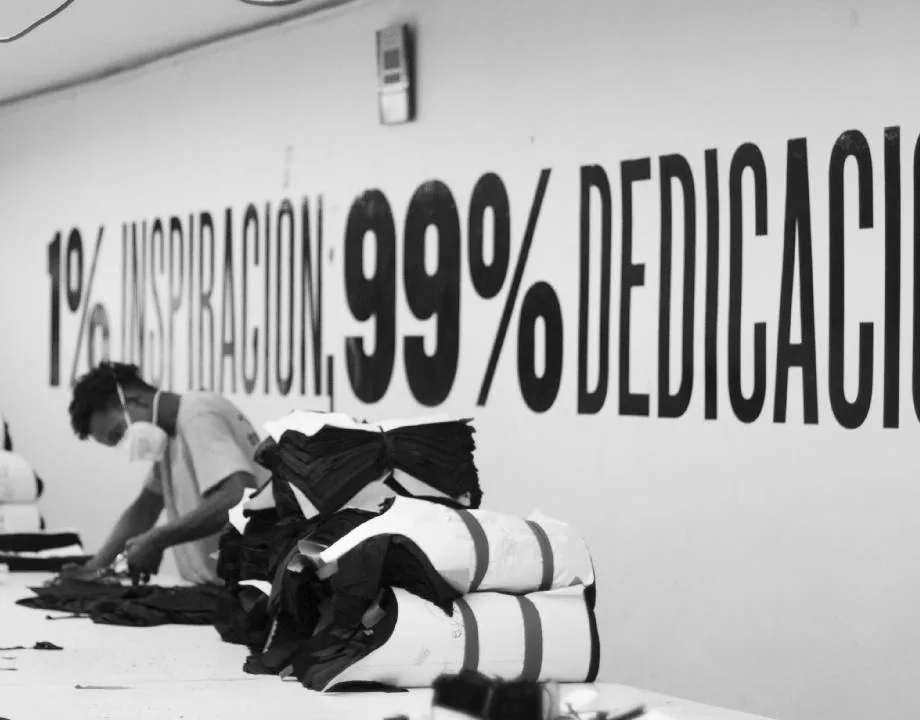
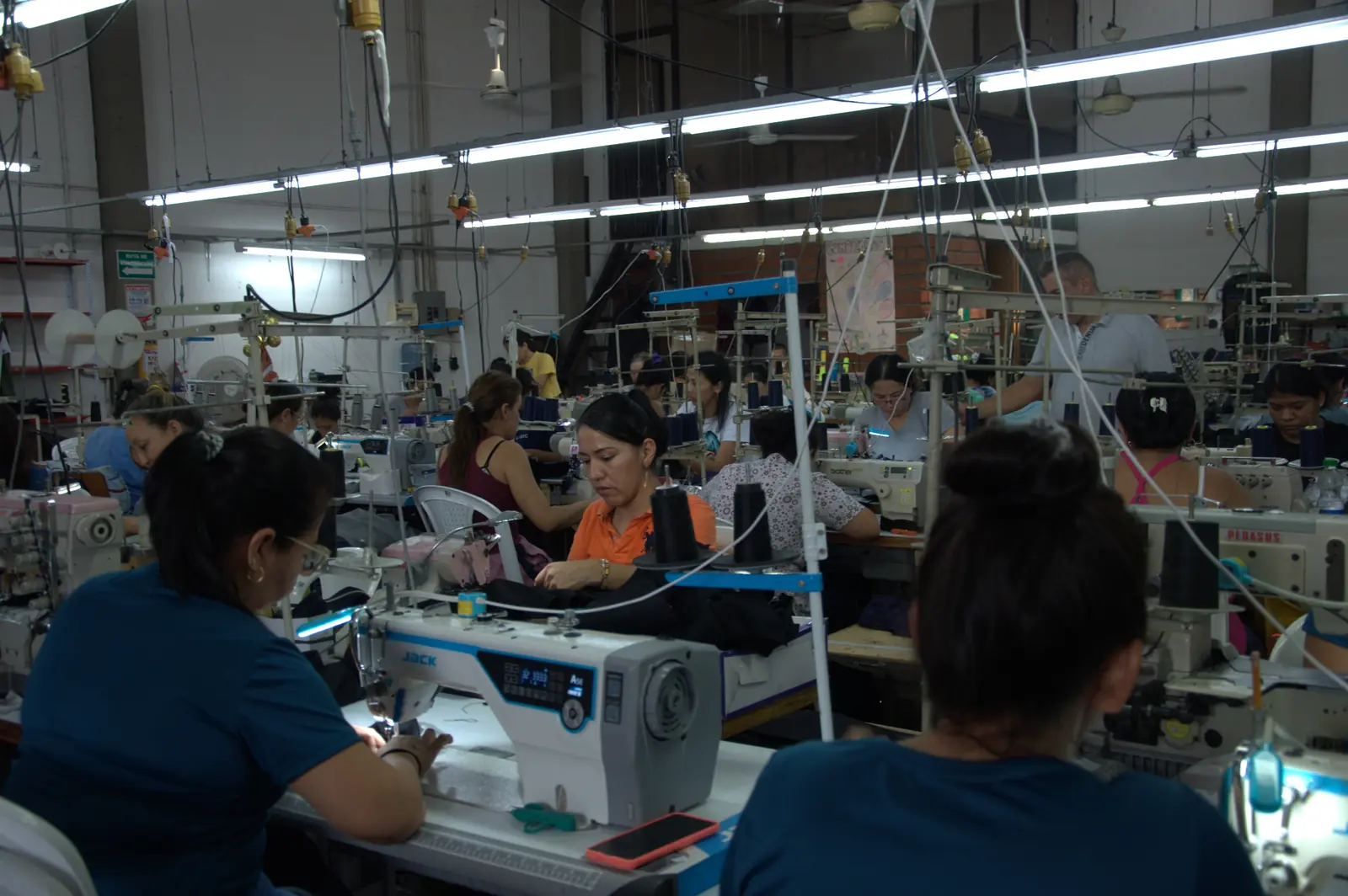
- Cutting, processes and supervised sewing in our own facilities.
- Piece by piece inspection, then labelling, folding, bagging and dispatch.
Two ranges govern the calendar. Development moves between two and eight weeks, depending on how unusual the style is and how hard the fabric is to locate. Production runs 30 to 45 business days counted from your approval of the sample. The sequence with your responsibilities marked is laid out in how we work with brands.
Three questions that reveal which one you are being quoted
Suppliers use the two names loosely, and some sell a sewing service under a full package heading. These three questions settle it in one email.
- Who places the order with the mill? If the answer is you, the quote is a sewing quote whatever the heading says.
- Who writes the tech pack and grades the pattern? A plant that expects a finished technical file is selling capacity, not development.
- What happens to a garment that fails inspection? In a package, the supplier that bought the fabric also owns the replacement. In tolling, the fabric was yours and so is the loss.
A fourth question is worth asking even though it does not classify anything: what sits outside the quoted price. Branded labels, custom hangtags and special packaging carry their own minimums almost everywhere, and freight and import charges are set by your country rather than by any factory.
When a plain clothing factory is the right call
Nothing about the wider model makes it correct for every brand. Sewing capacity alone is the better purchase in three situations.
- You already have a mill relationship worth protecting. A brand built on one specific fabric should not hand that purchase to a third party.
- You already bought the fabric. Paying for a package that excludes its main input makes no sense, and CMT manufacturing exists precisely for this case.
- You have an in house designer and a graded pattern library. Development you have already paid for should not be quoted to you twice.
The reverse is just as clear. A brand with a reference image, no technical file and no supplier list will spend more months assembling a sewing quote than it would spend producing under a package, and the months are the expensive part.
The four ways to buy production, side by side
Two questions separate all of them: who owns the materials, and who owns the design.
Cut and sew
Your fabric, your pattern, our labour. The narrowest scope and the heaviest logistics load on your side.
CMT
Cut, make and trim tightens it further, down to shipping the buttons and the zippers yourself. Maximum control over material cost.
Private label
A product the factory already developed, adapted and sold under your name. Quickest to shelf because the pattern has been sewn before, and the least room to make it yours. The full comparison is in private label versus custom manufacturing.
Full package
Your design, our sourcing, our production, one contract. The terminology and the acronym behind it are unpacked in what FPP stands for.
Frequently asked questions about clothing factory vs full package
Is a clothing factory the same as a full package manufacturer?
No. Every full package manufacturer runs a clothing factory, but not every clothing factory sells full package. The word factory describes a place with cutting tables and sewing machines. Full package describes a commercial scope that includes sourcing the fabric, developing the pattern and taking responsibility for the finished garment.
Which model costs less for a small brand?
The sewing only quote is always the lower number on paper, because the fabric is not inside it. Once a small brand adds the mill minimums it has to meet alone, the freight to move the roll and the weeks spent coordinating three suppliers, the package usually wins on total cost, and it reliably wins on calendar time.
Can I start with full package and move to cut and sew later?
Yes, and plenty of brands do exactly that. Once the pattern is proven and you have found a mill you trust, moving to a sewing only contract is a reasonable next step. At GAT the patterns developed for your styles are yours, so that transition does not cost you the technical work you already paid for.
What is the minimum order in each model?
At GAT a full package order starts from 36 pieces per style, counted separately for each colour, which lets a brand test a style without tying its budget to inventory it has not sold yet. A sewing only contract has a different floor, because the constraint moves to whatever minimum your own mill imposes on the fabric purchase. Budget for the restock while you are still deciding, because another 30 to 45 business days pass before the second run lands, and that is why most brands open with 100 to 300.
Do I need a tech pack to ask for a quote?
Not for full package. A reference image is enough to open the conversation, and the technical file gets written during development and reviewed by you before the first sample is cut. For a sewing only contract the tech pack is a prerequisite, since the plant is being asked to execute a specification rather than create one.
Which model fits your brand right now
If you own the fabric and the graded pattern, you are shopping for sewing capacity and should compare plants on lead time, inspection standard and how quickly they reply. If you own a reference image and a target price, you are shopping for a package, and the supplier list matters less than whether the plant will develop the style with you.
We cut and sew in Cali, Colombia, and have been doing it for over 20 years with more than 130 collaborators, 75% of them women, and a capacity in the range of 25,000 to 30,000 units a month. Quotes are EXW from our facilities by default, and DDP when a brand agrees it at the start. The brands already producing with us are on our customers page. Upload a reference image to our quoting tool and we will tell you which of the two models your project actually needs.