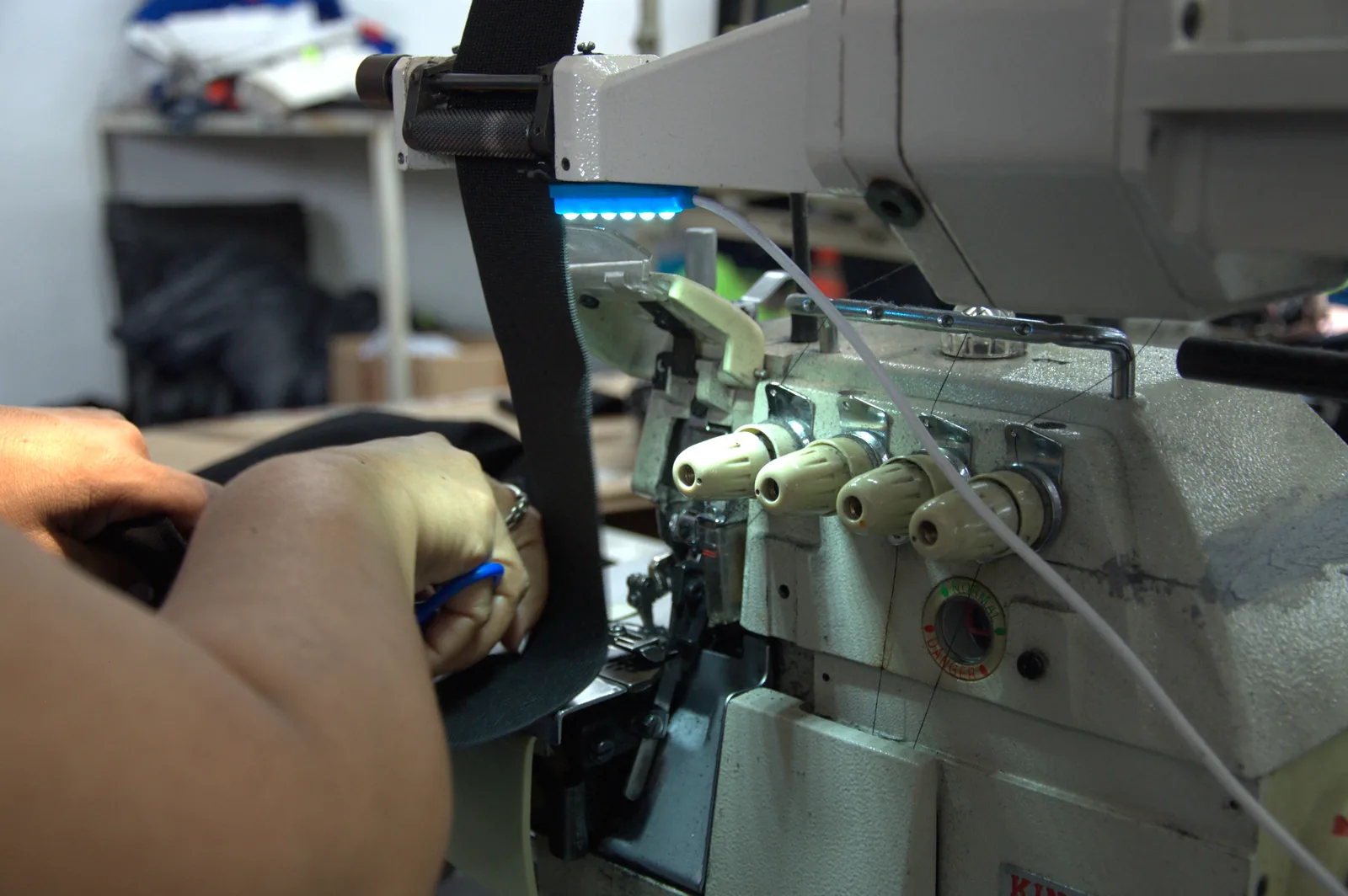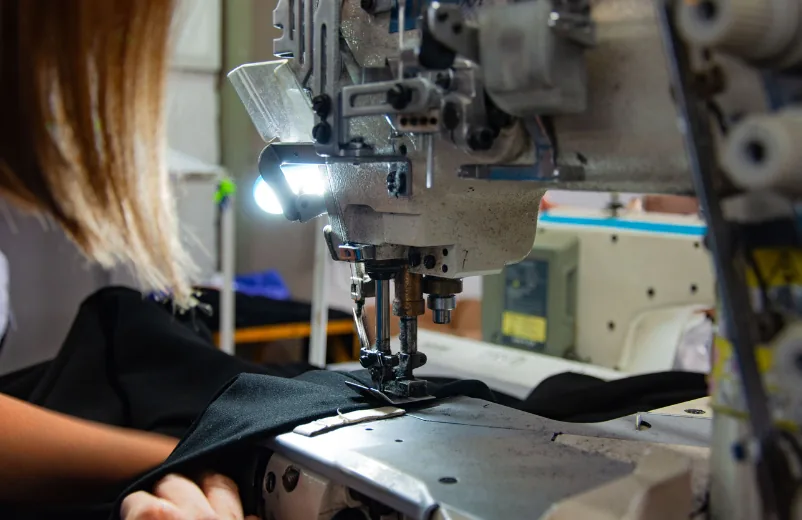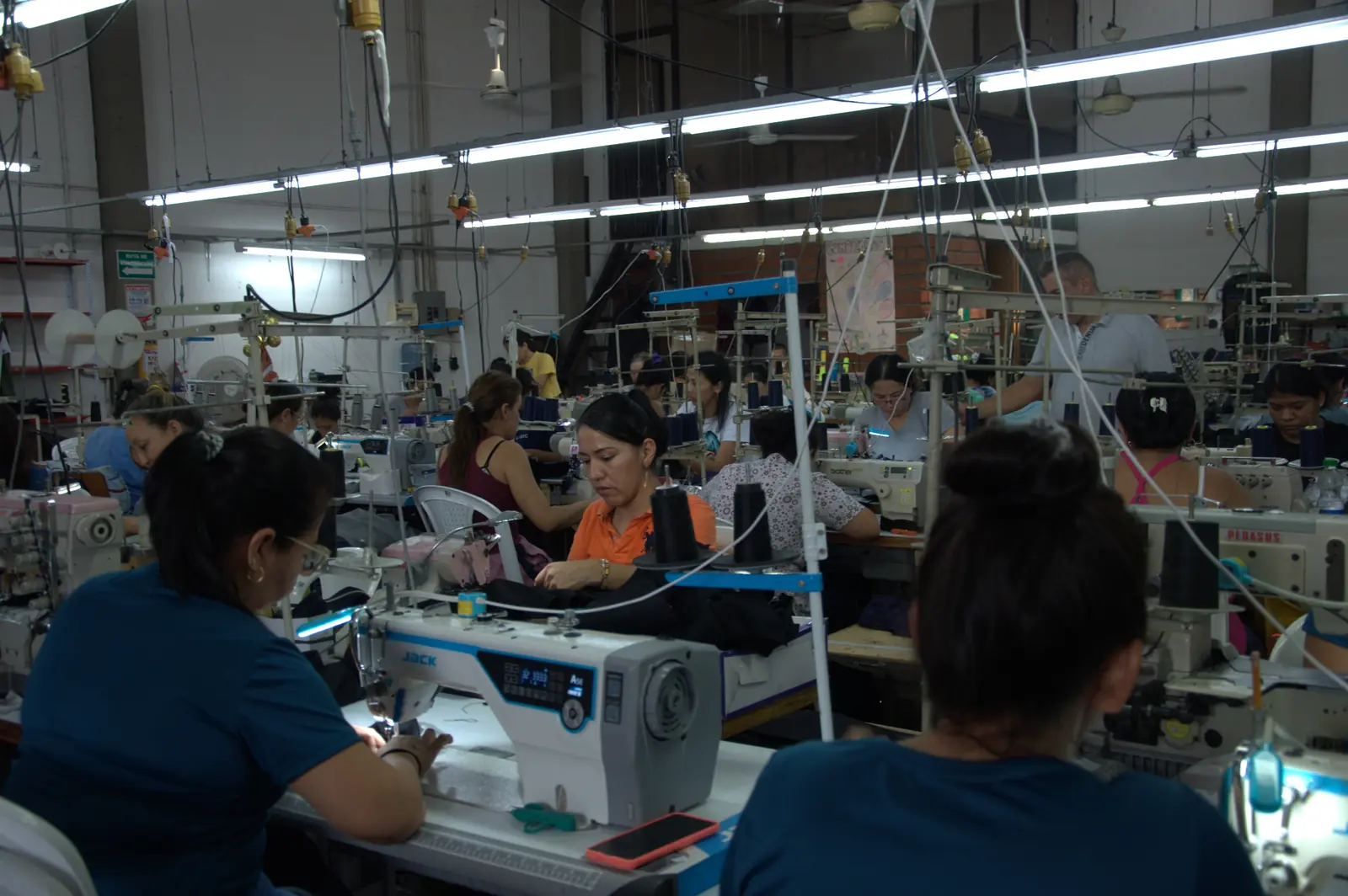

Choosing a clothing manufacturer comes down to whether they can make your specific garment, at your quantity, at a price your retail supports, on a schedule you can plan around. Everything else is secondary. The checks below are ordered by how expensive it is to get each one wrong.
We sit on the other side of this conversation several times a week, which means we also see the enquiries that were never going to work. Most of them fail on the first three points, and almost none of them fail on the ones brands worry about most.
1. Can they make your garment at all
Plants are built around garment categories, and the machines decide what is possible. A workshop set up for knit tops does not have the equipment for tailored jackets, and a denim plant is a different industry again.
Ask what they produce most of. If your product is not on that list, everything else about them is irrelevant, however good they are. This is the cheapest check and the one most often skipped.
2. Their minimum, per style and per colour
Two numbers, and suppliers routinely quote only the first. A minimum of 100 per style sounds workable until you learn it is 100 per style and colour, and your three colourways just became 300 units.
Get both in writing before anything else. It sets the floor of your investment, and it is the constraint that most often kills an otherwise good match.
3. Which model they are selling you
CMT, full package, private label and wholesale are different products with different prices, and two quotes are not comparable unless you know which is which. The test is who buys the fabric and who owns the pattern. The ten types of manufacturer lays them out.
4. Lead time, in business days, from a stated milestone
"Four to six weeks" is not a commitment until you know from when. Production time counted from sample approval is a different promise from production time counted from purchase order, and the gap between them is the entire development phase.
Then ask what happened the last time they missed one. The answer tells you more about how the plant is run than the number does.
5. A garment they made recently, in your hands
Photographs and certifications tell you very little. A physical sample tells you almost everything, and it is the single most useful thing you can ask for.
6. Who inspects, and when
Inspection at the end of a run finds faults when the only remedy is a remake. Inspection during the run finds them while the line can still be corrected. Ask how many checkpoints there are and whether the people doing it work for the factory or for a third party engaged after the fact.
7. Whether the person you are talking to can see the floor
Sales offices detached from production are common, and they are not inherently a problem, but they change how quickly a question gets a true answer. Ask where production happens. If the answer is a different country from the office, you are dealing with an intermediary, and that is worth knowing before you plan a timeline around them.
8. Communication in the first week
How a supplier behaves before you have paid them is the most optimistic version of how they will behave afterwards. If replies take four days now, they will not take fewer once your order is one of thirty on the floor.
9. What happens when something goes wrong
Ask directly what the process is for defective units, for a delayed shipment, for fabric that arrives off-shade. A plant with real answers has had these problems and built a procedure. A plant that says it never happens has either not produced much or is not telling you the truth.
10. Where the production site is, and what that means for you
Distance sets shipping cost, shipping time and how easily you can visit. Time zone sets how many hours pass between your question and their answer. Country of origin affects duties and, for some customers, matters commercially.
None of these decide anything on their own, and together they often decide everything. A slightly higher unit price at four days of freight can beat a lower one at six weeks on the water.
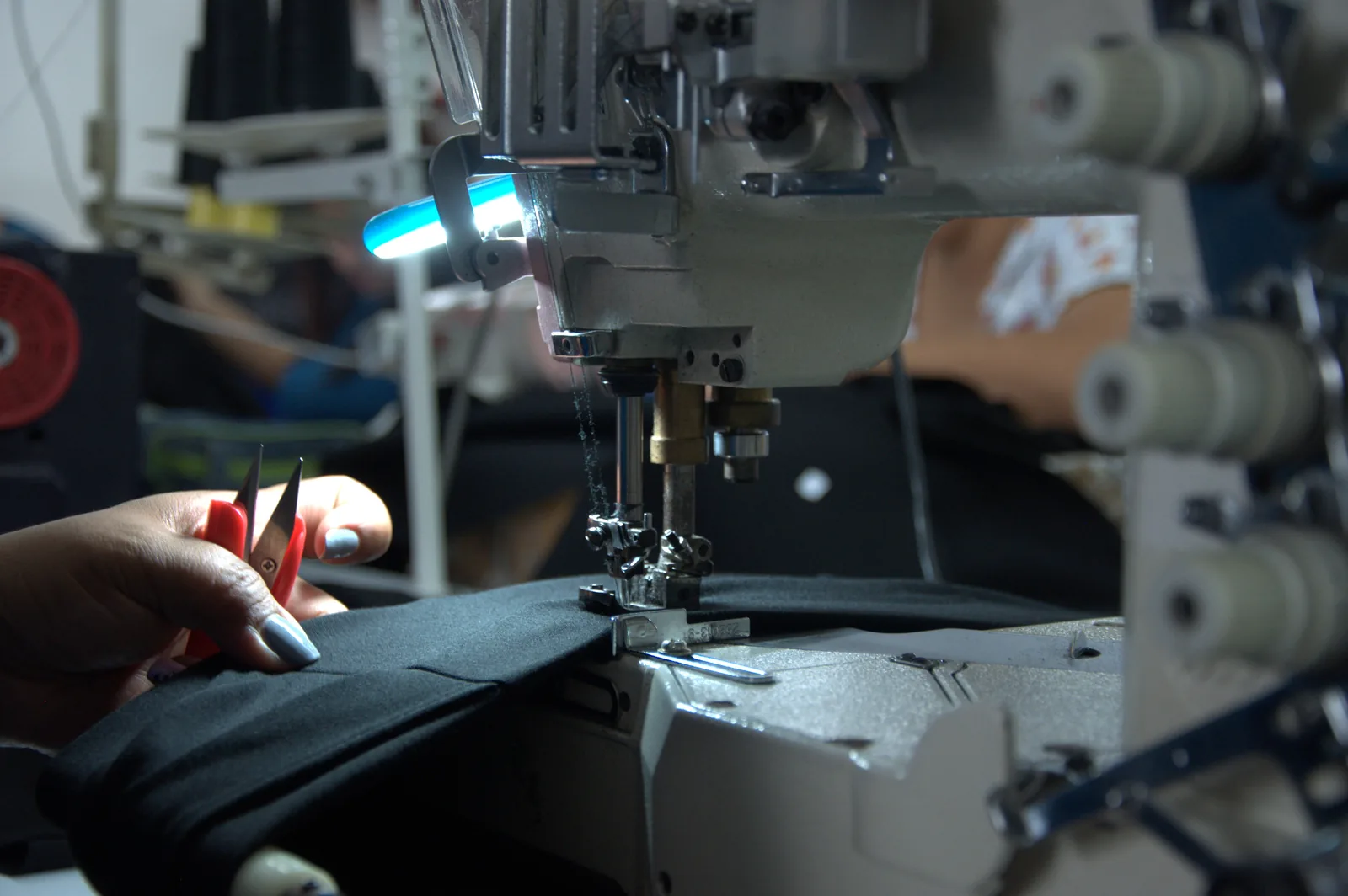
What factors to consider when judging a garment
This applies whether you are assessing a factory's sample or a designer piece in a shop. It is the same craft either way, and it takes about a minute.
- Turn it inside out first. The inside is where a factory stops trying. Seam allowances should be even, overlocking should be dense and consistent, and there should be no loose threads.
- Check the seams at stress points. Armholes, crotch, side seams under the arm. Pull gently. Puckering or visible strain means the wrong stitch or the wrong tension for that fabric.
- Look at pattern matching. On a stripe or check, do the lines meet at the side seams and across the front? Matching costs fabric, so it is a direct signal of what the maker was willing to spend.
- Feel the fabric weight against the garment's purpose. A drapey blouse in a stiff cloth and a structured jacket in something limp are both failures of specification, not of sewing.
- Test the hardware. Zips, buttons, snaps. Cheap hardware on good cloth is the most common cost-saving, and it is the part that fails first.
- Read the composition label. Then feel the fabric and see whether they agree. A blend behaves differently from what the fibre name suggests, and the percentage is where the cost sits.
- Check the finishing. Hems, topstitching, the neck binding. Even, straight and consistent across the piece is what separates a garment that survives a season.
What does not deserve the weight it gets
Brands routinely over-index on how large or well-known a manufacturer's other clients are. A plant that produces for a famous label is not thereby better for your 200-unit order, and is often worse, because your order is small enough to be scheduled around theirs.
A polished website is also weak evidence. Some of the most capable workshops have no meaningful web presence at all, which is precisely why searching for them is harder than it looks.
Frequently asked questions about choosing a clothing manufacturer
What questions should I ask a clothing manufacturer?
Where production physically happens, what the minimum is per style and per colour, who buys the fabric, the lead time in business days and from what milestone, how quality is inspected, and what happens with defective units. Six questions, and the answers place a supplier accurately.
How do I know if a clothing manufacturer is legitimate?
Ask for the production address and permission to visit, and ask them to describe a recent order start to finish. A real producer answers both easily. An intermediary hesitates on the first and generalises on the second.
How do you select a suitable environment for a garment production site?
For an operator: adequate lighting at each station, machines maintained and appropriately spaced, ventilation, and cutting separated from sewing so dust does not travel. For an owner: proximity to fabric suppliers and to freight, and a stable power supply. Both are visible on a site visit within ten minutes.
Should I choose a local or overseas manufacturer?
It depends on what your price supports and where your customers are. Local buys speed and oversight, overseas usually buys unit cost. Nearshore production sits between the two and is worth pricing when your buyers are in the Americas.
How many manufacturers should I get quotes from?
Three or four, and make sure they are quoting the same model. Comparing a CMT price against a full package price makes the CMT look cheaper by a wide margin while leaving out everything you would still have to buy.
Does a low minimum mean lower quality?
No. It usually means the plant is organised for shorter runs, which is a different production setup rather than a worse one. Judge the sample, not the minimum.
Questions to ask a clothing manufacturer
Send these by email before the first call. The answers sort the list faster than any amount of browsing, and a supplier who will not put them in writing has answered anyway.
- What is the opening quantity, per style and per colour?
- Do you develop the pattern, or do I send one?
- What does the first sample cost, and how many corrections are included?
- How many business days from approved sample to finished goods?
- Which fabrics do you hold, and which do you have to buy in?
- Who owns the pattern and the tech pack when we stop working together?
- What happens to units that fail final inspection?
- Are the goods priced at your door or delivered to mine?
- Which categories do you refuse, and why?
- Can I speak to a brand you produce for today?
The last two are the ones suppliers dodge. A plant that names what it does not make is describing a real floor; one that says yes to everything is quoting somebody else's.
How we work
Applying this list to ourselves: GAT Fashion Lab produces full package in Cali, Colombia, has done for over twenty years, and works with a team of more than 130 people, three quarters of them women. Orders open at 36 pieces of a style in one colour, and reordering that quantity takes another 30 to 45 business days, so the 100 to 300 band exists to keep you in stock rather than to sell you more units. Development takes two to eight weeks, production 30 to 45 business days from your approval of the sample, and quality is checked at four points during the run rather than once at the end. What we do not do: denim, tailored outerwear, and anything sold from a catalogue.
Put your garment through our quoting tool and compare our number against the others. It costs nothing and takes minutes. From Colombia to the world.